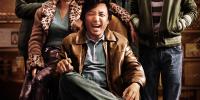
The screen portrayal of a cancer sufferer whose illegal import of foreign medicines into China spurred national policy changes has become a box-office smash as audiences flock to a rare Chinese film on a hot-button issue.
Dying To Survive is based on Lu Yong, who was arrested in 2013 after illegally importing a generic cancer drug in a case that sparked public debate about high medical costs.
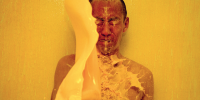
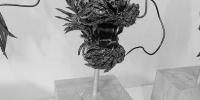
Singaporean artist Lee Wen’s series Journey of a Yellow Man (1992–2012), one of his most famous and long-standing performances, was not simply a personal affront, it was a political affront. At the intersection of Asian art history, critical race theory, and migration and diasporic studies, one is never far (enough away) from the chromatic framing of race and ethnicity: yellow race, yellow peril, yellow face, the forever foreigner.
In 2016, Zhou Zhenfeng, who was a student at a college in Hebei at the time, discovered that there were a lot of waste tires in the streets and alleys. Zhou Zhenfeng learned that tires are made of infusible or refractory polymer elastic materials. It takes hundreds of years for these materials to decompose in the soil to the extent that they do not affect the growth of plants.
Many girls in China may have seen the advertisements of egg donation as a surrogate, in hospitals, schools, public toilets, shared bikes, ATMs...... They are everywhere and the number of this kind of advertisements is large. Though there are lots of girls who have never seen such advertisements or would never believe in them, there would still be some girls who would dial the numbers on the advertisements.
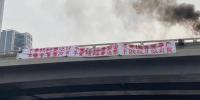
The Nanjing Yangtze River Bridge, completed in 1968, is one of China’s most iconic infrastructural projects and a potent symbol of national pride. Spanning over 6,700 meters across the Yangtze River, it was the first double-decked road-rail truss bridge designed and built entirely by Chinese engineers, without foreign assistance, during a time of intense geopolitical isolation.
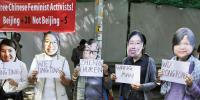
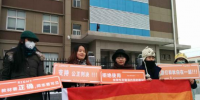
Nancy Lindisfarne and Jonathan Neale write: Five Chinese feminists have been arrested for planning to protest against sexual harassment. They face five to ten years in jail. This post explains the background to the case, and suggests ways that other activists around the world can show solidarity.
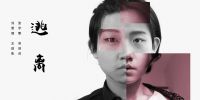
A high school student from The High School Affiliated to Renmin University of China Made a Movie about "Sexual Minorities", a Topic Avoided By Almost Every Parent. How Should We Start Talking About This?" was widely circulated among people on Wechat. The topic "High School Students Made a Trans Movie" went viral and ranked highly on Weibo’s most searched topics.
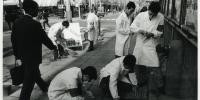
On October 16, 1964, the artist collective Hi Red Center, clad in sanitation masks and white uniforms and wielding small brooms and toothbrushes, spent several hours meticulously cleaning the streets of the Tokyo district of Ginza, amid the hustle and bustle of a “normal” day.
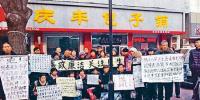
Chinese leader Xi Jinping’s latest attempt to cultivate his image as a man of the people is creating some unintended consequences. Qingfeng Restaurant, an unassuming local eatery where Xi ate a meal of pork buns, fried pig liver and vegetables last month, has since become a staging ground for residents to protest against their local governments.
She seeks to utilize her feminist art to spread awareness on mental health issues. Sravy is a nomad in her own right, and throughout her experiences in Asia she has noticed that there are stimas surrounding women's autonomy and how they handle mental health struggles.
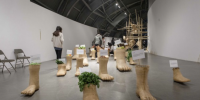
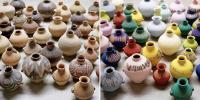
Exhibition visitors have expressed feelings of uneasiness or even pain and nostalgia when seeing Colored Vases by Ai Weiwei1. The 51 vases that make up the artwork are originally treasures from the Neolithic Age (5000–3000 BCE) and the artist has dunked them in common industrial paint.
Why did Ai Weiwei do it?
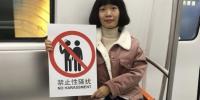
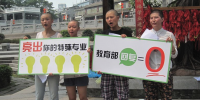
Zheng Xi 郑熹, a Ph.D. candidate with a focus on gender studies at Zhejiang University in Hangzhou. Zheng has launched a campaign asking city governments around China to display anti-sexual-harassment logos, complete with a groper’s “salty-pig hand” visual (etymological context here), alongside other commonly displayed public safety logos on places like subway trains and buses.
Founded 19 years ago, the Beijing Queer Film Festival (aka Love Queer Cinema Week) is one of the grassroots film festivals in China focusing on independent queer film screenings and cultural exchange activities. We aim to expand public discussions on sexuality / gender identity / gender expression, we aim to give a platform to sexual and other minorities in China and the World, and we celebrate diversity.
On April 26th, 2012, Zheng Churan, a feminist activist who was a senior at Zhongshan University at the time, brought 500 letters of advocacy to the school post office on a bicycle.
In November 2015, Chinese LGBT activist Chen Qiuyan met with government officials in Beijing after months of campaigning to have the Ministry of Education remove textbooks which identify homosexuality as a mental disorder.
In 2001, the Chinese Society of Psychiatry removed homosexuality from its list of recognized mental disorders, after the Chinese government decriminalized consensual homosexual acts in 1997.
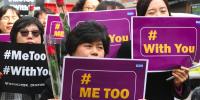
Young women in South Korea are fighting for a new future. The #MeToo movement which has highlighted sexual harassment and abuse around the world has taken a surprising hold in this socially conservative country.
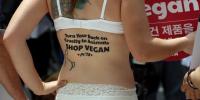
An animal rights activist sporting only a white bikini, bunny ears and tail has been spotted protesting against fur in Pyeongchang, South Korea, which is hosting the Winter Olympics 2018.
Ashley Fruno discussed the People for the Ethical Treatment of Animals' (Peta) stance on fur in front of the Olympic rings at the Alpensia Resort.
Ahead of a recent exhibition at the prestigious modern art museum OCAT Shanghai, the artist Song Ta described the process of creating his multimedia piece “Uglier and Uglier.” After secretly filming thousands of unsuspecting female college students, Song and three assistants painstakingly ranked them by their perceived attractiveness; those deemed most appealing featured early in the show, with the women on display getting progressively “uglier” as the
In early July 2012, after the Chinese college entrance examination results were announced, the media found that many colleges and universities had gender bias on the admitted scores, and the maximum difference between men and women was up to 40 points. This finding aroused widespread concern and dissatisfaction from the public.
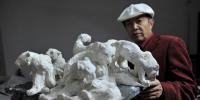
By a pond inside one of the entrances to Beijing’s Chaoyang Park lies a cluster of one and two storey red pyramid-shaped buildings. Sculptures of Gandhi and Lincoln and other famous figures sit in the quiet woods nearby. This is Yuan Xikun’s Jin Tai Art Museum.
On Nov 24, 2013, more than 10 Chinese feminist activists sang the feminist song "Do You Hear Women Sing" in the cabin of Beijing Metro Line 13 (adapted from the famous song "Do You Hear the People Sing" in the musical "Les Miserables". Beijing has the most stringent control on society.