What is it like living with AIDS? This heart-wrenching video for South Africa’s Topsy Foundation brings us through 90 hard days in the life of someone living with it. Be sure to watch it all the way to the end. It’s worth it:
Did you catch that? If you didn’t, watch it again. Spoiler after the jump.
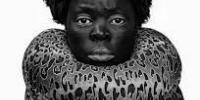
Step into the captivating world of Zanele Muholi, the activist and masterful photographer from South Africa. Through their lens, they unveil the realities found within LGBTQI+ stories, challenging norms and reshaping perceptions of beauty. Each intimate and evocative portrait captured by Muholi becomes a vessel for social change, dismantling stereotypes, and amplifying the voices of those historically silenced.
Born in Nigeria in 1975, Péju Alatise, is a multimedia artist focusing on the experience of women and girls, particularly in her native country but with resonance across the world.
Zanele Muholi, the self-proclaimed visual activist and photographer, investigates the fraught relationship between post-apartheid South Africa and its queer community, who, despite being constitutionally protected since 1996, remain a constant target of abuse and discrimination.
In an endeavor to raise awareness at the local and international level, Razia organized the Mifohaza Masoala (Wake Up Masoala) music and environmental festival, which took place at the edge of the Masoala Rainforest in October 2011. The concert featured some of Madagascar’s most thrilling performers, and the festival was a tremendous success, with over 10,000 people in attendance.
Afrika ARTS Kollective is a group of artists that decided to face Uganda's demographic growth and the garbage problem of the capital, Kamala, with art. 30,000 tons of residues come out of this monthly and the Administration is being working on healthy and good environmental behaviors among citizens.
ONGOING ORGANIZATION:
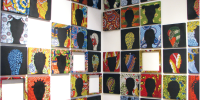
CALLED: Iranti [pronounced írantì] is the Yoruba word for ‘memory’. Largely found in South West Nigeria and parts of Benin Republic, the Yoruba people consider memory a prized form of intelligence which determines how often one remembers what they see and hear.
SUNO is one of the few luxury fashion brands that has been born out of a social cause. Max Osterweis and designer Erin Beatty launched their first collection in the spring of 2009, " after post-election violence threatened to damage the economy and industry in Kenya."
While the clothes is mostly produced by local artisans in Kenya, Suno has since expanded its business to include production in Peru, India, and NY.
“Most people can’t imagine a futurist Africa,” says Ethiopian photographer Aïda Muluneh. She challenges this in her project, Water Life, exploring real-world issues with an otherworldly twist.
Muluneh went to Dallol, Afar, Ethiopia, an extreme landscape where it is dry and hot to capture the essence of water to life. Through her work, Muluneh highlights how water scarcity is mainly a burden on women.
Drama Queens Ghana's “MoonGirls” is an Afrofuturistic graphic novel series. Through an Afrofuturistic lens, “MoonGirls follows the adventures of 4 African "supersheroes" with varying superpowers to save the world from a diverse range of forces; from patriarchy, rape culture to pollution and global warming.
The Yes Men join Reclaim the City in their fight against unjust housing policy. On September 30, 2019, a horde of zombies attended a "#natsneverdie rally" at the Cape Town Civic Centre in order to celebrate Mayor Dan Plato and the Mayoral Committee and to support their policies, which are increasingly similar to those of the National Party under Apartheid.
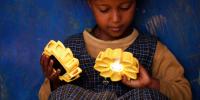
Olafur Eliasson's latest project Little Sun was first debuted at the World Economic Forum on Africa in 2012. The global initiative is bringing tiny, sunburst shaped, plastic solar powered LED lights to the most marginalized regions of the world. Elliasson calls Little Sun, "A work of art that works in life."The lights are also capable of self renewable energy, which makes them practical and portable to those without proper electricity.
Can you finish the lyric? “Your driver could be LGBTQ, Your Tailor could be LGBTQ,…” If you can’t, you may be a part of the majority who doesn’t know about the song Wo Fie. However, for those in the LGBTQIA+ community, and followers of Ghanaian musician Angel Maxine, the song has become a Pride month anthem.
In Women Are Heroes, JR introduces women who sometimes look death in the face, who go from laughter to tears, who are generous, have nothing and yet share, who have had a painful past and long to build a happy future.
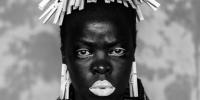
In the portrait Bester I, Mayotte, the sitter’s eyes stare directly at the camera, practically boring a hole in the lens. Their lips are painted white, their hair and ears adorned with clothespins. The self-portrait of Zanele Muholi is striking on its own, but it does not stand alone.
VOA NEWS March 29, 2012 By Nico Colombant
WASHINGTON--A Sudanese artist from the restive Blue Nile region is using art and activism to promote the plight of people caught between borders and conflict.
In an audio montage of memories from refugees, the sounds of gunfire and explosions mix with crying babies. Narrator Michelle Orecchio describes how to reverse war's grip on so much of humanity.
It started as an experiment: what happens when you equip a vibrant youth community with the resources to express themselves through hip hop and electronic music? Last summer I traveled to Goma, Democratic Republic of Congo to find out and the results were more beautiful than I could have imagined.
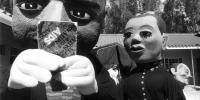
"Puppets Against Aids was launched by Gary Friedman on 1st December 1988 in time for 'World Aids Day' in Johannesburg, South Africa. During 1987, Friedman had been studying with Muppet master, Jim Henson, in Charleville-Mézières, France. Henson provided the initial financial contribution to launch the African Research and Educational Puppetry Programme 'Puppets Against Aids'.
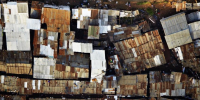
In a lively room in Kibera, Nairobi’s largest slum, a group of women have gathered to discuss how to keep the upcoming Kenyan election free from violence. The women are not politicians, election officials or campaigners – they are grassroots activists, working with their communities to keep the peace on August 8.
Joseline de Lima was wandering the dusty alleys of her working-class neighborhood in the capital of Togo one day last year, when a disturbing thought crossed her mind: Who would take care of her two boys if her depression worsened and she were no longer around to look after them?
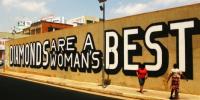
Africa has had a devastating history of blood diamond wars. Blood diamond refers to a diamond mined in a war zone and then sold to finance an invading army's war efforts, usually in Africa where more than two-thirds of the worlds diamonds are extracted.
This site specific social / political word play was painted on the exterior wall of Johannesburg's largest diamond trader Jewel City.
Although we are in the supposedly modern and advanced year of 2020, there are still at least 500 million women and girls that lack adequate facilities for menstrual hygiene management, according to the World Bank Organization.
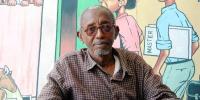
“I want to show the people how bad the troubles were," says artist Muhiyidin Sharif Ibrahim of Mogadishu, Somalia. "That’s the message we’re going to send to people.”
(Robyn Dixon, Los Angeles Times)
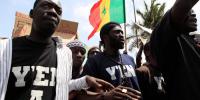
"Y’en a Marre (“We're Fed Up") first emerged in 2011 as a grassroots campaign against injustice and inequality in Senegal. Spearheaded by the hip hop group Keur Gui Crew in response to local power outages, the nascent protest movement went on to mobilize against the controversial bid by Senegalese president Abdoulaye Wade to remain in office for a third term.