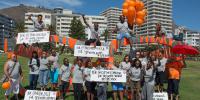
The Uganda National Contemporary Ballet (UNCB) presented a new powerful and moving production advocating for the child soldiers all over the world at the National Theatre in Kampala.
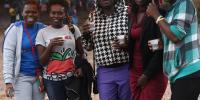
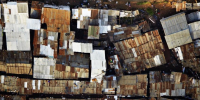
In a lively room in Kibera, Nairobi’s largest slum, a group of women have gathered to discuss how to keep the upcoming Kenyan election free from violence. The women are not politicians, election officials or campaigners – they are grassroots activists, working with their communities to keep the peace on August 8.
An exercise that used drama/and audio visuals to engage with with all election partners, especially the political parties especially the political parties and their candidates/leaders, Electoral Commission, Musicians Association of Ghana, etc to push for a free, fair and peaceful Presidential and Parliamentary election and hand over of power to who ever won the elections peacefully.
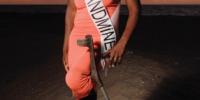
A beauty contest for landmine victims challenges normal concepts of beauty. The search for beauty takes many forms. The traditional beauty pageant might be thought to be one of the less acceptable, concentrating as it does on conventional ideas of female perfection. Miss Landmine is a challenge to normal concepts of beauty. It is a beauty pageant held in Angola, a country ravaged by war and its aftermath, for women who have lost limbs from landmines.
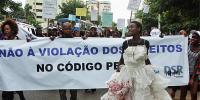
Rights activists in Mozambique have marched through the capital Maputo to protest a colonial era law still included in new legislation that allows rapists to go unpunished if they marry their victims.
The "marriage effect" clause sees convicted rapists given a five-year suspended sentence if they marry their victims and stipulates that the perpetrator should stay married to the victim for at least five years.
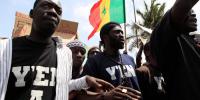
"Y’en a Marre (“We're Fed Up") first emerged in 2011 as a grassroots campaign against injustice and inequality in Senegal. Spearheaded by the hip hop group Keur Gui Crew in response to local power outages, the nascent protest movement went on to mobilize against the controversial bid by Senegalese president Abdoulaye Wade to remain in office for a third term.
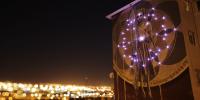
In Cape Town, South Africa the design firms Design Indaba Trust and Thinking have teamed up with artist Faith47 to help raise funds to bring more light to their urban city. Their goal is to raise funds to light up 700 meters of Manwabisi Park, which will ultimately reduce the crime rate in the area through more light. In order to get the community involved in the project, they have combined street art with community engagement.
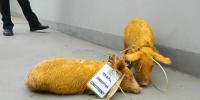
In February , two leaders of a guerrilla movement here traveled to the financial district carrying a wooden container that contained three pigs, each painted yellow from snout to tail.
Born in Nigeria in 1975, Péju Alatise, is a multimedia artist focusing on the experience of women and girls, particularly in her native country but with resonance across the world.
Toyi-toyi is a Southern African dance originally from Zimbabwe by Zimbabwe People's Revolutionary Army (ZIPRA) forces that has long been used in political protests in South Africa.
Toyi-toyi could begin as the stomping of feet and spontaneous chanting during protests that could include political slogans or songs, either improvised or previously created. Some sources claim that South Africans learned it from Zimbabweans.
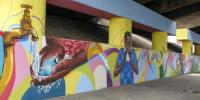
In a bid to fight the spread of COVID-19, the EU Delegation to Ghana on Wednesday 27 May joined the International Organisation for Migration (IOM), the Accra Metropolitan Assembly (AMA) and artists from the Ghana Graffiti Collective, to launch an initiative to use street art and graffiti to create awareness about coronavirus and migration.
The artwork created by the Ghana Graffiti collective speak about hope, tolerance, love and solidarity.
In Women Are Heroes, JR introduces women who sometimes look death in the face, who go from laughter to tears, who are generous, have nothing and yet share, who have had a painful past and long to build a happy future.
Step into the captivating world of Zanele Muholi, the activist and masterful photographer from South Africa. Through their lens, they unveil the realities found within LGBTQI+ stories, challenging norms and reshaping perceptions of beauty. Each intimate and evocative portrait captured by Muholi becomes a vessel for social change, dismantling stereotypes, and amplifying the voices of those historically silenced.
Djerbahood Project, which took place during the months of July and August on a small island called Djerba and is located in the Gulf of Gabes. Better known as the island of dreams, the tiny village of Djerba boasts a traditional and authentic Tunisian setting which acted as a blank canvas for hundred and fifty street artists from thirty different countries.
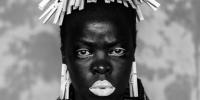
In the portrait Bester I, Mayotte, the sitter’s eyes stare directly at the camera, practically boring a hole in the lens. Their lips are painted white, their hair and ears adorned with clothespins. The self-portrait of Zanele Muholi is striking on its own, but it does not stand alone.
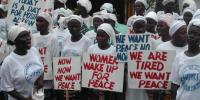
Pray the Devil Back to Hell is the extraordinary story of a small band of Liberian women who came together in the midst of a bloody civil war, took on the violent warlords and corrupt Charles Taylor regime, and won a long-awaited peace for their shattered country in 2003.
The term “Afrofuturism” was coined in the 1990s by the cultural critic Mark Dery, who recognized a preoccupation with the future in the work of a number of black artists. Ever since, it has remained a term that is retrospectively applied to seemingly disparate artists, from Missy Elliot to Toni Morrison. What unites the movement is a shared fascination with the black experience, particularly in America.
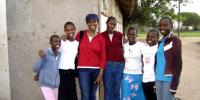
Mtendo MweMa Project's mission is to provide a safe house and educational opportunities to girls, especially those in danger of female circumcision, early marriage and pregnancy, whom otherwise have no alternative but to return to their villages during the holiday seasons in Kenya, East Africa.
In 1978, while studying print-making in Hamburg, Gavin Jantjes was deemed a persona non grata by South Africa. His crime? Creating a series of prints that documented the violence and discrimination in the apartheid state, which he gathered together under the tongue-in-cheek name of a "colouring book".
Driving along an ordinary dirt road, it's hard to miss the Goma Cultural Centre with its bright blue gate, emblazoned with the Congolese flag. "As you can see, we are proud to be Congolese around here," said Belamy Paluku, a volunteer manager at the youth centre.
VOA NEWS March 29, 2012 By Nico Colombant
WASHINGTON--A Sudanese artist from the restive Blue Nile region is using art and activism to promote the plight of people caught between borders and conflict.
In an audio montage of memories from refugees, the sounds of gunfire and explosions mix with crying babies. Narrator Michelle Orecchio describes how to reverse war's grip on so much of humanity.
The “Perceiving Freedom” glasses sculpture on Cape Town’s Sea Point promenade looking towards Robben Island, commemorates late President Nelson Mandela and the values of freedom and equality.
“I want to show the people how bad the troubles were," says artist Muhiyidin Sharif Ibrahim of Mogadishu, Somalia. "That’s the message we’re going to send to people.”
(Robyn Dixon, Los Angeles Times)
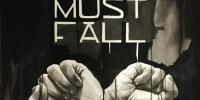
Daniel Hewson describes the use of protest posters and the work of collective, Burning Museum, and artist, Faith47, in the Fees Must Fall movement taking place in South Africa: