A rescue drone for refugees in danger whilst traveling across the Mediterranean Sea.
Last year alone, 3,500 refugees perished attempting to cross the Mediterranean Sea. The Avy Search and Rescue Drone is specifically designed to help refugee boats. The drone is capable of flying long distances, detecting vessels, and can drop life jackets, life buoys, food supplies, medication and communication devices.
Drones for Good Competition
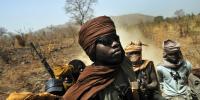
MOTHER EARTH is broken from incessant decadent wars carelessly perpetuated by mindless ,vicious political imbeciles. Our natural wealth plundered by greedy ,gluttonous economic dare-devils, imbibing crude oil and fresh blood . Warlord-ism set the suns of our freedom, our earth is torn naked . War is ravaging the beauty of African diamond fields ,We are now Wretched Vagabonds . Warlords are frying peace in oil springs of the Gulf.
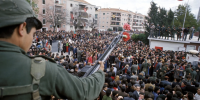
Celeste Caeiro, who on April 25, 1974, handed out red carnations to soldiers on their way to ending a 40-year right-wing dictatorship in Portugal, a spontaneous patriotic act that gave a largely bloodless coup its name, the Carnation Revolution, and her an enduring appellation, “the Lady of the Carnations,” died on Friday in Lisbon. She was 91.
"SOA Cycle, and what it later became, which is called the Democracy Cycle, is a group of seven large works that approach the question of democracy. What is democracy? How is it constructed? How is it implemented? Is it something that is to be thought of in relation to its political influence? Or is it something that plays out in terms of cultural and social, and even emotional terms, for instance?
IMAPCT are youth activists who view the creative arts and leadership training as a way to develop ourselves and change the world in a positive way. They believe that they must be the message that bring through hardwork, focus, discipline, unity and the principles of S.O.S. safe space, outstanding effort and service to their family friends and community.
National Public Radio (NPR):
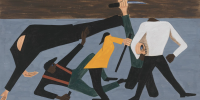
There's no historical marker outside Jacob Lawrence's childhood home in New York City's Harlem neighborhood.
But Khalil Gibran Muhammad, director of the Schomburg Center for Research in Black Culture, has an idea of what it might say: "Here lived one of the 20th century's most influential visual artists, a man named Jacob Lawrence, who was a child of southern migrants."
Mass media using propaganda to brainwash citizens. Confusion and ignorance causing a divide. People rising up against an oppressive government. Humans being torn between rage and love. These are the themes of Green Day’s widely successful 2004 album, “American Idiot.” These themes still sound familiar. Nearly two decades later, the world, especially the United States, faces these same issues.
In “Speech/Acts,” a group exhibition organized by Meg Onli at the Institute of Contemporary Art in Philadelphia, Kameelah Janan Rasheed and Tiona Nekkia McClodden stood out as artists who take up voices, histories, and experiences that can help audiences move forward and endure in the future.
The work of a radical theater and puppetry collective, known as Papel Machete, produces and performs throughout Puerto Rico and the United States. Papel Machete was established on May 1, 2006 during protests responding to the government shutdown and political and economic crisis prompted by Puerto Rico’s status as a United States colony.
I was 24 years old. We were in danger. The Israeli planes were flying raids overhead. And I was designing posters." Hosni Radwan won't easily forget the conditions in the Beirut offices of the PLO Information Department, as an exhibition of the work it produced opens in London.
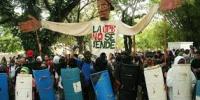
To state or chant ‘BLACK LIFE’S MATTER’ is not to say other lives don’t matter, it’s a reminder that four hundred years and counting, black lives didn’t matter enough. Not during the dark era of slave trade and its horrors on the African, not after slavery ended and blacks were left holding the short end of the stick.
An inspired story of artists who have made millions engaging their communities of using their artistic influence to create change for others!
****
Over the last few years or so, Diddy and Jay-Z have continually found themselves near the very top of Forbes' wealthiest acts in hip-hop list. Now, it looks like the two are combining their immense wealth to help Black people across the U.S.
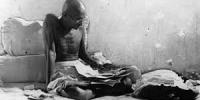
On September 16, 1932, in his cell at Yerwada Jail in Pune, Mohandas Karamchand Gandhi begins a hunger strike in protest of the British government’s decision to separate India’s electoral system by caste.
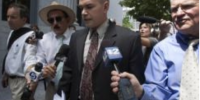
In December 2008, Tim DeChristopher, along with his church group, was protesting outside a Bureau of Land Management oil and gas lease auction of 116 parcels of public land in Utah's red rock country. Tim decided to take his protest inside and disrupt the auction itself. Instead, at the door, he was offered a bidder's paddle — which, after a split second of hesitation, he accepted.
Encarnación Aragoneses Urquijo (886-1952), commonly known by her literary pseudonym Elena Fortún, was a Spanish writer who focused in children and teenagers literature.
She was born in Madrid, where she studied Philosophy and Humanities. In 1908 she married Eusebio de Gorbea y Lemmi, a member of the republican army. They left the country after the Civil War to live frist in France and then in Argentina.
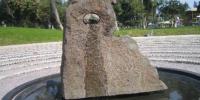
The Eye that Cries (El Ojo que Llora, in Spanish) is a memorial that was born as a private initiative designed to honor the thousands of victims as a result of terrorism in Peru, to strengthen the collective memory of all Peruvians and to promote peace and reconciliation in the country.
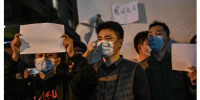
Protests erupted in cities and on campuses across China this weekend as frustrated and outraged citizens took to the streets in a stunning wave of demonstrations against the government’s “zero covid” policy and the leaders enforcing it.
A general strike can be one of the most potent noncooperation methods
in the repertoire of nonviolent resistance. It is a widespread
cessation of labor in an effort to bring all economic activity to a
total standstill. Although it is easy to broadcast the call for a
general strike, it is exceedingly difficult to implement for the maximal
impact that it potentially exerts. What’s more, a general strike must
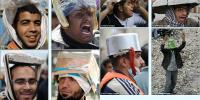
from "Laugh, O Revolution: Humor in the Egyptian Uprising" by Anna Louie Sussman, in 2011.
Revolutions can be messy. They can be tragic. As long as the Internet is working, they can be tweeted. And, as Egyptians demonstrated during their 18 days of protest, they can also be funny.
Myanmar has been engulfed in protest since February 1, when Burmese army general Min Aung Hlaing seized control of the government in a military coup, refusing to accept the landslide election victory of the National League for Democracy and its leader, Aung San Suu Kyi.
This weekend marks the one-year anniversary of Donald Trump's inauguration. It also marks the one-year anniversary of the Women's March his election inspired, the largest single-day protest in the nation's history.
Join other families in reimagining sports team mascots and logos that misrepresent Native American communities. Design a campaign for alternative names with the help of artists Sam Durant and Elisa Harkins, taking inspiration from the exhibition Jimmie Durham: At the Center of the World.
Pop-Up Studio
Families explore art and create together in lively workshops led by artists. These drop-in programs are designed for ages 5 and up.
Just over a decade ago on May 15, 2011, a wave of social outrage began as the Spanish people collectively decided that they had had enough of the corruption, cuts, and inequalities affecting their country.
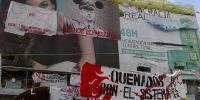
The streets of Santiago are once again alive with the spirit of revolution. For weeks now, working-class Chileans have occupied national monuments and blocked major intersections in protest of widespread inequality. They desire full reform — a request so long in the making that it is practically tradition. The country’s floundering political elite offer half measures while dispatching riot police and the military.