T.I.E. is a residential, 24-hour, intensive experience during which participants will be: introduced to aesthetics of Immersive Theatre, guided through a practical exploration of these strategies, and mentored in the creation of an immersive, theatrical experience about a social justice issue -- a piece that can be shared at the end of the workshop with an invited audience of their choice
The egregious practice that some Muslim men employ to divorce their wives instantaneously and without their consent, merely by uttering the word talaq (divorce) three times, has finally been declared unconstitutional and illegal by the Indian Supreme Court. The country’s ruling Bhartiya Janata Party (BJP) party claims that the ban is a victory for its administration, which had been advocating its abolition since it came to power in 2014.
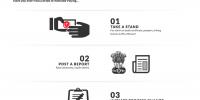
ipaidabribe.com is an online tool that allows the users to report when they pay bribes, are asked to pay and refuse, and when they find an honest officer.
They have a well designed site with apps for mobile phones, and although it started in India it has now grown and you can select multiple countries on different continents.
Hok Kolorob. Let there be noise.
It was perhaps these two words of protest that eventually led to the arrest of two engineering students for allegedly molesting a fellow student at Kolkata’s Jadavpur University last month.
Maria was psyched to travel to the Philippines where her hand-made basketball nets were well received. Invited with the Institute for Infinitely Small Things (Boston/Mass based) by Clara Balaguer and the Office of Culture and Design (Manila) she worked in Zamboanga City with students of Western Mindanao State University to carry out a 6 day arts and activism workshop.
To call attention to bullying, the Singapore Coalition Against Bullying for Children and Youth has released a video that gets shorter each time it is viewed.
Hosted on a site called Share It To The End, the short animated video depicts a boy getting bullied at school and telling us he always feels alone and doesn’t feel safe anywhere.
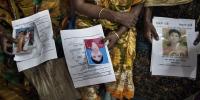
On April 24, 2013, more than 1,000 lives were taken in the Rana Plaza Collapse. While history remembers this tragic event as the deadliest garment factory accident, activist and photographer Taslima Akhter reveals a story of dreams crushed by structural murder. Dedicating her career to the lives and struggles of garment workers in Bangladesh, she has continued to foster a community rallying together for safer working conditions.
As climate change worsens, so will our collective sense of loss. Coastlines, cities, crops, and entire species will disappear. Artist Catherine Young has created a perfume line that bottles up the scents of things we enjoy today, but will be diminished–or gone–soon enough. During exhibitions, visitors are allowed to smell the perfumes.
By adding screen print with the wording ‘SUPERCOPY’ on to copies of LaCoste polo shirts bought at a street market in Thailand SUPERFLEX turns a copy product into a Supercopy – a new original. As a result, LaCoste took legal action against SUPERFLEX.
The Thai Health Promotion Foundation (THPF) is a non-profit organization that has been continuously holding above-the-line campaigns encouraging people to quit smoking. However, the number of people quitting smoking has not diminished as much as they want.
In 1989, playwright, actor, and activist Safdar Hashmi was fatally attacked by political thugs while performing a street play outside of Delhi. His death led to the founding of Sahmat, an influential artist collective that has taken a consistent stance against the threats of religious fundamentalism and sectarianism in India through a vibrant mix of high art and street culture.
Seeking to use war-time waste for social good, Saught was set up by Pamela Yeo, Adeline Heng and Ng Sook Zhen in December 2010. Based in Singapore, the company uses the metal from de-activated landmines to create pieces of jewellery. The organisation employs citizens from conflict-ravaged regions, offering a source of employment for those who may have lost as a result of the fighting in their nation.
The “Wearable/Portable Architecture project” discussed the possibilities of having a locale create portable architecture based on the conditions of its environmental, urban and cultural conditions. It is structured to find ways in providing new arguments and sustaining an artistic impetus to our immediate environment.
There are no whistles, no loud speakers, and no placards held up high in this quiet act of subversion. Pimsiri Petchnamrob stands silently in a mass of sharply dressed Bangkok commuters, her hands clutched around a copy of George Orwell's 1984.
Next to her a small group of young men and women, their faces sombre and their heads bowed low, also read books about fictional and real totalitarian worlds in silence.
In the country formerly known as Burma, these free thinkers are a force in the struggle for democracy.
By Joshua Hammer
Photographs by Adam Dean
Smithsonian Magazine, March 2011
The Kiss of Love campaign in India is a non violent protest against moral policing. It started out as a Facebook page but gained momentum across India when a mob of conservative, right-wing party members attacked and demolished a coffee shop in Kozhikode, Kerala. Their grounds to do so was public display of affection by couples inside the coffee shop, which they saw as immoral activity.
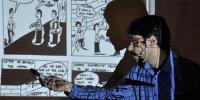
With World Comics India, the organization he started, Sharad has pioneered a cheap and easy medium for poor people to communicate meaningfully on issues that are neglected by the conventional media. While the urban elite dominates public media, the grinding day-to-day concerns of millions are rarely heard. Layers of discrimination and abuse heaped on huge numbers of people keep their problems out of sight and out of mind.
In response to a memo from Afghanistan's education ministry, Ahmad Sarmast, the founder of Afghanistan's Institute of Music, began a Twitter campaign with the hashtag #IAmMySong. In response to the hashtag, Afghan girls have taken to Twitter with videos of themselves singing tagged with Sarmast's hashtag and spreading petitions against the ban. The ministry memo banned girls 12 years old and older from singing at school functions.
In late January 2009, a group of 40 members of right-wing Hindu group Sri Ram Sena attacked women and men in a pub in the Indian city of Mangalore. They were upset with the women for engaging in behavior they found immoral, claiming that the girls were disrespecting traditional Indian values. Video footage of the event spread across Youtube in India, sparking outrage among many at the attack on innocent women.
“Badass Indian Pinups” is a series of paintings by Indo-Canadian artist Nimisha Bhanot, that features paintings of Indian women being confident and sexually liberated.