They are disparaged as “free-willed” women, “stubborn,” “picky,” “incomplete.”
But a video by an East Asian beauty brand that went viral over the past week has upended the conversation on China’s sheng nu, which translates literally into “leftover women” — those who happen to be over 27 and unmarried.
“People think that in Chinese society an unmarried woman is incomplete. You feel like an outsider,” says one young woman.
Since 2020, university students across China have launched a grassroots initiative to combat menstrual stigma by placing “menstrual pad mutual aid boxes” in campus restrooms. These boxes, often accompanied by signs reading “Take one if you need it, donate if you can,” provide free sanitary pads to anyone caught off guard by their period—offering both practical relief and a symbolic challenge to the cultural silence surrounding menstruation.
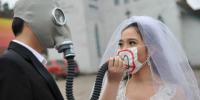
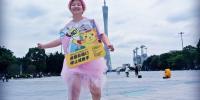
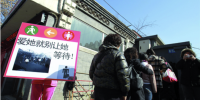
The action art performance themed "War on smog, we are taking action" was held by some environmental activists and volunteers on the commercial center and famous tourist spot Yangren Jie (Foreigners’ Street) in Nanan district, Chongqing municipality in Southwest China on Friday, Febuary 28.
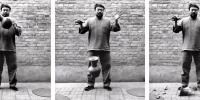
Dropping a Han Dynasty Urn (1995) by Ai Weiwei is a highly provocative work of art. This series of three black and white photographs portray the artist holding a 2,000-year-old Han dynasty urn that, frame by frame, he drops, it falls, and shatters. As much a work of photography as a work of performance art, in each still an unaffected Ai looks directly at the camera aware of his destructiveness.
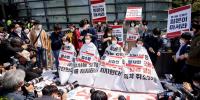
More than 30 South Korean college students shaved their heads in front of the Japanese embassy in Seoul on Tuesday to protest Japan's decision to release water from its crippled Fukushima nuclear plant into the sea.
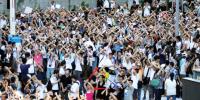
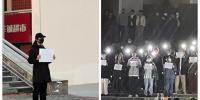
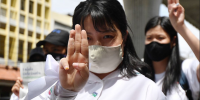
Police periodically dispersed crowds, who chanted and held placards but did not stop the event from taking place, though there is an anti-pandemic ban on gatherings larger than 10 people.
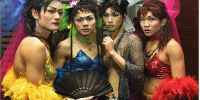
The documentary film "The Two Lives of Li Ermao" recorded the bumpy life experience of a transgender Li Ermao and her unique and moving story.
"Others only live one life, I live two." Looking back, the "two lives" are not only the emotional disillusionment and the swing of identity that Li Ermao has experienced in the past 17 years, but also her helpless but accurate summary of her life.
Moral and national education (MNE) s a school curriculum proposed by the Education Bureau of Hong Kong, transformed from the current moral and civic education (MCE).
Leilei Zhang was harassed on a public bus when a man gripped her hand, glared at her and refused to let go. With the determination to raise public awareness, Leilei began a crowd-funding campaign to raise money for what could have been China's first public anti-sexual harassment advertisement. She approached the authorities of her home city, Guangzhou, but it did not want to take on the advertising for fear it would panic the public.
In time for the 30th Anniversary of the famed EDSA People People Revolution, a two-day pop-up museum in Camp Aguinaldo serves as a vivid reminder of a significant period in Philippine History.
The interactive museum, which is composed of nine halls, recreates the martial law victims’ struggle for democracy, including the events that led to the bloodless revolution in 1986.
Direct Cause: The event that on November 24, several people died in a fire in a residential building in Urumqi, Xinjiang province, due to delayed disaster relief due to the COVID-19 lockdown policy in China, and the indifference of the government towards the incident and the block of message.
Primary Cause: The three-year-long lockdown policy and the government’s excessive control over speech and thought led to social discontent.
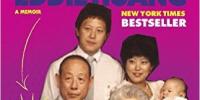
Fresh off the Boat examines the immigrant struggle told from the perspective of Eddie Huang, a modern day chef and video entrepreneur who has found a way to use food to explore culture, diaspora, and more through food, television, and the book that I am discussing now.
This book serves as an important storytelling experience of the immigrant and helps bridge the generational struggles often seen in these stories.
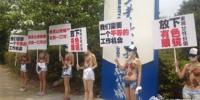
Female students from the Guangdong University of Technology in Guangzhou called for equal job opportunities and for people to "pay attention to the value of women" while protesting on the school's campus, shirtless and covered in body paint.
The photos, taken by ogling passersby, have been circulating on Weibo and naturally netizens stand divided on whether the semi-naked protests were empowering or counterproductive...
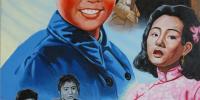
"Stand Up, Sisters" tells the story of a rural girl who journeys to Beijing for a family visit, only to be deceived and forced into prostitution, suffering unthinkable hardships. After the founding of the People's Republic of China, these women are rehabilitated. The narrative reaches its peak with her and her younger sisters' victorious achievement of self-reliance.
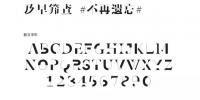
On Sept 21, 2017, the professional committee of dementia and related diseases of China geriatric health association, together with many caring enterprises, jointly launched a public welfare activity entitled "no longer forget", hoping to call on the public to pay attention to Alzheimer's disease and promote early screening.
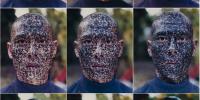
One of the most critical artists on the contemporary art scene is Zhang Huan. His works are of great social insight and unique in how he applies his artistic expression. He thus makes them an almost visual feast with a peek into the multilevel structure of modern society. One such work is the masterpiece "Family Tree," which shows how art can mould our social cognition through multilayered symbolism and profound imagery.
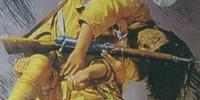
Chen Boer's first heroine film, which she co-wrote and directed, was "Daughter of China," about female soldiers in the Northeast Anti-Japanese United Army. They didn't have much filmed material at the time, but as a feminist, Chen Boer clearly wanted to record the sacrifices and contributions of Chinese women in the War of Resistance against Japanese Aggression.
"Thai artists and art students are on the frontline of their country’s swelling pro-democracy movement, calling for reforms of Thailand’s military-backed government, and breaking both taboo and national law to criticise the nation’s monarchy.
The “Occupy Men’s Toilets” movement, initiated by Chinese feminist activists including Li Tingting (Li Maizi) and Wu Rongrong, emerged in 2012 as a creative, non-violent protest against gender inequality in access to public facilities.
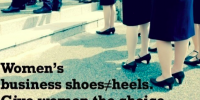
Yumi Ishikawa, a Japanese actress, freelance writer, and part-time funeral parlor worker, started the #KuToo Movement because she feels it’s unfair she has to wear heels at work. She also feels that being required to wear heels is rooted in a cultural problem, one much deeper than physical discomfort.
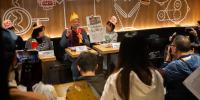
On a recent eight-hour shift at a McDonald’s in Hong Kong, Luke Ching, 52, wiped tables, cleared trays of half-eaten fries, emptied cups of soda and milk tea and lugged bulging trash bags to the dumpster.
For him, the main goal of the part-time work was not making ends meet. It was research for his main pursuit: using art to advocate for better treatment of people in menial jobs in a city with one of the widest income gaps in the world.
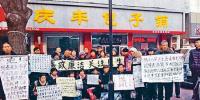
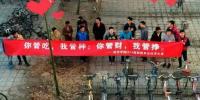
Chinese leader Xi Jinping’s latest attempt to cultivate his image as a man of the people is creating some unintended consequences. Qingfeng Restaurant, an unassuming local eatery where Xi ate a meal of pork buns, fried pig liver and vegetables last month, has since become a staging ground for residents to protest against their local governments.
“Girl’s Day” in China was supposed to be a way for boys on college campuses to show the girls how much they care. This year it went too far.
Have you heard about “Girl’s Day?” It’s a big holiday for Chinese college students. Every year on March 7, students throughout the country celebrate the day as a campus version of International Women’s Day.
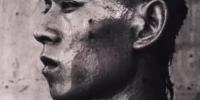
Zhang Huan is a very talented performance artist in China. In the famous work "Twelve Square Meters", he was covered with fish oil and honey sitting in a dirty public toilet in Beijing's East Village for an hour, not only making swarms of flies greedily surround him, but also People feel extremely uncomfortable and even nauseous.
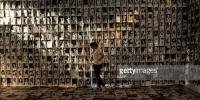
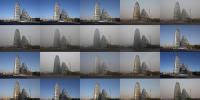
The Breath of China is a thematic photo exhibition of thousands of air-quality images taken by 44 photographers in 34 Chinese capital cities. The exhibition was displayed on the 14th Pingyao International Photography Festival (PIPF) in Shanxi Province, from September 19th to 27th, 2014.