change
medium
issue
region
despondent apostate
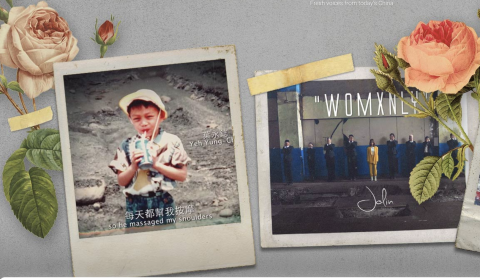
“Rose Boy” (玫瑰少年) refers to Yeh Yung-chih, a 15-year-old junior high school student in Taiwan who died on April 20, 2000, after years of bullying due to his non-conforming gender expression. Though the official cause of death was ruled accidental—he allegedly slipped in a school bathroom—the circumstances surrounding his death, including prior complaints from his mother about repeated verbal and physical harassment, drew widespread public attention. Yeh’s story became a watershed moment in Taiwan’s LGBTQ+ and anti-bullying discourse, pushing educators, activists, and lawmakers to reckon with the realities of gender-based violence in schools.
In 2018, nearly two decades later, Taiwanese pop icon Jolin Tsai released the song “玫瑰少年” (official English title: Womxnly) as a tribute to Yeh. The lyrics celebrate gender nonconformity, resilience, and beauty in the face of social hostility: “Which rose has no thorns? The best revenge is beauty.” The song became an anthem across queer communities in Taiwan and mainland China, winning Song of the Year at the 2019 Golden Melody Awards, and bringing Yeh’s story to a new generation.
The cultural impact of Womxnly extended beyond music. It reintroduced Yeh Yung-chih as a queer martyr figure, with the phrase “玫瑰少年” becoming a symbol for youth marginalized due to gender expression or sexual identity. LGBTQ+ activists in China and Taiwan began invoking his memory during awareness campaigns, memorial events, and calls for inclusive gender and sexuality education. His mother, Chen Chun-ju, has also become an outspoken advocate for anti-bullying reform and LGBTQ+ youth support.
In mainland China, despite intensified censorship of LGBTQ+ content, Yeh’s story has continued to circulate on social media, especially around April 20 each year. Online commemorations are often organized by queer digital communities, using his name as a rallying point to address gender-based school bullying, youth mental health, and the lack of institutional protection for sexual minorities. For many, “Rose Boy” has come to symbolize those lost to gendered violence and social exclusion, including more recent cases like that of Lu Daosen, a 24-year-old queer photographer who took his own life in 2021 after enduring years of homophobic abuse.
However, tensions remain around public representation. In 2022, a televised performance of Womxnly by popular singer Zhou Shen and rapper GAI drew criticism for altering lyrics and removing references to gender diversity—interpreted by many as an act of queer erasure under censorship. The incident sparked heated debate about cultural appropriation, the sanitization of queer memory, and who gets to tell LGBTQ+ stories in a restrictive environment.
Despite these setbacks, the ongoing remembrance of Yeh Yung-chih and the legacy of Womxnly continue to inform queer activism across Chinese-speaking communities. The “Rose Boy” narrative embodies a unique form of affective activism—one that mobilizes grief, beauty, and popular culture to challenge gender norms and create intergenerational solidarity among queer youth. From tragedy to anthem, from silence to symbolic power, “Rose Boy” has become a name that speaks not only of one lost life, but of a collective struggle for recognition, dignity, and safe futures.