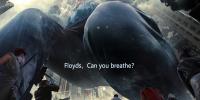
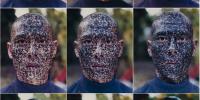
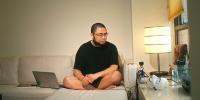
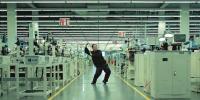
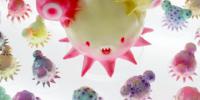
Whose Utopia? is a color film which is 19 minutes 58 seconds long. It was originally commissioned by the Siemens Arts Program back in 2005. The projector-style video is based on the work and social lives of assembly line workers at OSRAM’s light bulb factory in the Pearl River Delta in China. This area has received huge numbers of immigrants from inland provinces seeking work and better lives in the wake of Beijing’s booming economy.
Ahead of a recent exhibition at the prestigious modern art museum OCAT Shanghai, the artist Song Ta described the process of creating his multimedia piece “Uglier and Uglier.” After secretly filming thousands of unsuspecting female college students, Song and three assistants painstakingly ranked them by their perceived attractiveness; those deemed most appealing featured early in the show, with the women on display getting progressively “uglier” as the
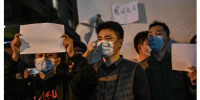
Protests erupted in cities and on campuses across China this weekend as frustrated and outraged citizens took to the streets in a stunning wave of demonstrations against the government’s “zero covid” policy and the leaders enforcing it.
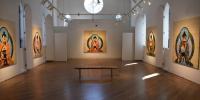
This is a series of paintings reflecting the struggle and sacrifices made by the Tibetan people for independence. The author is Tenzing Rigdol, who is a Tibetan and influenced a lot by the Dalai Lama and traditional Tibetan culture. The paintings are full of Tibetan cultural elements. For instance, the characters created in the paintings are Tibetan monks, who are the typical representatives of their culture.
Just the other day, we were hearing about Samsung getting in legal trouble over patent violations with Apple. A federal court decision ruled that Samsung owes Apple more than $1 billion in restitution.
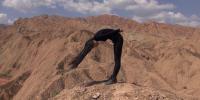
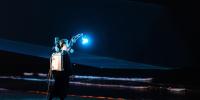
Tong Wenmin is a Chinese performance artist affiliated with works exploring movement, interaction, and humanity. Her art is a relationship between human behavior and the natural world, a round dynamic between physicality and environmental elements. One of her most compelling works, "FLYING THE WIND," is outstanding in merging performance art with a deeper exploration of the interaction between humans and nature.
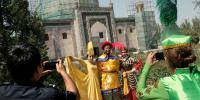
KASHGAR, China — They come for the camel rides, the chance to dress up like a conquering Qing dynasty soldier or to take selfies in front of one of the most historic Islamic shrines in Xinjiang, the sprawling region in China’s far northwest.
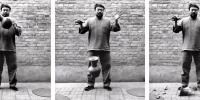
Dropping a Han Dynasty Urn (1995) by Ai Weiwei is a highly provocative work of art. This series of three black and white photographs portray the artist holding a 2,000-year-old Han dynasty urn that, frame by frame, he drops, it falls, and shatters. As much a work of photography as a work of performance art, in each still an unaffected Ai looks directly at the camera aware of his destructiveness.
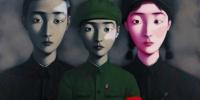
The immediate prototypes of Zhang Xiaogang’s Big Family series are formal group photographic portraits from the 1950’s and 60’s, including those of Zhang’s own family, a source of the painter’s “endless reveries.” From these old black-and-white pictures Zhang Xiaogang derived the series’ paradigmatic features: a subdued, nearly monochromatic palette; a thickly layered but flat surface, without overt evidence of brushwork; a general compositional restric
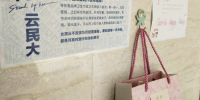
Since 2020, university students across China have launched a grassroots initiative to combat menstrual stigma by placing “menstrual pad mutual aid boxes” in campus restrooms. These boxes, often accompanied by signs reading “Take one if you need it, donate if you can,” provide free sanitary pads to anyone caught off guard by their period—offering both practical relief and a symbolic challenge to the cultural silence surrounding menstruation.
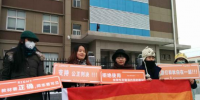
In November 2015, Chinese LGBT activist Chen Qiuyan met with government officials in Beijing after months of campaigning to have the Ministry of Education remove textbooks which identify homosexuality as a mental disorder.
In 2001, the Chinese Society of Psychiatry removed homosexuality from its list of recognized mental disorders, after the Chinese government decriminalized consensual homosexual acts in 1997.
The outbreak of the coronavirus has brought international scrutiny down on China’s political system. Again. A few commentators have applauded the efficiency of the Chinese Communist Party’s response, but most have zoomed in on its weaknesses. Some have even blamed the party itself for the outbreak, calling the disease a “Communist coronavirus” or “the Belt and Road Pandemic.”
By Steven Jiang, CNN
https://www.cnn.com/2018/03/14/asia/china-viral-eye-roll-intl/index.html
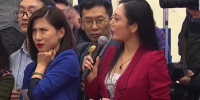
(CNN)It was the eye roll that resonated with millions -- and broke the internet in China.
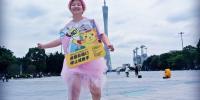
Leilei Zhang was harassed on a public bus when a man gripped her hand, glared at her and refused to let go. With the determination to raise public awareness, Leilei began a crowd-funding campaign to raise money for what could have been China's first public anti-sexual harassment advertisement. She approached the authorities of her home city, Guangzhou, but it did not want to take on the advertising for fear it would panic the public.
Zhang Huan is a very talented performance artist in China. In the famous work "Twelve Square Meters", he was covered with fish oil and honey sitting in a dirty public toilet in Beijing's East Village for an hour, not only making swarms of flies greedily surround him, but also People feel extremely uncomfortable and even nauseous.
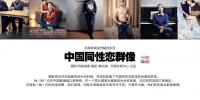
A Straight Journey is a documentary of Chinese homosexual people. It is the first time for Chinese gays and lesbians to make their debut and speak out via one of the largest Chinese Internet service providers. Two Chinese photographers Masa and Mojo took a journey across 11 China's cities making portraits of 48 gays, lesbians and their families from 2014-2015.
Lu Yang attempts to bring the negative notion of Cancer cell into a “Kimo Kawa” object of love and/or pain and hopes to open a dialogue that brings awareness to the acceptance and tolerance of living with cancer cells.
China's only seaside theater festival has been held in the resort town of Aranya in north China's Hebei Province. Artists from around the world traveled there to take deep dive into the world of dramatic performance. For theatergoers, there were interactive activities including cross-border installations such as seaside talks, environmental drama readings, screenings, theater houses, parades and bonfires by the sea.
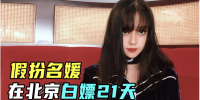
In her 2021 graduation project from the Central Academy of Fine Arts (CAFA), Chinese performance artist Zou Yaqi staged a provocative social experiment titled “21-Day Survival Challenge.” For three weeks, Zou assumed the persona of a wealthy socialite, using counterfeit luxury items, strategic self-presentation, and social engineering to access elite spaces in Beijing—such as five-star hotel lobbies, first-class airport lounges, and high-end restaurants
Shortly after the close of this year’s International Women’s Day, China’s Twitter-like service Sina Weibo shut down Feminist Voices. With 180,000 followers, the group’s social media account was one of the most important advocacy channels for spreading information about women’s issues in China, but in an instant, it was gone. A few hours later, the private messaging app WeChat also shuttered an account for the group.
If there’s one thing we know for certain about China in 2019, it’s that people there love their apps. They use WeChat to talk with friends; they spend hours battling virtual enemies on PUBG; they binge-watch short videos on Douyin. And so why shouldn’t the Communist Party get in on the action?
With delicate composition, striking details and strong emotion, five editorial posters drawn by Wuheqilin have attracted some half million followers to his account on Sina Weibo, China's Twitter-like social media platform. His political views expressed in his art have led to some netizens dubbing him the "Wolf Worrier artist."
Zuoxiao Zuzhou is a Chinese singer whose accented, croaky voice is hardly ever in tune. But for his fans he's the voice of a generation — one of the very few voices who dare to speak out. After a collaboration, Cowboy Junkies member Michael Timmins called him "China's Leonard Cohen."
One of the most critical artists on the contemporary art scene is Zhang Huan. His works are of great social insight and unique in how he applies his artistic expression. He thus makes them an almost visual feast with a peek into the multilevel structure of modern society. One such work is the masterpiece "Family Tree," which shows how art can mould our social cognition through multilayered symbolism and profound imagery.