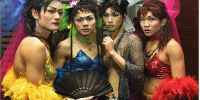
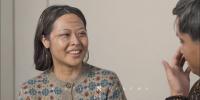
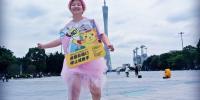
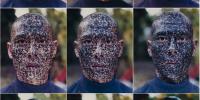
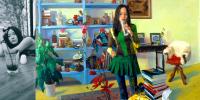
The documentary film "The Two Lives of Li Ermao" recorded the bumpy life experience of a transgender Li Ermao and her unique and moving story.
"Others only live one life, I live two." Looking back, the "two lives" are not only the emotional disillusionment and the swing of identity that Li Ermao has experienced in the past 17 years, but also her helpless but accurate summary of her life.
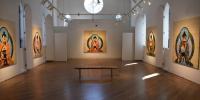
This is a series of paintings reflecting the struggle and sacrifices made by the Tibetan people for independence. The author is Tenzing Rigdol, who is a Tibetan and influenced a lot by the Dalai Lama and traditional Tibetan culture. The paintings are full of Tibetan cultural elements. For instance, the characters created in the paintings are Tibetan monks, who are the typical representatives of their culture.
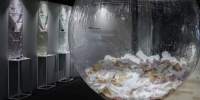
"100 Questions About Sex from Children" is an annual touring sex education exhibition founded and curated by Se A, a leading advocate of inclusive sex education in China. Since its launch in 2021, the exhibition has been held in major cities such as Shenzhen and Guiyang, with plans to expand into regions where sex education and gender awareness remain underdeveloped.
Simple Wedding Movie is an organization in China that cares about love and marriage and offer marriage service. It made a short video with the theme: experience getting old before getting married. Most people would get married in a young and beautiful age. During that time, they are young and beautiful. Because of that, young couple may more likely to have passion and love for each other.
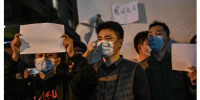
Protests erupted in cities and on campuses across China this weekend as frustrated and outraged citizens took to the streets in a stunning wave of demonstrations against the government’s “zero covid” policy and the leaders enforcing it.
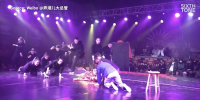
A viral video of a student dance performance in southern China’s Guangxi Zhuang Autonomous Region has won praise for speaking out against so-called ghost marriages, which many today see as an archaic and even dangerous tradition.
Just the other day, we were hearing about Samsung getting in legal trouble over patent violations with Apple. A federal court decision ruled that Samsung owes Apple more than $1 billion in restitution.
Ahead of a recent exhibition at the prestigious modern art museum OCAT Shanghai, the artist Song Ta described the process of creating his multimedia piece “Uglier and Uglier.” After secretly filming thousands of unsuspecting female college students, Song and three assistants painstakingly ranked them by their perceived attractiveness; those deemed most appealing featured early in the show, with the women on display getting progressively “uglier” as the
Lu Yang attempts to bring the negative notion of Cancer cell into a “Kimo Kawa” object of love and/or pain and hopes to open a dialogue that brings awareness to the acceptance and tolerance of living with cancer cells.
Late last month, Chinese citizens took up a creative means of protest over the nation’s strict “zero-COVID” policy. In a place with little tolerance for large public demonstrations, protesters have been holding up blank pieces of paper. Their ingenuity inspired a local artist Yolanda He Yang to stage a public art demonstration to subtly communicate their dissent.
Shortly after the close of this year’s International Women’s Day, China’s Twitter-like service Sina Weibo shut down Feminist Voices. With 180,000 followers, the group’s social media account was one of the most important advocacy channels for spreading information about women’s issues in China, but in an instant, it was gone. A few hours later, the private messaging app WeChat also shuttered an account for the group.
Yu Hong’s Female Writer, a painted and photographic portrait of the writer Zhao Bo 趙波 (b. 1971), recalls courtly images of idealized beauties. Yu, however, deliberately complicates the perspective in her composition: she asked the sitters for her She series to select photographs of themselves that could be paired with her paintings, meaning that the images together convey dual female perspectives, both the artist’s and the subject’s.
Zhang Huan is a very talented performance artist in China. In the famous work "Twelve Square Meters", he was covered with fish oil and honey sitting in a dirty public toilet in Beijing's East Village for an hour, not only making swarms of flies greedily surround him, but also People feel extremely uncomfortable and even nauseous.
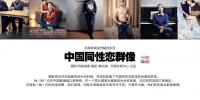
A Straight Journey is a documentary of Chinese homosexual people. It is the first time for Chinese gays and lesbians to make their debut and speak out via one of the largest Chinese Internet service providers. Two Chinese photographers Masa and Mojo took a journey across 11 China's cities making portraits of 48 gays, lesbians and their families from 2014-2015.
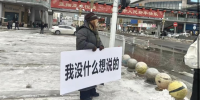
Feb 23 2024, on the streets in Henan, China, a girl holds a big sign with the black text "I've got nothing to say" on a white background, walking around in city center and malls. She live-streamed her walk and her account was banned after a few hours.
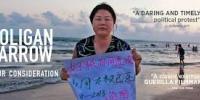
Nanfu Wang feels safe in New York. Surveillance, that essential preoccupation of the documentarian in America, is a chokehold from which she has been temporarily released. From her Brooklyn apartment, the Chinese filmmaker prepares for the release of her debut feature documentary, Hooligan Sparrow.
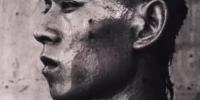
Nanjing, a picturesque city lying by the Yangtze River, owes its fame to its favorable geographic position, galaxy of talents and profound historical background. Having served as the capital of ten dynasties in ancient China, its splendour has remained and even enlarged with an extended population up to 600,000 when the government of the Republic of China set up its capital there in 1927.
A photography project on China's marriage market has recently reignited the debate about marriage in China, and the phenomenon of women deemed too old to marry, or "leftover women" in the country.
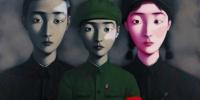
The immediate prototypes of Zhang Xiaogang’s Big Family series are formal group photographic portraits from the 1950’s and 60’s, including those of Zhang’s own family, a source of the painter’s “endless reveries.” From these old black-and-white pictures Zhang Xiaogang derived the series’ paradigmatic features: a subdued, nearly monochromatic palette; a thickly layered but flat surface, without overt evidence of brushwork; a general compositional restric
Leilei Zhang was harassed on a public bus when a man gripped her hand, glared at her and refused to let go. With the determination to raise public awareness, Leilei began a crowd-funding campaign to raise money for what could have been China's first public anti-sexual harassment advertisement. She approached the authorities of her home city, Guangzhou, but it did not want to take on the advertising for fear it would panic the public.
One of the most critical artists on the contemporary art scene is Zhang Huan. His works are of great social insight and unique in how he applies his artistic expression. He thus makes them an almost visual feast with a peek into the multilevel structure of modern society. One such work is the masterpiece "Family Tree," which shows how art can mould our social cognition through multilayered symbolism and profound imagery.
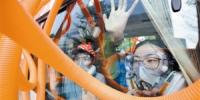
A minibus is parked on the side of the road with a series of pipelines wrapped around it. One end of the pipeline is connected to the exhaust port of the minibus, and the other end is put into the car, so that the exhaust gas can be directly introduced into the car, forming a " Street gas chamber".
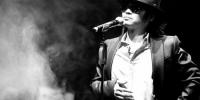
Zuoxiao Zuzhou is a Chinese singer whose accented, croaky voice is hardly ever in tune. But for his fans he's the voice of a generation — one of the very few voices who dare to speak out. After a collaboration, Cowboy Junkies member Michael Timmins called him "China's Leonard Cohen."
March 20, World Sleep Day is approaching, Chongqing Fuling wine town square placed 2 transparent sleep house, staff in the form of performance art to call on people to "put down the phone, sleep at ease". It is reported that the purpose of World Sleep Day is to make people pay attention to the importance of sleep and sleep quality, to remind people to pay attention to sleep health and quality.