Sima Qian: China's 'grand historian' By Carrie Gracie BBC News, Beijing
Speaking truth to power has always been a high-risk strategy in China. Its rulers tend to prefer flattery, and writers who forget this do so at their peril. China's "grand historian" - 2,000 years ago - was one of many who have paid a terrible price.
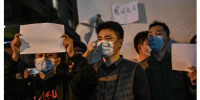
Late last month, Chinese citizens took up a creative means of protest over the nation’s strict “zero-COVID” policy. In a place with little tolerance for large public demonstrations, protesters have been holding up blank pieces of paper. Their ingenuity inspired a local artist Yolanda He Yang to stage a public art demonstration to subtly communicate their dissent.
The young Chinese feminists shaved their heads to protest inequality in higher education and stormed men’s restrooms to highlight the indignities women face in their prolonged waits at public toilets.
Protests erupted in cities and on campuses across China this weekend as frustrated and outraged citizens took to the streets in a stunning wave of demonstrations against the government’s “zero covid” policy and the leaders enforcing it.
March 20, World Sleep Day is approaching, Chongqing Fuling wine town square placed 2 transparent sleep house, staff in the form of performance art to call on people to "put down the phone, sleep at ease". It is reported that the purpose of World Sleep Day is to make people pay attention to the importance of sleep and sleep quality, to remind people to pay attention to sleep health and quality.
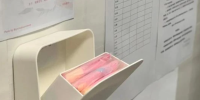
From October to December 2020, Chinese university students nationwide launched a viral movement to install “menstrual pad mutual aid boxes” in women’s restrooms—free, wall-mounted containers stocked with disposable pads on a take-one, replace-one basis. Nearly 250 campuses joined within weeks. Some sustained their boxes for over a year, while others saw them vanish after bureaucratic pushback, logistical hurdles, or dwindling volunteer resources.
A minibus is parked on the side of the road with a series of pipelines wrapped around it. One end of the pipeline is connected to the exhaust port of the minibus, and the other end is put into the car, so that the exhaust gas can be directly introduced into the car, forming a " Street gas chamber".
As the summer warms up, bringing with it sleeveless tops, Xiao Meili, a women’s rights advocate, is collecting photos of women’s armpits. Her goal: to challenge a growing belief in China that a woman must have hair-free armpits to be attractive.
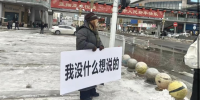
Feb 23 2024, on the streets in Henan, China, a girl holds a big sign with the black text "I've got nothing to say" on a white background, walking around in city center and malls. She live-streamed her walk and her account was banned after a few hours.
China's only seaside theater festival has been held in the resort town of Aranya in north China's Hebei Province. Artists from around the world traveled there to take deep dive into the world of dramatic performance. For theatergoers, there were interactive activities including cross-border installations such as seaside talks, environmental drama readings, screenings, theater houses, parades and bonfires by the sea.
This is a series of paintings reflecting the struggle and sacrifices made by the Tibetan people for independence. The author is Tenzing Rigdol, who is a Tibetan and influenced a lot by the Dalai Lama and traditional Tibetan culture. The paintings are full of Tibetan cultural elements. For instance, the characters created in the paintings are Tibetan monks, who are the typical representatives of their culture.
They are disparaged as “free-willed” women, “stubborn,” “picky,” “incomplete.”
But a video by an East Asian beauty brand that went viral over the past week has upended the conversation on China’s sheng nu, which translates literally into “leftover women” — those who happen to be over 27 and unmarried.
“People think that in Chinese society an unmarried woman is incomplete. You feel like an outsider,” says one young woman.
A photography project on China's marriage market has recently reignited the debate about marriage in China, and the phenomenon of women deemed too old to marry, or "leftover women" in the country.