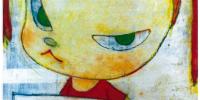
An early representation of Nara’s strong stance against nuclear weapons, No Nukes is now synonymous with the antinuclear protest movement. The work is painted over a promotional poster for bossa nova musician Vinicius Cantuária’s Amor Brasileiro (1998) among other printed ephemera.
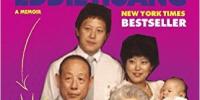
Fresh off the Boat examines the immigrant struggle told from the perspective of Eddie Huang, a modern day chef and video entrepreneur who has found a way to use food to explore culture, diaspora, and more through food, television, and the book that I am discussing now.
This book serves as an important storytelling experience of the immigrant and helps bridge the generational struggles often seen in these stories.
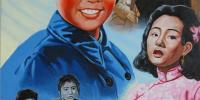
"Stand Up, Sisters" tells the story of a rural girl who journeys to Beijing for a family visit, only to be deceived and forced into prostitution, suffering unthinkable hardships. After the founding of the People's Republic of China, these women are rehabilitated. The narrative reaches its peak with her and her younger sisters' victorious achievement of self-reliance.
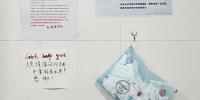
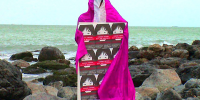
HONG KONG — It started when a single box of free sanitary pads appeared in a middle school classroom in October. Then a plastic container with pads was attached to the walls of four bathrooms in a university in Shanghai. By Monday, boxes and bags of individually wrapped pads had popped up outside bathrooms in at least 338 schools and colleges across China. Each carried a version of the same instructions: “Take one, then put one back later.
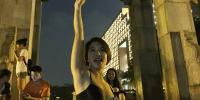
Women around the world fed up with long lines for the ladies’ restroom have a new folk hero: a Beijing college student leading her own version of an “occupy” movement in southern China.
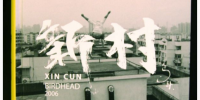
Song Tao and Ji Weiyu, established their collaborative named Birdhead in 2004. Both natives of Shanghai, their work is deeply rooted in their hometown and its evolution amid China’s growth into a global power. The duo takes diaristic snapshots, highlighting their everyday lives in the quickly changing city.
In Cut Piece—one of Yoko Ono’s early performance works—the artist sat alone on a stage, dressed in her best suit, with a pair of scissors in front of her. The audience had been instructed that they could take turns approaching her and use the scissors to cut off a small piece of her clothing, which was theirs to keep. Some people approached hesitantly, cutting a small square of fabric from her sleeve or the hem of her skirt.
Cosmic Generator presents a network of characters working in nonsensical, and at times absurd, economies. Artist Mika Rottenberg uses footage from actual discount dollar stores in Calexico, CA; Mexicali, Mexico; and Yiwu, China to recreate the imaginary “life” of a product, from its production in the factory to the moment it is sold.
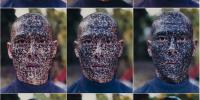
One of the most critical artists on the contemporary art scene is Zhang Huan. His works are of great social insight and unique in how he applies his artistic expression. He thus makes them an almost visual feast with a peek into the multilevel structure of modern society. One such work is the masterpiece "Family Tree," which shows how art can mould our social cognition through multilayered symbolism and profound imagery.
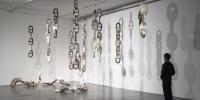
“I am a silkworm.” Liang Shaoji has repeatedly used this phrase to describe his work, underscoring his preoccupation with the materiality of silk and the technology of sericulture, or silk farming. For more than twenty-five years, Liang Shaoji has raised silkworms and trained them to spin silk onto different objects in his Nature series.
In a private Tokyo dinner party artist Mao Sugiyama served his genitals to five of the events guests. Several months prior to the event he chose to have his genitals surgically removed. He released invitations to the event on social media, 70 paid attendees were present for the event.
Self-identifed as asexual, Sugiyama stated that he intended to raise awareness for "sexual minorities, x-gender, asexual people."
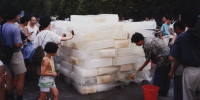
Since the 1980s, revitalizing the economy has always been the country's development strategy. Although China's economy has grown rapidly in just twenty years, attracting worldwide attention, environmental destruction has also become a problem. For example, the Fu Nan River in Chengdu, like many rivers nationwide, is severely polluted.
As the summer warms up, bringing with it sleeveless tops, Xiao Meili, a women’s rights advocate, is collecting photos of women’s armpits. Her goal: to challenge a growing belief in China that a woman must have hair-free armpits to be attractive.
WeiweiCam is a self-surveillance project by artist Ai Weiwei that went live on April 3, 2012, exactly one year after the artist's detention by Chinese officials at Beijing Airport.[1] At least fifteen surveillance cameras monitor his house in Beijing[2] which, according to Ai, makes it the most-watched spot of the city.[3] He described his decision to put himself under further surveillance as a symbolic way to increase transparency in the Chinese g
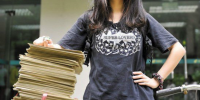
On April 26th, 2012, Zheng Churan, a feminist activist who was a senior at Zhongshan University at the time, brought 500 letters of advocacy to the school post office on a bicycle.