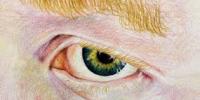
Sunaura Taylor is an artist, writer and activist. Through painting, printmaking, writing and other forms of political and artistic engagement her work intervenes with dominant historical narratives of disability and animal oppression. Taylor's artworks have been exhibited at venues across the country, including the CUE Art Foundation, the Smithsonian Institution and the Berkeley Art Museum.
Counterspace is an independent curatorial platform functioning as the first decolonial thinktank mapping cultural activism worldwide. It shapes collectively decolonial toolkits with common tools and resources, and a global directory browsable by continent, praxis, and social construct, as a Beuys-inspired ‘social sculpture’ revisited, and an alternative map of the universe.
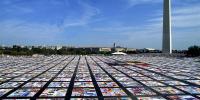
Cleve Jones's powerful vision for memorializing those lost to AIDS was realized in October 1987 in Washington D.C. It showcased the artistic contributions of people who'd lost loved ones to the virus from a number of US metropolitan centers. The quilt has continued to grow for the nearly 40 years since. By 1992, the AIDS Memorial Quilt included panels from every state and 28 countries.
In 2011 a protest movement started in Israel. Citizens expressed their demand for a fair distribution of resources, claiming for the lack of housing and maintenance of the buildings and apartments, due to the privatized housing schemes. In these instances no one feels responsible for maintaining buildings and those in need are forced to live under poor and risky conditions.
Entre el 2004 y el 2014 se registraron 982 víctimas de ataque con ácido en Colombia. En el 41 por ciento de los casos, el agresor no fue identificado. El aumento de casos llevó a que en enero pasado se promulgara una ley que endurece los castigos contra ese flagelo y con la que se busca reducir al máximo esta situación en todo el país.
Exposing Disordered Eating is a photographic exhibition intended to show us the images we rarely see. In American media, representations of disordered eating are conditioned and controlled; all we are shown is the crumpled, emaciated anorexic figure with sunken eyes and cheekbones. This image is both unrelatable and othered, and it fails to capture the reality of modern eating disorders: they are omnipresent, multifaceted, and sneaky.
Ron Krielen is a social designer and a taxi driver. He spent five years driving a taxi for elderly and disabled people. En route, he would get to know them and their individual situation. He realized that this kind of personal contact gave him a better insight into possible solutions than many of the healthcare providers who were actually assigned to each case.
In November 2016, citizens of Flint, MI filed a historic class action law suit against both city and state for the damages wrought by lead contaminants in the water supply. The city's 100 thousand inhabitants have faced damages not only to their homes for the corrosive qualities of the water, but in myriad physical ailments; skin lesions, hair loss, high lead blood levels, vision loss, depression and anxiety are all reported symptoms.
Gender equality charity Women of the World (WOW) is launching a one-day festival of activism that invites people from all generations, genders and backgrounds to take part in conversations around sexual violence.
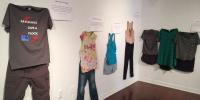
Since 2020, university students across China have launched a grassroots initiative to combat menstrual stigma by placing “menstrual pad mutual aid boxes” in campus restrooms. These boxes, often accompanied by signs reading “Take one if you need it, donate if you can,” provide free sanitary pads to anyone caught off guard by their period—offering both practical relief and a symbolic challenge to the cultural silence surrounding menstruation.
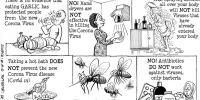
Godfrey Mwampembwa, popularly known as Gado, has been holding politicians accountable for nearly 30 years. Now, his concern has shifted to the coronavirus.
In a quiet office on the third floor of a building in Nairobi’s central business district, the cartoonist known by his pen name, Gado, was sketching a satire about the coronavirus.
If you visit the Art AIDS America exhibition expecting to see activist slogans and memorial pieces along with some art-world superstars, you won’t be disappointed—Keith Haring, Robert Mapplethorpe and the “Silence = Death” slogan are present and accounted for—but you might also walk through the show scratching your head in confusion.
Glowing softly in the West Texas desert night, artist Guadalupe Maravilla’s Mariposa Relámpago, was once an ordinary school bus but is now a richly decorated, mobile site for remembrance and healing. Like much of the artist’s work, this piece commemorates and confronts the artist’s journey to the United States as an unaccompanied, undocumented minor fleeing civil war in El Salvador in the 1980s.
Renowned Cuban artist Tania Bruguera surprised a Bogota audience in September when she lined up three people directly involved in the Colombian conflict for a chat. The real performance however, started when a waitress emerged with a tray of neatly organised lines of cocaine, and began offering them to members of the audience.
For more than 100 years, the American Cancer Society has worked relentlessly to help people stay well, help people get well, find cures and fight back against cancer.In May 1985, Dr.
Through her work, South African art activist Athenkosi Kwinana aspires to deepen the understanding of Albinism in her native country, where she has faced discrimination in most aspects of her life from childhood days on. Working with both drawing and printmaking, Kwinana creates large self-portraits that aim to constructively reimagine the representation of Albinism in the country’s black communities and African contemporary art as whole.
Mary Fisher wears many hats: Artist, author, and HIV/AIDS activist are just a few. The latter is perhaps what she's known best for—her influential speech at the 1992 Republication National Convention is regarded as one of the greatest American speeches of the century, spurring a push toward treatment and compassion towards those who are HIV-positive.
The “Occupy Men’s Toilets” movement, initiated by Chinese feminist activists including Li Tingting (Li Maizi) and Wu Rongrong, emerged in 2012 as a creative, non-violent protest against gender inequality in access to public facilities.
With the support of the Amy Rossborough Foundation and several other Yale University affiliated departments, Tamara Leacock, while a senior at Yale University, designed a collection and produced a fashion show that explored through fashion, dance, and carnival an intimate portrait of HIV. The goal of the production was to display HIV in a setting that was intimate, personalized, and displayed with a human face.
If fashion is a reflection of the times it is little wonder that the current round of shows have often felt discombobulating.
Gucci’s show on Sunday night was particularly surreal, opening with a series of models being propelled along a conveyor belt catwalk, staring bleakly ahead, wearing a high fashion take on straitjackets.
Senior activists clad in hospital gowns crowded the State House steps Monday and parted their johnnies to expose false rubber buttocks -- in the hopes of drawing attention to a "gap" in health care assistance for low-income seniors. The Massachusetts Senior Action Council organized the rally to push for expanding eligibility for the Medicare Savings Program, which helps seniors pay Medicare premiums and other expenses.