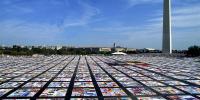
Cleve Jones's powerful vision for memorializing those lost to AIDS was realized in October 1987 in Washington D.C. It showcased the artistic contributions of people who'd lost loved ones to the virus from a number of US metropolitan centers. The quilt has continued to grow for the nearly 40 years since. By 1992, the AIDS Memorial Quilt included panels from every state and 28 countries.
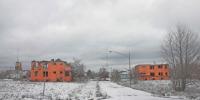
Object Orange (formerly Detroit. Demolition. Disneyland. is an artistic project in Detroit, Michigan which seeks to draw attention to dilapidated buildings by painting them orange.
A unique piece captured significant attention at the Central Academy of Fine Arts undergraduate graduation exhibition in June. The work featured an "anime-style" girl's skull linked to a human skeleton and internal organs, all encased within a thin film. As visitors entered the exhibit area, her breathing and gaze would alter accordingly.
Installed on the occasion of the 2016 U.S. presidential election, I want a president renders a poignant portrait of the cultural and political climate in the early 1990s in New York City with words that still resonate today.
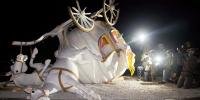
“He describes it as a “family theme park unsuitable for small children” – and with the Grim Reaper whooping it up on the dodgems and Cinderella horribly mangled in a pumpkin carriage crash, it is easy to see why.
Banksy’s new show, Dismaland, which opened on Thursday on the Weston-super-Mare seafront, is sometimes hilarious, sometimes eye-opening and occasionally breathtakingly shocking.
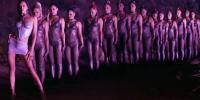
Yesterday, I procrastinated my way to watching the Savage X Fenty Show, and I was left in complete awe of Rihanna. She truly is a powerhouse, but on top of that, all her brands; Fenty Beauty, Savage X Fenty and Fenty have intentionally left no one behind.
As the death toll from Israel’s attacks on the besieged Gaza Strip continues to rise, a guerrilla projection on May 13, 2021 illuminated a building in Brooklyn’s Dumbo neighborhood with messages of solidarity with Palestinians.
Our project aims to show people that joy can be an act of resistance and resilience in the face of global justice issues when harnessed in the right way. The sharing of joy can also act as a connector in a society that continues to grow more polarised through the division of social media and mainstream media.
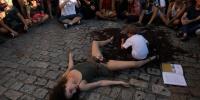
Artists in Rio de Janeiro have staged a pop-up street show to protest against the closure by the new far-right state government of an exhibition because of a performance attacking dictatorship-era torture.
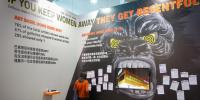
For more than 30 years, the Guerrilla Girls have travelled the world exposing sexism and inequality in the art industry, and this week they proved Hong Kong was no exception.
Three members of the anonymous feminist collective—calling themselves Frida Kahlo, Käthe Kollwitz and Zubeida Agha—spoke at the University of Hong Kong on Monday, dressed in their signature black outfits and gorilla masks.
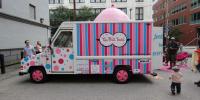
The Milk Truck is a combination of guerrilla theatre, activism and slapstick humour. When a woman finds herself in a situation where she is discouraged, harassed, or unwelcome to breastfeed her baby in public, she contacts The Milk Truck. The truck summons social media supporters and arrives to the location of the woman in need, providing her with a shelter for feeding her baby.
The two Puerto Rico-based artists Jennifer Allora and Guillermo Calzadilla have worked together to make captivating artworks. Allora and Calzadilla are known for their interactive art pieces in public, often addressing social and political issues and engaging questions of history, geopolitics, and culture.
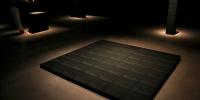
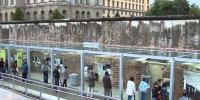
It was once the most feared address in Berlin, a place easy to enter but very hard to leave. Now the ruins of the former engine room of Nazi terror at Prinz Albrecht Strasse in Berlin have been preserved in a new exhibition space open to the public from tomorrow.
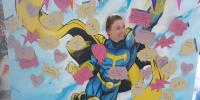
We were ‘Superheroes’ and had fun, colourful, engaging activities which had a high visual impact with a purpose to engage the head, hand and heart. We believe that everyone has superpowers within and they just need to be released but that all superheroes need a rest in order be at their best for themselves and others.
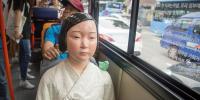
Buses serving several routes in central Seoul have acquired a new and highly controversial passenger: a barefoot “comfort woman”, wearing a traditional hanbok dress with her hands resting on her knees.
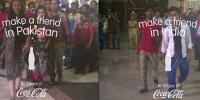
A new, three-minute ad by Coca-Cola, "Small World Machines," starts with a relatively straightforward premise: India and Pakistan do not get along so well. It ends with the promise of peace: "Togetherness, humanity, this is what we all want, more and more exchange," a woman, either Indian or Pakistani, narrates as the music swells. Sounds great. How do we get there? By buying Coke, of course.
For an art project about the effects of white privilege and the disturbing ways in which its effects are built into our society, Risa Puno’s The Privilege of Escape is a surprisingly fun, even enjoyable experience.
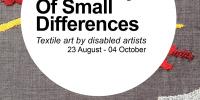
An exhibition of textile-based work by disabled artists, organised in protest at the inaccessibility of an exhibition by a popular artist, when it came to Leeds.
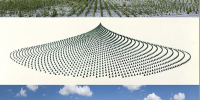
Denes's project "Tree Mountain-A Living Time Capsule" in Finland is a monumental earthwork involving the planting of 11,000 trees by 11,000 people on a reclaimed gravel pit. It's designed to grow over the next 400 years, serving as a testament to environmental stewardship and the potential for regeneration.
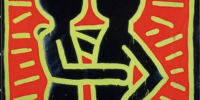
Keith Haring is known to be one of the biggest artists raising awareness for HIV and AIDS, considering he had also passed away from HIV. Starting his career covering ads with spray paint and chalk in subway stations in New York City, his work started trending and he became an activist for this cause.
Mona Haydar knows the way some people feel about Muslims in the wake of recent terrorist attacks.
Just weeks after the horrific San Bernardino, Calif., shooting in December, where Islamic extremists killed 14 people and wounded 22 others, Haydar was at an airport looking to buy frozen yogurt. Suddenly, a man came up to her and whispered menacingly in her ear, "You killed my people."
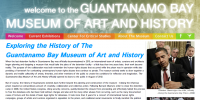
When the last detention facility in Guantanamo Bay was officially decommissioned in 2010, an international team of artists, curators and architects began planning and designing a museum that would take the place of the detention facility - a little less than two years later, their work became reality.