The Folded Map Project is a project by Tonika Lewis Johnson, a photographer and community activist from Chicago. The project aims to investigate and change the racial and economic segregation that affects the city and its residents.
Jay-Z rapped alongside side Bono, the Edge and Rihanna; Coldplay's Chris Martin moonlighted as Beyoncé's piano player; Justin Timberlake covered Leonard Cohen — and those performances, from January 22nd's multinetwork, $66 million-grossing telethon for Haitian earthquake victims, were just the most visible of musicians' efforts to raise funds.
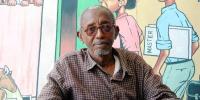
“I want to show the people how bad the troubles were," says artist Muhiyidin Sharif Ibrahim of Mogadishu, Somalia. "That’s the message we’re going to send to people.”
(Robyn Dixon, Los Angeles Times)
A rescue drone for refugees in danger whilst traveling across the Mediterranean Sea.
Last year alone, 3,500 refugees perished attempting to cross the Mediterranean Sea. The Avy Search and Rescue Drone is specifically designed to help refugee boats. The drone is capable of flying long distances, detecting vessels, and can drop life jackets, life buoys, food supplies, medication and communication devices.
Drones for Good Competition
Inspired by the Laughing Farmers of Karnataka, protesters in New York make Carlos Slim's visit to New York uncomfortable while he appears on a "Live From NYPL" program. This excellent video summarizes the action.
Beauty in Transition is an artistic project created by multi-media artist Jody Wood, that established a pop-up mobile hair salon providing beauty services including a hair wash, cut, color and/or style service to willing participants living in homeless shelters. By provoking face-to-face dialogue in a calming recuperative salon environment, this project aims to facilitate empathetic understanding and to unravel the reductive label of homelessness.
With past government shut downs and teetering the fiscal cliff, debt
ceiling now eliminated, credit line increase after credit line
increase? I thought my timely art piece may be interesting for your
viewers and spark healthy/heated discussion.
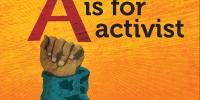
A is for Activism is a children's book developed by Innosanto Nagara, an author illustrator and founding member of the Design Action Collective, a worker owned cooperative design studio in Oakland that is dedicated to “serving the Movement.” The book includes playful rhymes for each letter stressing the importance of civic engagement and a participatory democracy.
In the "D", "D" doesn't really stand for "Detroit", but "Demolition." Take a look around and you'll notice a great number of buildings marked on the front with a circled "D" in faint chalk. Off to the side, many of these same buildings will also have a noticeable dot, courtesy of our own native son, Tyree Guyton.
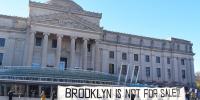
The Brooklyn Anti-Gentrification Network is a grassroots movement and campaign to prevent the displacement of low-to-middle income people, elders, families and mom-and-pop businesses from Brooklyn. They say, “Not 1 more person displaced! Not 1 more luxury development, until we have affordable housing for all!”
The following description is taken from Amanda Froelich's article on www.trueactivist.com (link below):
"Dumpster diving is a topic that is rising in popularity. Just take a peek at Rob Greenfield! This activist won’t hesitate before jumping in a dumpster, but he’ll also take time to spout reasoning behind why we should work hard to ‘waste less’.
As we’ve already found out, gender inequality exists in all parts of the world, but besides discriminative attitudes, women also suffer from wage discrimination.
According to statistics, women’s earnings in the US “were 77% of men’s in 2011”, while in Switzerland, women earned “roughly 20% less than equally skilled men in comparable positions”.
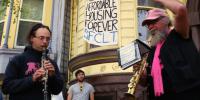
Real estate agents and investors with plans to visit an open house in San Francisco Tuesday were greeted with a somewhat unexpected scene – a motley crew of Mission activists and neighborhood characters holding signs and singing, “If you buy this house, you will have bad karma.” A small brass band played along.
After the economic crisis of December 20, 2001 in Argentina, there was a growth in the participation in all types of protests and claims of the different sectors affected by the crisis (against banks by savers, roadblocks and mobilizations of picket movements, state employees in municipalities and government houses, neighborhood assemblies, etc). The situation that was experienced led the protesters to seek new and varied reporting strategies.
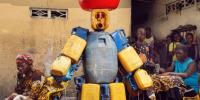
“So dramatic, so strong, so visual,” artist Stéphan Gladieu said of his first encounter with the revival of an ancestral folk art movement in Kinshasa, Democratic Republic of Congo. Kinshasa is the capital of Congo but also one of the many places American and European countries send their waste.
On Tuesday morning, when Google CEO Sundar Pichai testified before the House Judiciary Committee about his company’s data collection practices, there was a familiar mustachioed face in the crowd. To most people, this person — also wearing a monocle and toting a bag of cash — is none other than the famous board game character most commonly known as Monopoly Man.
Mine is not Arts for the sake of Arts. It is a revolutionary INSGINA carved into the artistic plaque of my DNA to speak FREEDOM of expression and then freedom after EXPRESSION. The footprints of my revolutionary walk are dipped in the paths of RESISTANCE. My Ideological Swag -word is CREATIVITY. My spiritual birth mark is RESILIENCE. My revolutionary slogan is a nonviolent but a poetic fist of MASS INSTRUCTION. I am non-selfish believer.
On January 17, 2011, Hong Yuping (洪玉萍), from Fujian Province, contacted Yu Jianrong (于建嵘), at the Chinese Academy of Social Sciences (CASS), about her family’s plight and requested assistance: In June 2009, their son, Yang Weixin (杨伟鑫), then age six, was abducted from their hometown, Quanzhou, and they had been searching for him ever since.1 In early 2010, Hong had recognized Yang Weixin in a photo of three children begging outside a Xiamen train statio
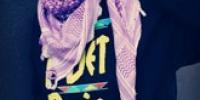
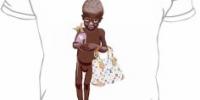
Danish 26-year-old art student Nadia Plesner designed this T-shirt depicting a Darfurian child holding a Louis Vuitton handbag as commentary on global disparity as it relates to war, developing nations, commercialism, and media.
In 2006, the fashion house sued Plesner for her appropriation of their trademark. The case was subsequently dismissed.
The starting point of this artistic project, carried out by MAPA within its Laboratory of Artists in Colombia, is the disappearance of one of the oldest "barrios" downtown Bogotá: El Cartucho.
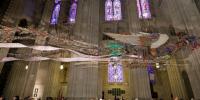
Xu Bing, the internationally acclaimed Chinese artist, has brought his “Phoenix” installation to the majestic nave of the Cathedral Church of St. John the Divine on Manhattan's Upper West Side. The two phoenixes, both Feng, the male, and Huang, the female, faced the decoratively carved bronze doors of the Cathedral, as if poised to take flight in the middle of the night.
The Center for the Study of Political Graphics and the Esperanza Community Housing Corporation have combined forces to bring 75 powerful and engaging poster works on broad issues of health care to audiences traditionally excluded from the art world in Los Angeles and elsewhere. Both organizations have been in the forefront of social change for three decades.
Invincible: Detroit’s Homegrown, Hip-Hop Activism: Powerful, passionate, and politically charged rhymes that speak for marginalized people.
by Shannan Stoll
Ilana Weaver started listening to hip hop when she was seven, after her family moved from Israel to Ann Arbor, Mich. She was trying to learn English, but soon became fascinated by how hip hop gives a voice to marginalized people.
A coalition of international artists has begun a year-long protest against the mistreatment and exploitation of migrant workers building Abu Dhabi's £17bn cultural hub, including the world's largest Guggenheim and a branch of the Louvre.
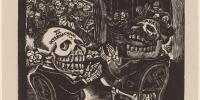
Born on June 30, 1902, in Mexico City, Leopoldo Méndez would become one of Mexico’s most significant and beloved graphic artists of the twentieth century. Méndez was one of eight children in a poor household. At a young age, Méndez used art as a means to bring joy to the Mexican community and attended the Academy of San Carlos located in Mexico City.