Omelia Contadina was born out of the concern of JR and director Alice Rohrwacher for the difficulties encountered by many small farmers and inhabitants of the Alfina plateau, in Italy.
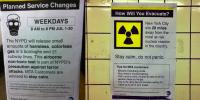
Come across a poster like the two above on your commute recently? Laid out in classic MTA style, but adorned with Orwellian imagery and an appropriately ambiguous hashtag, they warn of two possible hazards to your health: an upcoming “airborne non-toxic test” in which the NYPD will disperse “harmless, colorless gas” around the five boroughs, and an at-risk nuclear reactor that’s just 28 miles from NYC.
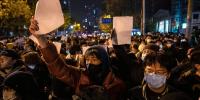
In Shanghai, a vigil grew into a street protest where many held blank sheets of white paper in a symbol of tacit defiance.
In Beijing, students at Tsinghua University raised signs showing a math equation devised by the Russian physicist Alexander Friedmann, whose surname in Chinese is a homonym for “free man.”
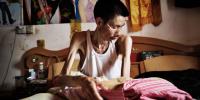
Photographer Sim Chi Yin spent more than three years documenting a Chinese gold miner who is suffering from the deadly lung disease silicosis. Despite the odds, his loving relationship with his wife has kept him alive much longer than anyone expected.
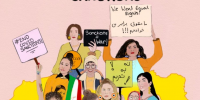
Activists have started an online campaign to pressure US Treasury Secretary Steve Mnuchin to lift sanctions on Iran to help it contain the spread of coronavirus.
Coronavirus: Are US sanctions hurting Iran's response to the pandemic?
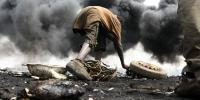
Japan has begun discharging nuclear wastewater into the ocean four times a year, each time lasting 17 consecutive days. Under their 30-year plan, it is estimated that approximately 1.34 million tons of wastewater from the Fukushima nuclear power plant will be released into what was once a clean and fertile sea. Countless marine species are forced to leave their natural habitats. About 7.6 billion people in the world face life threats.
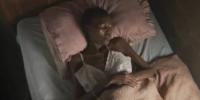
What is it like living with AIDS? This heart-wrenching video for South Africa’s Topsy Foundation brings us through 90 hard days in the life of someone living with it. Be sure to watch it all the way to the end. It’s worth it:
Did you catch that? If you didn’t, watch it again. Spoiler after the jump.
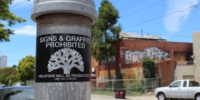
In this article, author Caroline Choi highlights different grafiti artists and their stories. These artists use their talent to tell their stories, ones that might not get to be told otherwise. She goes into the history of grafiti, and how it ties into how rich and white the art world has become.
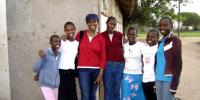
Mtendo MweMa Project's mission is to provide a safe house and educational opportunities to girls, especially those in danger of female circumcision, early marriage and pregnancy, whom otherwise have no alternative but to return to their villages during the holiday seasons in Kenya, East Africa.
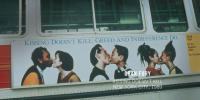
Gran Fury was an AIDS activist artist collective from New York City consisting of 11 members, all artists - but action, not art, was the aim of the collective. Gran Fury member Loring McAlpin described the collective's mass-market ambition to “...fight for attention as hard as Coca-Cola fights for attention.”
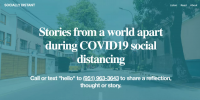
How it works:
1. Call or text “hello” to (951) 963-3643 to share your experience. Make sure you’re in a quiet place. Maximum recording time is 10 minutes.
2. Please start by telling us where you’re calling from. Perhaps you can even paint a picture of your surroundings for anyone who listens. Then share what you want to say.
3. Hang up when you’re finished.
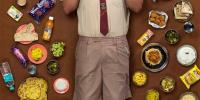
Gregg Segal -- a California-based artist who is known for using the medium of photography to explore culture with the "sensibility of a sociologist" -- travelled around the world asking kids to keep a journal of everything they ate in a week. Once the week was up, Segal made a portrait of the child with the food arranged around them:
With the support of the Amy Rossborough Foundation and several other Yale University affiliated departments, Tamara Leacock, while a senior at Yale University, designed a collection and produced a fashion show that explored through fashion, dance, and carnival an intimate portrait of HIV. The goal of the production was to display HIV in a setting that was intimate, personalized, and displayed with a human face.
AN UNPRECEDENTED COALITION of workers from some of America’s largest companies will strike on Friday. Workers from Amazon, Instacart, Whole Foods, Walmart, Target, and FedEx are slated to walk out on work, citing what they say is their employers’ record profits at the expense of workers’ health and safety during the coronavirus pandemic.
“ARTICULO 6: narratives of gender, strength and politics” is an activist design project that aims to raise awareness about the case of forced sterilizations implemented during the government of Alberto Fujimori in Peru.
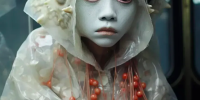
Through her work, South African art activist Athenkosi Kwinana aspires to deepen the understanding of Albinism in her native country, where she has faced discrimination in most aspects of her life from childhood days on. Working with both drawing and printmaking, Kwinana creates large self-portraits that aim to constructively reimagine the representation of Albinism in the country’s black communities and African contemporary art as whole.
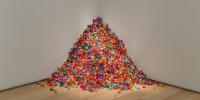
Felix Gonzalez-Torres produced meaningful and restrained sculptural forms out of common materials. “Untitled” (Portrait of Ross in L.A.) consists of an ideal weight of 175 pounds of shiny, commercially distributed candy. The work’s physical form and scale change with each display, affected by its placement in the gallery as well as audience interactions.
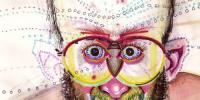
Artist Bryan Lewis Saunders took it upon himself to draw a self portrait every time he took a psychoactive substance. These ranged from zoloft to morphine to marijuana and it is an amazing subjective experience to witness. We can almost get a taste of what each drug must feel like on the inside, at least to Saunders, and an experiment like this raises some important questions like what are drugs and what place do they have in society?
On Sept 21, 2017, the professional committee of dementia and related diseases of China geriatric health association, together with many caring enterprises, jointly launched a public welfare activity entitled "no longer forget", hoping to call on the public to pay attention to Alzheimer's disease and promote early screening.
In 2011 a protest movement started in Israel. Citizens expressed their demand for a fair distribution of resources, claiming for the lack of housing and maintenance of the buildings and apartments, due to the privatized housing schemes. In these instances no one feels responsible for maintaining buildings and those in need are forced to live under poor and risky conditions.
This Girl Can is a campaign launched by England Sports to encourage women to be active no matter how they do it or how they look. In common culture, the trend is to be fit, active, and toned. Social media is filled with women having "the perfect body", sculpted to perfection in every way. Although being healthy and fit is attainable with hard work and dedication, most women struggle to attain their goals.
Late last month, Chinese citizens took up a creative means of protest over the nation’s strict “zero-COVID” policy. In a place with little tolerance for large public demonstrations, protesters have been holding up blank pieces of paper. Their ingenuity inspired a local artist Yolanda He Yang to stage a public art demonstration to subtly communicate their dissent.