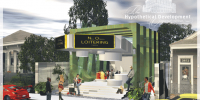
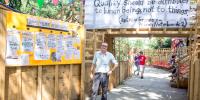
Members of this organization begin the narrative process by examining city neighborhoods and commercial districts for compelling structures that appear to have fallen into disuse —“hidden gems” of the built environment. In varying states of repair, these buildings suggest only stories about the past, not the future.
“Girl’s Day” in China was supposed to be a way for boys on college campuses to show the girls how much they care. This year it went too far.
Have you heard about “Girl’s Day?” It’s a big holiday for Chinese college students. Every year on March 7, students throughout the country celebrate the day as a campus version of International Women’s Day.
Artist Maya Lin first burst onto the scene in 1981, when her design was selected for the Vietnam Veterans Memorial while she was still a senior at Yale. Since then, Lin has turned her focus to environmental issues, with her most recent show at Pace Gallery investigating Manhattan’s landscape and environmental history.
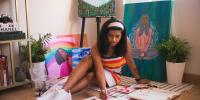
She seeks to utilize her feminist art to spread awareness on mental health issues. Sravy is a nomad in her own right, and throughout her experiences in Asia she has noticed that there are stimas surrounding women's autonomy and how they handle mental health struggles.
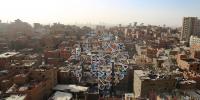
The streets of the Cairo suburb Manshiyat Naser, nicknamed "Garbage City," are lined with trash, and the people who live there — Coptic Christians who make their living sorting through it and recycling anything they can — are called zabaleen, or "garbage people."
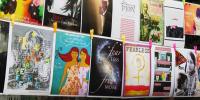
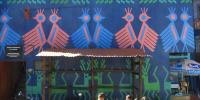
Founded in India, this collective creates participatory murals that transform public spaces into affirmations of love and resistance. Collaborating with marginalized communities, they co-create artworks that challenge narratives of fear and oppression
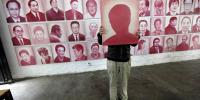
Chinese Artist Zhang Bingjian has embarked on an artistic project to promote transparency in China and Chinese government. His motivation? Discovering the extent of the corruption going on in his country. Zhang told the Toronto Star: “The chief prosecutor announced that 3,000 officials had been convicted for corruption in a single year. I remember being shocked, a little angry and then confused.”
The immediate prototypes of Zhang Xiaogang’s Big Family series are formal group photographic portraits from the 1950’s and 60’s, including those of Zhang’s own family, a source of the painter’s “endless reveries.” From these old black-and-white pictures Zhang Xiaogang derived the series’ paradigmatic features: a subdued, nearly monochromatic palette; a thickly layered but flat surface, without overt evidence of brushwork; a general compositional restric
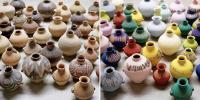
Exhibition visitors have expressed feelings of uneasiness or even pain and nostalgia when seeing Colored Vases by Ai Weiwei1. The 51 vases that make up the artwork are originally treasures from the Neolithic Age (5000–3000 BCE) and the artist has dunked them in common industrial paint.
Why did Ai Weiwei do it?
Heroin sold in the northeast, specifically in New York, Pennsylvania, and New Jersey tends to come in little glassine baggies. The art comes from the individual and unique "stamp" on said baggie sold to a user.
The minaret of the Jara Mosque in Gabes towers over its surroundings. Formed of golden brick, it jolts up from the flat, sand-colored cityscape around it, all the better to broadcast the call to prayer across the coastal city.
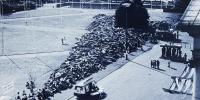
In 1982, for documenta 7, Beuys proposed a plan to plant 7000 oaks throughout the city of Kassel, each paired with a basalt stone. The 7000 stones were piled up on the lawn in front of the Museum Fridericianum with the idea that the pile would shrink every time a tree was planted. The project, seen locally as a gesture towards green urban renewal, took five years to complete and has spread to other cities around the world.
As the cold air bit our faces, and we hid deeper into our layer of sweaters, my family and I continued to wander around Manhattan, seeking a place which would provide warmth and food. And there it was, dimly lit: the Michelin-starred ramen restaurant, Tonchin. We ordered the highly-sought after ramen bowl, Tonkotsu, and awaited our meal. Out of the kitchen, the steam arose from a bowl of a warm, salty pork broth.
"MASK" is an art exhibition that explores the uses and meanings of masks, and ones feelings about them. Masks throughout history have taken many forms and have served many purposes. They have been used in construction, scientific research, technical manufacturing, medicine, the theater, and warfare.
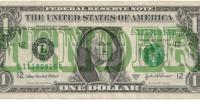
Title 18, Part 1, Chapter 17 of the United States Criminal Code:
"Whoever mutilates, cuts, defaces, disfigures, or perforates, or
unites or cements together, or does any other thing to any bank bill,
draft, note, or other evidence of debt issued by any national banking
association, or Federal Reserve bank, or the Federal Reserve System,
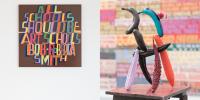
Bob and Roberta Smith has been at the forefront of activist art for 2 decades; so who better to ask about how art is responding to these politically bleak times?
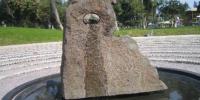
The Eye that Cries (El Ojo que Llora, in Spanish) is a memorial that was born as a private initiative designed to honor the thousands of victims as a result of terrorism in Peru, to strengthen the collective memory of all Peruvians and to promote peace and reconciliation in the country.
The Origins of Totalitarianism:Donald Trump reads Hannah Arendt
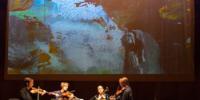
AI video and sound. 2024, 24:30mins
YouTube link: https://youtu.be/RzWi51prZlA?si=hTUP4F-_nOSijbba
This month’s blast of arctic air may have roused climate-change skeptics. But the composer Laura Kaminsky and the painter Rebecca Allan were unfazed. Holed up in their apartment in Riverdale in the Bronx on one of the coldest days in decades, these longtime artist-activists were doing what came naturally: fighting the planet’s warming.
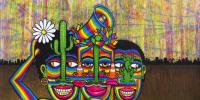
The "I'm Not A Joke" campaign from Daniel Arzola is a series of images inscribed with compelling truths about human diversity that encourages individuals to live as their authentic selves. He wants the images to eventually appear on buses and subways, exposing audiences to the realities of queer experiences in an attempt to break down prejudice in a form of activism that he calls "Artivism."
"Brazilian artist Mundano is used to spending his time on the road and in the streets, making art as an act of protest. Known for leaving his colorful works of graffiti on walls around the world, Mundano is especially dedicated to issues of environmental and social justice and spotlighting the overlooked work of Brazil’s trash collectors through his Pimp My Carroça campaign.
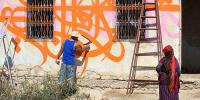
Nestled on the banks of Lake Atitlán in Guatemala, Santa Catarina Palopó is a small town brimming with vibrant colors and stunning natural views. Despite its natural beauty and cultural heritage, the community struggled with economic development and poverty for years until they had the opportunity to harness the power of art and transform the town.
As the audience enter, Olivier de Sagazan is pacing the stage, deep in thought. A slight, barefooted figure dressed in suit and tie, he circles in and out the shadows, head bowed, sometimes muttering to himself. As the audience settle and hush, his footsteps gradually become more audible (the floor is mic-ed) and begin to pound like a calling drum.