change
region
medium
issue
despondent apostate
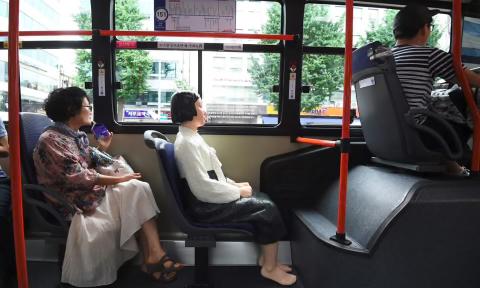
Buses serving several routes in central Seoul have acquired a new and highly controversial passenger: a barefoot “comfort woman”, wearing a traditional hanbok dress with her hands resting on her knees. Appearing on the front seat of buses in the South Korean capital earlier this week, the statues were installed by the Dong-A Transit company as a potent reminder of an unresolved wartime atrocity whose roots lie in Japan’s 1910-1945 occupation of the Korean peninsula.
The term “comfort women” is a euphemism for as many as 200,000 girls and young women, mostly from the Korean peninsula, who were coerced into working in Japanese frontline brothels before and during the second world war.
“It is designed to remind South Koreans of suffering the women went through,” said Rim Jin-wook, the head of Dong-A Transit, the bus company behind the statue passengers.
Seoul’s mayor has supported the scheme, which will run to the end of September, by riding on one of the buses and saying it was an “opportunity to pay tribute to the victims”.
However, the use of public spaces to highlight such a controversial issue has sparked criticism in Japan, which claims that the statues contravene the spirit of a 2015 agreement that was supposed to settle the comfort women controversy “finally and irreversibly”.
The agreement included an apology for the women’s ordeal, but Japan refused to accept legal responsibility, maintaining its official position that all compensation claims were settled by a bilateral peace treaty in 1965. In addition, Tokyo committed to setting up a $9mn fund to care for the dwindling number of surviving sex slaves.