The New Culture Movement was initiated by Chen Duxiu, Li Dazhao, Lu Xun, Hu Shi, Cai Yuanpei, Qian Xuan and other writers who had received Western education (called the new-style education at the time). It is an ideological and cultural innovation and literary revolutionary movement.
I think this is a very interesting project that is intended to pay hommage by showcasing portraits of survivors of the Cuban revolution. They are displayed in the streets of Havana and, as the artists explains, this is a place that lacks commercial advertising/ billboards in the streets. So they are displaying the courage and strength of those, people who should be admired, earned their place in a sense.
Trash Tycoon is an upcycling social network game developed by Guerillapps. The game applies traditional social gameplay features to highlight real-world issues such as waste, water, and “green” activities. Gameplay includes cleaning trash, recycling, and constructing products and decorations out of recycled material.
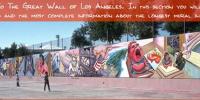
The Great Wall of Los Angeles represents a minority perspective/p.o.v. of the history of the city. Judy Baca first began the mural in 1974 through SPARC at the rise of the Chicano movement. The project was a part of the community and completed by Baca, other local artists and local youth volunteers. This mural is effective in depicting the racial tension of the past, but maybe it would be enhanced by a prospective future.
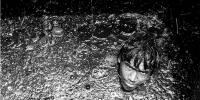
What would it be like if we switched positions with whales in captivity?
Nothing like this – but at least prankster Rémi Gaillard had some fun trying to recreate the scenario.
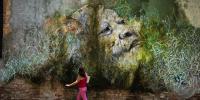
Kanami Kusakima, also known as the woman who dances in Washington Square Park with the long black hair and the paint, was happy to allow the Mayor's Office of NYC use her image as a promotional tool for a "post-coivd" New York. Yet, she has had multiple encounters with police who want to shut her performance down.
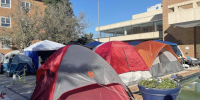
Dozens of Howard University students are sleeping outdoors in a tent encampment on campus grounds to protest what they describe as "poor" and "unlivable" conditions in the college dormitories.
Students told ABC News that portions of the university living quarters have mold and insect and rodent infestations, as well as leaky ceilings and flooding -- all of which they say put their health at risk.
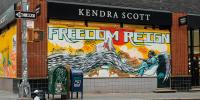
Three months ago, when New York government officials ordered nonessential businesses closed to slow the spread of coronavirus, high-end retailers sheathed their stores in plywood barriers, as though readying for civil unrest.
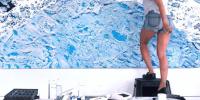
Her name is Zaria Forman, a leading artist in contemporary art with a cause. She is not only an exceptional human being; she is also an incredible American drawer who uses art to convey the emergency of climate change.
Zaria’s ultra-realistic drawings explore moments of raw beauty, peace in the landscape, power in the ice and transition that allow the viewers to emotionally connect with places they may never see in real life.
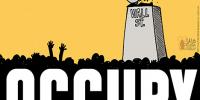
After collecting street art and memorabilia from "Occupy Wall Street" since the fall of 2011, the Smithsonian National Museum of American History has lent its collection of Occupy Wall Street posters to Wesleyan's Davison Art Center. The posters will make up an exhibition entitled “Artists Take Action: Protest Posters Today,” which is on display in the University's gallery from April 5 to May 26.
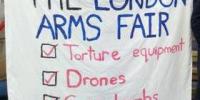
A group of women arrested at the DSEI arms fair in 2013 have begun private prosecution proceedings against arms companies who exhibited illegal weapons at the fair.
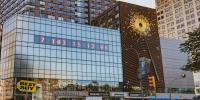
For more than 20 years, Metronome, which includes a 62-foot-wide 15-digit electronic clock that faces Union Square in Manhattan, has been one of the city’s most prominent and baffling public art projects.
Environmental activist Ella Daish has created a giant tampon applicator as part of a protest against single-use plastic. The piece is made out of period plastic found polluting beaches, waterways, and local ecosystems in the UK. Daish sourced 1,200 applicators from 15 different locations across the United Kingdom. Of the plastic applicators collected for the project, 87.5 percent came from one brand, Tampax.
Introduction: The Ambulatory Free States of Obsidia
The Ambulatory Free States of Obsidia is a tiny, Matriarchal, Micro-nation located at the confluence of feminism and geography.
Grand Marshal Yagjian's Great Vision for The Ambulatory Free States of Obsidia came in 2015 when its land claim was 'liberated' from a former lover’s house for a greater purpose.
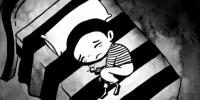
To call attention to bullying, the Singapore Coalition Against Bullying for Children and Youth has released a video that gets shorter each time it is viewed.
Hosted on a site called Share It To The End, the short animated video depicts a boy getting bullied at school and telling us he always feels alone and doesn’t feel safe anywhere.
On the opening day of the Spring/Summer 2011's season of Mercedes Benz's New York Fashion Week, former fashion editor, speaker, and fashion activist Michaela Angela Davis led a protest of approximately 20 black women, dressed in black suits, carrying signs with the names of every fashion editor in the 40 year history of African American fashion and lifestyle magazine, Essence Magazine.