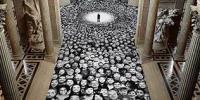
After winning the TED Prize on March 2, 2011, the French-artist JR launched the Inside Out Project, in his first TED Talk. Using his own artistic practice as inspiration, this participatory platform helps individuals and communities to make a statement by displaying large-scale black and white portraits in public spaces. Through their “Actions,” communities around the world have sparked collaborations and conversations.
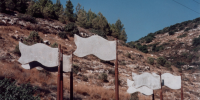
Utilizing excess construction cement that was being dumped into a creek near Beit Shemesh, Israel, Shai Zakai harnessed the unclaimed cement to create an art installation that brought awareness to the ongoing pollution. The project was entitled, 'Concrete Creek' aimed to bring the community closer to their environment. Zakai installed cement flags and set them among the river.
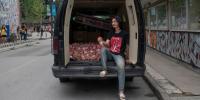
The 9,000 bottles of water on display at an art gallery in Beijing last month appeared identical to those of Nongfu Spring, one of China’s most popular spring water brands, with one jarring difference. Inside each bottle was brown, murky groundwater collected from a Chinese village.
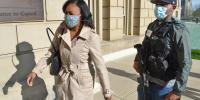
A black Michigan lawmaker was escorted to the state Capitol by armed guards Wednesday, after protestors carrying long guns descended on the building last week to rally against the state’s extension of stay-at-home orders meant to stop the spread of the coronavirus.
New York Times
January 28, 2012
By SIMON ROMERO
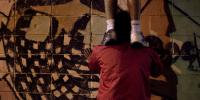
SÃO PAULO, Brazil — This mega-city’s authorities have waged war for years against what they call “visual pollution,” banning billboard advertising, demolishing abandoned skyscrapers and planning to raze concrete eyesores like the elevated highway known as the Big Worm.
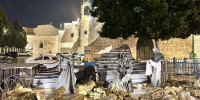
This year, Bethlehem is sombre and quiet. There is no Christmas tree and there are no holiday lights or tourists to see them.
Instead, the city of Jesus’s birth – which is in the middle of a war zone – is marking Christmas with a powerful and poignant message: solidarity with Palestine.
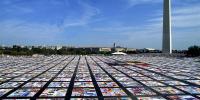
Cleve Jones's powerful vision for memorializing those lost to AIDS was realized in October 1987 in Washington D.C. It showcased the artistic contributions of people who'd lost loved ones to the virus from a number of US metropolitan centers. The quilt has continued to grow for the nearly 40 years since. By 1992, the AIDS Memorial Quilt included panels from every state and 28 countries.