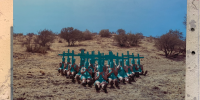
Cheril Linett is a female artist from Chile, with a background in performance art and stage performance, who primarily focuses her artwork on feminist issues in Chile, especially ones involving violence, murder, hate crime and different kinds of oppression and assault, but also creates artwork reflecting issues in other parts of Latin America.
The American rapper’s performance of 'Stand Up for Something' with singer Andra Day has gone down as one of the highlights of this year’s Academy Awards.
Common used his Oscars performance to condemn Donald Trump’s “hate” and the National Rifle Association.
The American rapper’s performance of “Stand Up for Something” with singer Andra Day has been held up by many as one of the highlights of this year’s Academy Awards.
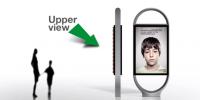
Spanish organization the ANAR Foundation (Aid to Children and Adolescents at Risk) releases a campaign that takes advantage of the process of lenticular printing to send an offer of help to abused children without alerting their abusers, even if they’re walking together.
Lenticular printing is a process that allows for different photos to be seen depending on the angle the image is viewed from.
Destin from the Youtube channel Smarter Every Day has started the "Hunstville Fighting Covid" website in order to mobilize and teach those who have 3D printers how to print Personal Protective Equipment to aid medical professionals fighting the COVID-19 epidemic.
Creative activism and the remaking of Palestine
While policy wonks and media pundits wallow in endless debates about Jewish settlements and the threat of terror, Palestinian groups are creatively exploring alternative ways to realise their national aspirations.
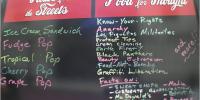
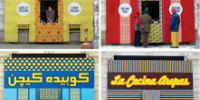
Conflict Kitchen is a restaurant that only serves cuisine from countries with which the United States is in conflict. Each Conflict Kitchen iteration is augmented by events, performances, publications, and discussions that seek to expand the engagement the public has with the culture, politics, and issues at stake within the focus region. The restaurant rotates identities in relation to current geopolitical events.
On the occasion of the European Cultural Capital Graz 2003, WochenKlausur developed a year-long program of activities for older people with severe mental disabilities. The object was to offer them opportunities for a change of their daily routine inside the home.
By COREY KILGANNON
There was something odd about the ice cream truck that pulled up to the curb on Park Avenue near 67th Street on Friday, with its proletarian color scheme and its overdressed driver with the subversive grin.
What is Art for Social Change?
There are many ways of defining art for social change. In each of these cases, art for social change strives toward effective engagement with social issues that integrate and celebrate imaginative thinking, helping people to find new ways to see and be engaged in the world. In the context of the ASC Project, three types of art for social change are considered:
The Bed-Stuy Aquarium (also known as the Hancock Street Bed-Stuy Aquarium) is a makeshift goldfish pond located on a sidewalk in the Bedford-Stuyvesant, Brooklyn neighborhood of New York City. The pond, originally formed by a puddle from a leaky fire hydrant, garnered attention from locals and the press beginning at the time of its creation in August 2024.
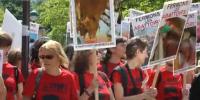
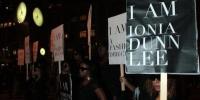
On the opening day of the Spring/Summer 2011's season of Mercedes Benz's New York Fashion Week, former fashion editor, speaker, and fashion activist Michaela Angela Davis led a protest of approximately 20 black women, dressed in black suits, carrying signs with the names of every fashion editor in the 40 year history of African American fashion and lifestyle magazine, Essence Magazine.
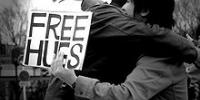
The Free Hugs Campaign is a social movement involving individuals who offer hugs to strangers in public places.The hugs are meant to be random acts of kindness - selfless acts performed just to make others feel better. International Free Hugs Month is celebrated on the first Saturday of July and continues until August first.
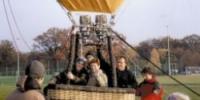
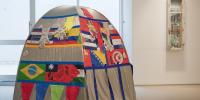
With a grand total of 0 permanent residents and an average winter temperature of --56.2°F, Antarctica is a bit more than your average “no man’s land.” This didn’t deter artist duo Lucy + Jorge Orta, however, who took an expedition to the territory in 2007 on commission from The End of the World Biennale. Nine years later, the duo’s cumulative work created during the program is finally on display in NYC at Jane Lombard Gallery.
A rescue drone for refugees in danger whilst traveling across the Mediterranean Sea.
Last year alone, 3,500 refugees perished attempting to cross the Mediterranean Sea. The Avy Search and Rescue Drone is specifically designed to help refugee boats. The drone is capable of flying long distances, detecting vessels, and can drop life jackets, life buoys, food supplies, medication and communication devices.
Drones for Good Competition
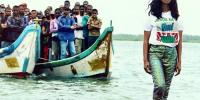
The video for “Borders,” a song off MIA's album Matahdatah, features images recalling all sorts of migrations from the developing world—there are people crossing deserts, fences, and bodies of water. Though much of M.I.A.’s work has been about women and children, this video is filled with brown men: the ultimate bogeyman for many in the West, stereotyped as terrorists, criminals, and job-takers.
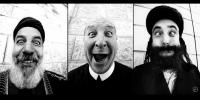
In 2007, anonymous French photographer JR embarked on the Face2Face project - the largest unauthorized photo exhibition ever conceived. JR and his collaborator Marco engaged Israelis and Palestinians employed in the same profession to be photographed making funny faces. They then enlarged the photos to grand proportions and wheat pasted juxtaposed portraits onto both sides of the security Separation Wall and in surrounding cities.
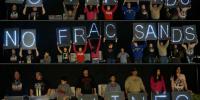
The Overpass Light Brigade (Milwaukee, WI), has been working with Idle No More (WI) in order to give visibility to the cultural and environmental costs of opening up Northern Wisconsin to iron mining. The proposal will soon be voted on and likely passed by the conservative Wisconsin legislature which has been purchased by the Gogebic Mining Company.
The pink "pussy hats" in The Women's March were created by a group of activists and knitters, including Krista Suh and Jayna Zweiman. The hats were designed as a form of protest and a symbol of resistance to the new administration and its policies.