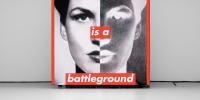
Untitled (Your Body is a Battleground) is an iconic 1989 silkscreen portrait made by artist, feminist and activist Barbara Kruger .
Though the poster was meant for the pro-choice march on April 9th, 1989, in DC, the portrait is now used mainly to voice the artist’s own opinion about gender inequality. The piece is much more relevant in today’s society, where it controls the way we view and treat women’s bodies.
GAME ON! Its gonna be a good Spring!" Connie Bacon.
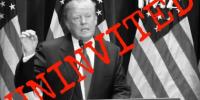
Activists and the politically aware will march with the message that Donald Trump and his beliefs are "UNWANTED".
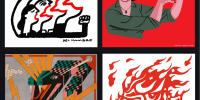
Platform ‘Iranian Women of Graphic Design’ share open-access protest posters to amplify #WomenLifeFreedom movement—triggered by the death of Mahsa Amini—in Iran and beyond.
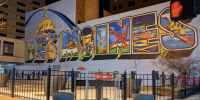
Caucus-goers in Des Moines will arrive to a disturbing sight on Monday, with dozens of chain-link cages appearing to hold migrant children cropping up across the city overnight.
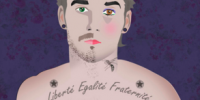
The "I'm Not A Joke" campaign from Daniel Arzola is a series of images inscribed with compelling truths about human diversity that encourages individuals to live as their authentic selves. He wants the images to eventually appear on buses and subways, exposing audiences to the realities of queer experiences in an attempt to break down prejudice in a form of activism that he calls "Artivism."
During the economic crisis of 2008, bankers in Spain took advantage of the economically disadvantaged, and the artwork La Fiera en Sevilla, or the Wild Animal in Sevilla in English, brings attention to this money-centric act from the bankers. La Fiera refers to the bankers at the time that used predatory methods in their actions to forcibly evict poor people from their houses.
Up Against the Wall: Art, Activism, and the AIDS Poster is the traveling version of the first major exhibition devoted to the University of Rochester's collection of HIV/AIDS-related posters. It illustrates to a broad audience that "AIDS affects everyone" and through the use of language and imagery, shows how messaging and information around HIV is shared to different groups, audiences, and people throughout the world.
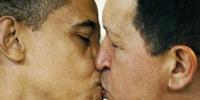
It seems a lot of powerful people hate Benetton's new 'Unhate' Campaign ads. The recently unveiled images show world leaders like the Pope and U.S. President Barack Obama kissing their perceived enemies.
On Thursday, the White House issued a statement condemning Benetton for its provocative campaign.
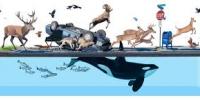
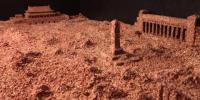
Josh Keyes is a contemporary artist who takes a "satirical look at the impact urban sprawl has on the environment and surmises, with the aid of scientific slices and core samples, what could happen if we continue to infiltrate and encroach on our rural surroundings."
“The Feminist Zine Fest showcases the work of artists and zine makers of all genders who identify on the feminist spectrum, and whose politics are reflected in their work. For the second consecutive year, Barnard proudly hosts the zine fest, welcoming approximately 40 zine-makers eager to share their work.
"Two weekends ago, a loose network of these artists and activists, under the name Subvertisers International, launched their first global effort to reclaim our shared public environment from its monopolization by commercial media. The demand was not for better or more truthful advertising, but to imagine what a city would look like when the stories we told ourselves in public space reflected a democratic voice.
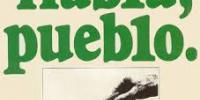
On Wednesday, December 15th 1976, a referendum was held in Spain. The question was to pass or not to pass the Ley para la Reforma Política (Political Reform Act). This Act was the legal instrument that allowed Spain to transition between Francisco Franco’s dictatorship to a democratic constitutional regime, a parliamentary monarchy.
Born in Nigeria in 1975, Péju Alatise, is a multimedia artist focusing on the experience of women and girls, particularly in her native country but with resonance across the world.
Asian Americans standing up for themselves, the Black Lives Matter movement, and their home: New York City
In 2020, as COVID-19 flared through New York City and NYC hospitals saw a spike of nearly 200,000 patients, Asian and Pacific Islanders (APIs) faced an added threat: blame, racism, and xenophobia.
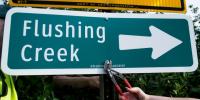
Flushing Creek is so hidden by industrial sites and highways, it’s almost invisible to those passing through the Flushing neighborhood of Queens. “I lived in Flushing my whole life and didn’t know that I lived near waterways until I was 20 years old,” Cody Ann Herrmann told Hyperallergic.
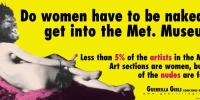
The Guerilla Girls are a group of feminist activist artists, who use facts, humor, and outrageous visuals to expose gender and ethnic bias and corruption in politics, art, film, and pop culture in their artworks. In 1989, they designed this billboard for the Public Art Fund (PAF) in New York, aimed to criticize the museum institutions for under-representing female artists and objectifying women.
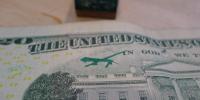
In Drones We Trust, 2014 - Joseph DeLappe
Crowd Sourced, Participatory Rubber Stamp Currency Intervention
FOR FULL PROJECT DOCUMENTATION VISIT: http://indroneswetrust.tumblr.com/
One of the oldest forms of human expression is art, so it’s no surprise that art is constantly used to critique another of humanity’s oldest practices, violence and war. In the world of art activism, the power of creativity and innovation has been used to create commentary about war since the beginning of time. Art that speaks out against the atrocities of violent conflict embodies empathy, care, and a plethora of other human emotions.
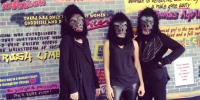
It’s women’s history month, and your favorite radical feminist avengers want you to go ape. The Guerrilla Girls have been making noise about gender and racial inequality in the art world since 1985. Fighting discrimination with a sense of humor and their signature faux fur, these masked feminists continue to challenge major museums to spotlight more women and artists of color.
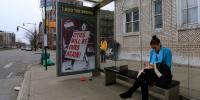
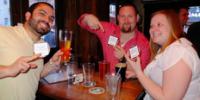
The group of NYU graduate students went to bars in Manhattan to shout back against sexual harassment and bring awareness to the Everyday Sexism project. Armed with coasters that said "#shoutingback" on them, as well as a slogan. Three different coasters with three different slogans were put on bars and tables in local watering holes. The slogans included "She ordered a drink.
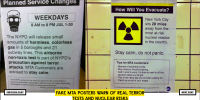
What would a chemical attack on NYC look like? How would poisonous gases spread, through the lines of the subway and above ground? These are some of the questions the NYPD and a team of researchers hope to answer this July, when they’ll disperse colorless, odorless, and apparently harmless gases called perflourocarbons around the city and track their movement.