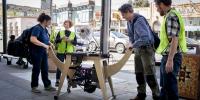
Power Call is a nomadic, interactive energy commons in San Francisco to the Bay Area. Using low-tech systems, Power Call harnesses, stores and dispenses energy for recharging a variety of cell phones. Anyone can contribute to the energy commons by spending a few minutes pumping the machine, creating a charge for yourself or a future person in need.
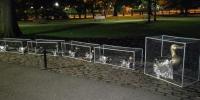
Alzayer put cages around Boston's "Make Way for Ducklngs" statues, separating the baby duckling statues from the mother. The original statues were created in 1987 by Nancy Schon and the mallard family is based on the children's book by Robert McCloskey.
It can be important to reflect on the artistic recounts of activists experiences under state imprisonment. In a revealing interview with Artspace, Chinese artist and dissident Ai Weiwei reflects on his 81-day secret detention in 2011 and the psychological strategies used to dismantle identity and autonomy.
Exposing Disordered Eating is a photographic exhibition intended to show us the images we rarely see. In American media, representations of disordered eating are conditioned and controlled; all we are shown is the crumpled, emaciated anorexic figure with sunken eyes and cheekbones. This image is both unrelatable and othered, and it fails to capture the reality of modern eating disorders: they are omnipresent, multifaceted, and sneaky.
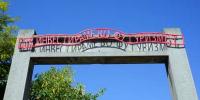
A site specific intervention аs part of the group exhibition Sculptural, organized and partly financed by the Museum of Contemporary Art, Skopje. The text INVEST IN FUTURISM is a quotation of a gaffe uttered by the Macedonian PM on public TV stating his plans to incorporate contemporary art in their right wing populist programme and the infamous project Skopje 2014.
A dilapidated wooden fishing boat laden down with animals who are just skin and bone, a sort of dystopian Noah’s ark trying to escape the end of the earth and an empty city devoid of human life that has been overtaken by nature.
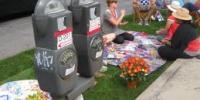
In 2005, Rebar, a design studio in San Francisco, transformed a single metered parking space into a temporary public park. The area where this two-hour park took place was one that lacked public open space. This was the first Park(ing) Day project.
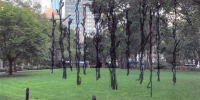
From an Art Net News Article: ""The installation is called Ghost Forest, a term used to describe vast acreages of woodland that have died out–often due to rising sea tides, which overwhelm forests near estuaries with saltwater, choking out their ability to get nutrients from the earth. In 2012, Sandy caused seawater levels to surge, leaving swaths of ghost forests in its wake.
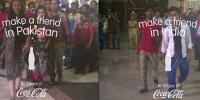
A new, three-minute ad by Coca-Cola, "Small World Machines," starts with a relatively straightforward premise: India and Pakistan do not get along so well. It ends with the promise of peace: "Togetherness, humanity, this is what we all want, more and more exchange," a woman, either Indian or Pakistani, narrates as the music swells. Sounds great. How do we get there? By buying Coke, of course.
French street artist Roti installed a 4-ton marble sculpture in Independence Square in Kiev Ukraine, as an expression of solidarity with government resistors and protestors. The sculpture depicts a woman's body emerging from water.
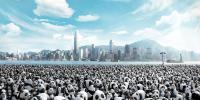
Grangeon's long-running traveling exhibit, Pandas on Tour, features 1600 papier-mâché pandas. That's approximately one for as many as there are left in the world (recent estimates actually place the number slightly below that, at 1596).
Neighbors in modern cities have less and less communication, and they all go about their business as soon as they close the door. In Switzerland, a woman dies every week as a result of domestic violence, so in an effort to get everyone to act, the charity has put up an interactive billboard in a shopping mall that shows a man in a family doing violence to a woman.
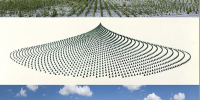
Denes's project "Tree Mountain-A Living Time Capsule" in Finland is a monumental earthwork involving the planting of 11,000 trees by 11,000 people on a reclaimed gravel pit. It's designed to grow over the next 400 years, serving as a testament to environmental stewardship and the potential for regeneration.
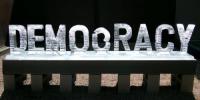
The State of Things was first performed in the spring of 2006 on the 3rd anniversary of the Iraq war. On September 1st, 2008 in collaboration with Northern Lights as part of the UnConvention, Ligorano/Reese recreated The State of Thing’s Democracy ice sculpture, weighing over 1,000 pounds and measuring 5 feet high and 20 feet wide, in front of the State Capitol Building in St. Paul, Minnesota.
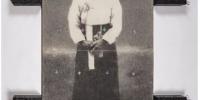
In the series The History of Korean Women, Cho's suggests that the cost of that gain cannot be paid for by a cultural amnesia masking the pain and suffering of previous generations. Here the semantic emphasis is on the official - the status of women and their contribution to the survival and growth of Korea. Their efforts have gone uncelebrated due to their relegated status within a five hundred year old social system.
Topic: Displaced people
Concept: Explore and communicate some of the issues around displacement in a global, European and Irish context.
Date of action: 11th March 2.30 to 4.20 pm
Place: Emmett Place, Cork City, Ireland
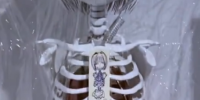
A unique piece captured significant attention at the Central Academy of Fine Arts undergraduate graduation exhibition in June. The work featured an "anime-style" girl's skull linked to a human skeleton and internal organs, all encased within a thin film. As visitors entered the exhibit area, her breathing and gaze would alter accordingly.
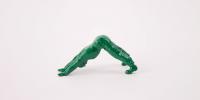
If something is a total opposite to war, that is the practice of yoga. Concentrating or relaxing your muscles and mind in order to release tension, is something a soldier would never have the luxury to do under the dangerous circumstances of war.
Inventor Dan Abramson thought of a amazingly creative and beautiful way to connect the two, by creating “Yoga Joes”, a series of simple green plastic army men that have some killer… yoga moves.
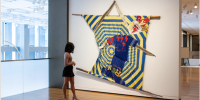
Natalie Ball’s work challenges dominant stories of Native American identities, taking to task the historical and visual legacies that misrepresent what it means to be “Indian.” She dives deeply into Indigenous histories and forms of knowledge, the use of language, and a wide range of materials—including animal hides, clothing, and synthetic hair—to create a new narrative around Indigenous experiences and identities.
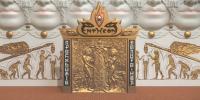
A striking new cultural space is taking shape in New York’s Hudson Valley. Alex Grey and Allyson Grey, co-founders of CoSM, Chapel of Sacred Mirrors, have launched a Kickstarter campaign to build Entheon, sanctuary of visionary art, to ask for support to complete the build.
Colombian ad agency Lowe SSP3 is starting a Christmas-themed campaign to entice guerrilla fighters out of the jungle to turn themselves in. The agency may have created an advertising-to-guerrillas award category after winning a gold Cannes Lion in the outdoor category and half a dozen Grand Prix awards at other shows this year for its first holiday effort, last December.
In “Speech/Acts,” a group exhibition organized by Meg Onli at the Institute of Contemporary Art in Philadelphia, Kameelah Janan Rasheed and Tiona Nekkia McClodden stood out as artists who take up voices, histories, and experiences that can help audiences move forward and endure in the future.
When Tracey Emin aired her dirty laundry in the 1999 Turner Prize exhibition at Tate Britain, she set a new standard for confessional art. She conceived of the installation, titled My Bed (1998), after a long, bedridden bender following a bad break-up. When Emin finally left her sheets, she examined the mess she’d created.
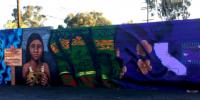
(Honoring our Origins, Ourselves and our Dreams) is an all-womyn and womyn-identified crew from the northeast San Fernando Valley dedicated to creating awareness through public art.
If the way to one’s heart really is through the stomach, Rirkrit Tiravanija must have more than his share of admirers. Now at GAVIN BROWN, the Buenos Aires-born artist with a history of dishing out tasty edibles in his exhibitions invites viewers to enjoy a bowl of soup in his interactive show, Fear Eats the Soul.