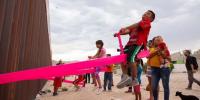
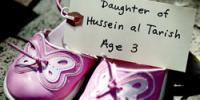
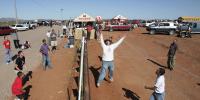
Pink seesaws were installed along the United States/Mexico border. The project, created by two professors sought to unite both sides of the fence by creating an activity that required a participant on either side. The seesaws were installed so there is one seat in El Paso, Texas and one in Ciudad Juárez, Mexico with the border fence acting as the fulcrum.
From The NationBy Laura FlandersA new campaign calling itself Caring Across Generations has in mind
nothing less than a 180-degree turn in the way that Americans think
about themselves, one another, the economy and workers. This group aims
to create 2 million quality jobs in the process and put us all on track
for a happy, healthy old age too. But first we need to talk, out loud,
about care.
In September 1971, after years of mistreatment and months of simmering tensions, more than 1,200 of the 2,200 inmates at the Attica Correctional Facility in upstate New York took control of the prison in protest of its substandard conditions and openly racist corrections officers.
The Beehive Design Collective is a wildly motivated, all-volunteer, activist arts collective dedicated to “cross-pollinating the grassroots” by creating collaborative, anti-copyright images for use as educational and organizing tools. We work as word-to-image translators of complex global stories, shared with us through conversations with affected communities.
The frontier between the United States and Mexico is the busiest land border in the world. It is also among one of the world’s most heavily regulated and policed border zones—the arid climate of which is responsible for many migrant deaths each year.
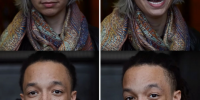
Shea Glover, age 18, began a senior project that became an activist/social campaign. Shea approached people throughout her high school and asked them if they would pose for her senior project. To each person she would say, I'm taking pictures of things I find beautiful". Recording the entire encounter revealed the diverse reactions of each student and teacher. Some erupted with laughter, others a huge grin, while some embarrassment.
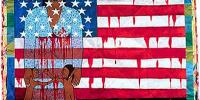
Faith Ringgold is a successful painter, sculptor, mixed-media artist, author, feminist, and political activist. She is particularly known for her narrative quilts, as she explores identity, race, family ties, as well as cultural and political topics through her many different forms of storytelling.
“I have always wanted to tell my story or, more to the point, my side of the story” - Faith Ringgold
In 2006, art historian Claire Bishop lit a fire under the collective seat of the art world with her Artforum piece “The Social Turn: Collaboration and its Discontents.” It set off — as much as any essay in the hermetic and staid world of contemporary art theory can — an uproar. The article inspired Grant Kester, an art historian also specializing in relational art practices, to respond:
Riot grrrl is a feminist punk rock movement started in the early 90's, particularly in Washington DC, Olympia, Washington, and Portland, Oregon. Bands that follow the movement include Bikini Kill, Bratmobile, Jack Off Jill, Bratmobile, Adickdid, The Butchies, Heavens to Betsy, Huggy Bear, Bangs, and Calamity Jane, amongst others.
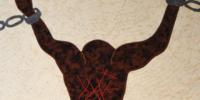
The image is stark. And shocking.
A black man, his ankles shackled, his head hanging away from the viewer, stands in relief on a field of white. Chains stretching to the image's borders on the left and right pull his arms taut. Fourteen crimson marks crosshatch his back. Within the dark fabric that frames "86 Lashes to Go," a small rectangle is labeled simply "salt."
"The Red Power Movement of the 1960s and 70s was a time of profound social change and progress for American Indians in the United States and Canada. In her outspokenness about the injustices facing Indigenous people, Buffy Sainte-Marie also sang for peace, the environment, women and children—believing that art can have impact and make a difference.
The project provides somatic rituals to solve the problems of creative makers, offering specific somatic instructions for how to deal with breaks in (or lack of) creativity. Rituals available as a live, interactive performance and as limited-edition chapbooks, and broaden an understanding of creative “results,” “ends and means,” and the idea of a muse/magic as relates to creative labour.
I Will What I Want is a campaign launched by Under Armour which speaks to women who do not wait for permission or affirmation in order to go after what they want. The campaign highlights various models and athletes who encourage women to tune out society's standards and pursue their dreams. The campaign began by highlighting Misty Copeland, a soloist at the American Ballet Theater.
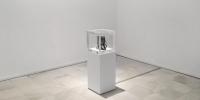
Pursuing the possibility of emancipatory use of technology, Paglen, together with Jacob Appelbaum, developed Autonomy Cube (2014). Autonomy Cube is a sculpture and internet router designed to be housed in civic spaces. The sculpture is meant to be both “seen” and “used.” Formally it references Hans Haacke's 'Condensation Cube' (1963-65).
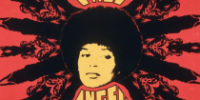
In Oakland, artists created murals and installations to honor activist Angela Davis, celebrating her legacy in fighting for racial and gender justice. These public artworks inspire new generations to continue the struggle for social change.
Essential workers at major companies like Amazon, Instacart, and Target across the United States on Friday protested for better safety protections, working conditions, and pay during the coronavirus pandemic.
Cassils has used clay, fire, photography, urine and the musculature of their own body as mediums to provoke, challenge and excite whoever experiences their singular creations.
The AIDS pandemic began in the early 1980s and brought with it a surge of emotions from the public: they were afraid, angry, fearful and defiant. The arrival of AIDS also brought with it a condemnation of the LGBT community. These emotions, along with the view on the LGBT community, paved the way for a new generation of artists.
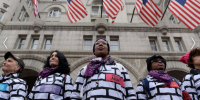
Brick x Brick is a public art performance that builds human “walls” against misogyny. It is organized by the Public Displays of Affection, a collective of artists, designers, educators and organizers that engages in nonviolent direct art action. During the wall performances, participants wear brick-patterned jumpsuits adorned with colorful brick patches bearing statements of misogynistic violence made by US President Donald Trump.
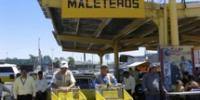
Malteros are the porters who transport luggage and goods between the border of the US and Mexico. Working with a group of maleteros in 2005, artist Mark Bradford collaborated on a system of maps and signs that placed the marginalized work of the unofficial maleteros alongside that of the sanctioned labor of policemen and taxi drivers.
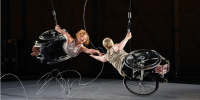
"Rainer’s early choreography celebrated, among other things, ordinary movements: the expressive capacities of kneeling, of shaking your head, of rolling on the floor. And when she went through periods of sickness, those movements became an even more important part of her repertoire. In her 1966 Hand Movie, an 8mm film she shot on her sickbed, we see a dance she choreographed for just her hand, while her body rests.
When people think of feminist protests of the 1960s, they most often think of bra burning at the Miss America pageant. This is super lame because bras weren’t even burned at that protest, just discarded into a trash can. It’s hard to imagine why this trope has persisted over the decades. Bras are an investment, so I have a hard time believing that any of my friends would willingly burn expensive (and sometimes really fun) garments.