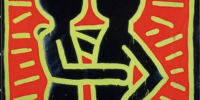
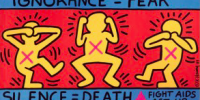
Keith Haring was an American artist and activist in 1980s New York, whose artwork raised awareness on social issues at the time. One the main awareness campaigns Haring participated on was AIDS awareness and activism.
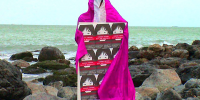
Created by and for women, Broccoli is an independent print magazine based in Portland, Oregon. Although intended for cannabis users, Broccoli is an art and lifestyle magazine that bills itself as “playful, informed, eclectic, and thoughtful.” It encourages the discovery and appreciation of cannabis through explorations of art, culture, and fashion.
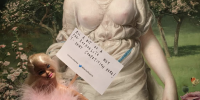
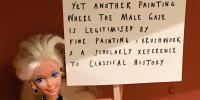
Say hello to ArtActivistBarbie (AAB), whose modus operandi is small signs, big questions and a fabulous wardrobe. With her inviting call to arms, “Refuse to be the muse!” this fierce new incarnation of Barbie is helping to challenge art galleries and museums worldwide about their woeful lack of women and other minorities in their collections, and reluctance to consider the female gaze.
Anti-government protests in Russia are taking many different forms, from mass rallies and marches to defiant street art and music.
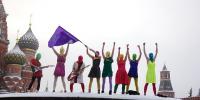
Just recently, members of a feminist punk group were arrested in Moscow's Red Square after they performed a song ridiculing Prime Minister Vladimir Putin. The group, which calls itself Pussy Riot, says it's planning more stunts before March's presidential elections.
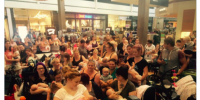
Dozens of moms organized a breastfeeding protest at an Australian mall after nursing mom Luci White was asked to leave the food court.
White says she was finishing up her lunch at Bendigo Marketplace, about 90 minutes outside Melbourne, when her 7-month-old son, Zaydd, started crying for milk. White started nursing him, but other patrons, an older man and a mom of two, started to complain.
Keith Haring is known to be one of the biggest artists raising awareness for HIV and AIDS, considering he had also passed away from HIV. Starting his career covering ads with spray paint and chalk in subway stations in New York City, his work started trending and he became an activist for this cause.
According to the Men's Rape Prevention Project in Washington DC, 58,000 soldiers died in the Vietnam war. During that same period of time, 51,000 women were killed mostly by men who supposedly loved them.
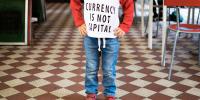
The People’s Bank of Govanhill uses social and activist art practices to involve people in re-imagining the local economy, looking at how we can put feminist economics into practice in the local community.
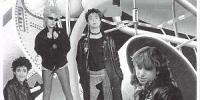
Las Vulpes was the first spanish punk rock band formed only by women. It was founded in Baracaldo (Vizcaya, Basque Country) in the summer of 1982, as a result of the guitarist´s desire on creating an all women punk band. After a few changes, the final formation consisted on: Loles Vázquez (guitar), Mamen Rodrigo (voice), Begoña Astigarraga (bass) and Lupe Vázquez (drums), all between 17 and 22 years of age.
In order to raise awareness about the global issue of arranged child marriages, 21-year-old YouTube star Coby Persin decided to push the envelope by asking a 12-year-old 'bride' to pose with a 65-year-old 'groom' in the middle of Times Square. Child marriage is not only legal in 91 countries around the world, but even continues to be legal in the United States - with some having a cut off as low as 12 years of age.
National Museum of Women In the Arts:
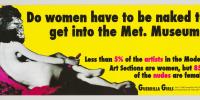
To maintain their anonymity, group members wear gorilla masks in public and adopt the names of historic women artists, such as Käthe Kollwitz and Frida Kahlo, as pseudonyms.
Sunaura Taylor is an artist, writer and activist. Through painting, printmaking, writing and other forms of political and artistic engagement her work intervenes with dominant historical narratives of disability and animal oppression. Taylor's artworks have been exhibited at venues across the country, including the CUE Art Foundation, the Smithsonian Institution and the Berkeley Art Museum.
During the 1600’s the Iroquois Indian Nations, a group of several indigenous tribes in North America, engaged in warfare with many other tribes. The men controlled when and against whom they declared a war.
Tribal Iroquois women decided that they wanted to stop unregulated warfare, and thought of a way to convince the Iroquois men to give them more power in deciding issues of war and peace.
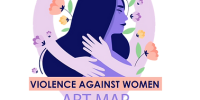
The Violence Against Women (VAW) Art Map was conceptualized in the fall of 2018, in the wake of the #MeToo movement by Dr. Lauren Stetz, as part of her doctoral research in Art Education with a minor in Women's, Gender, & Sexuality Studies at Penn State University.
Museums and art galleries are not usually the sites of feminist political protest. Yet over the past couple of years, before the lockdown, gallery visitors all over the UK had noticed a small, determined activist whose modus operandi is “Small signs, big questions, fabulous wardrobe”.
Shortly after the close of this year’s International Women’s Day, China’s Twitter-like service Sina Weibo shut down Feminist Voices. With 180,000 followers, the group’s social media account was one of the most important advocacy channels for spreading information about women’s issues in China, but in an instant, it was gone. A few hours later, the private messaging app WeChat also shuttered an account for the group.
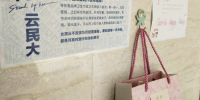
Since 2020, university students across China have launched a grassroots initiative to combat menstrual stigma by placing “menstrual pad mutual aid boxes” in campus restrooms. These boxes, often accompanied by signs reading “Take one if you need it, donate if you can,” provide free sanitary pads to anyone caught off guard by their period—offering both practical relief and a symbolic challenge to the cultural silence surrounding menstruation.
New York Times, DAVID FIRESTONE, Published: December 31, 1993
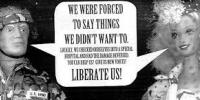
Your son tears the wrapping paper off his fierce new "Talking Duke" G. I. Joe doll and eagerly presses the talk button. Out comes a painfully chirpy voice that sounds astonishingly like Barbie's saying, "Let's go shopping!"
Does your son:
A) Furiously vaporize the doll with his own phaser rifle?
B) Go shopping with Joe?
"A Night of Philosophy and Ideas is a thinker’s lollapalooza. The free, 12-hour weekend lyceum at the Brooklyn Public Library includes spirited debate, live music, theater, performance art pieces, and film screenings. At any given hour, five or six different events will be taking place simultaneously. Visitors are encouraged to come and go as the spirit moves them.
"Owning a vehicle, you could drive by and with the pressure of your foot on the accelerator and with your eyes on the road you could pass it quickly … The images of poverty would lift and float and recede quickly like the gray shades of memory so that these images were in the past before you came upon them. It was the physical equivalent of the evening news.” — David Wojnarowicz.
The Harlem Festival of Culture not only pays homage to the past but also envisions a brighter future. It serves as a platform to showcase the rich diversity and dynamism of Harlem's artistic community, while also acting as a catalyst for social change and community empowerment. The festival boasts a lineup of artists from various genres and backgrounds, including jazz, soul, hip-hop, gospel, blues, rock, Latin, and Afrobeat.