Early Sunday morning, the Dallas Police Department's Twitter account tweeted for followers to download its iWatch Dallas app and share videos "of illegal activity from the protests." The police are looking to arrest lawbreakers at weekend demonstrations decrying police violence against black people. The benefit of the app, according to the tweet, was the ability for informants to stay anonymous.
It can be important to reflect on the artistic recounts of activists experiences under state imprisonment. In a revealing interview with Artspace, Chinese artist and dissident Ai Weiwei reflects on his 81-day secret detention in 2011 and the psychological strategies used to dismantle identity and autonomy.
For Women’s History Month 2024, Hysterical Collective presented: Hysterical: Radical Creativity – the third instalment of the annual charity art exhibition and cultural programme taking place in March each year. Co-founded and curated by Eliza Hatch of Cheer Up Luv and Bee Illustrates, Hysterical is a queer and feminist-led exhibition and event showcase; centred around community, collaboration, and activism.
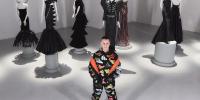
Jeremy Scott and Moschino may no longer be a thing but the designer is still plenty busy. Case in point, Scott's new partnership with Korean car manufacturer Hyundai, the latest in the latter's ongoing Re:Style upcycling program.
For Hyundai Re:Style 2023, Jeremy Scott has saved discarded Hyundai Motor Car parts from the junk pile, instead transforming them into wearable couture (car-ture?).
An erroneous tip called into law enforcement authorities in 2002 subjected Hasan Elahi to an intensive investigation by the FBI and after undergoing months of interrogations, he was finally cleared of suspicions. After this harrowing experience, Elahi conceived “Tracking Transience” and opened just about every aspect of his life to the public.
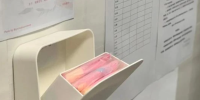
From October to December 2020, Chinese university students nationwide launched a viral movement to install “menstrual pad mutual aid boxes” in women’s restrooms—free, wall-mounted containers stocked with disposable pads on a take-one, replace-one basis. Nearly 250 campuses joined within weeks. Some sustained their boxes for over a year, while others saw them vanish after bureaucratic pushback, logistical hurdles, or dwindling volunteer resources.
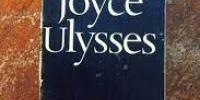
In 1932, Bennett Cerf, cofounder of Random House Publishing, acquired the rights to publish James Joyce’s Ulysses in the United States, believing that the book would be as successful as it had been throughout Europe. But Cerf had a problem. The book was banned in the United States and would be seized as soon as it came off the printing press, which would lose Cerf millions of dollars.
A coalition of more than twenty national arts funders has launched an emergency relief fund that will provide millions of dollars to artists struggling financially in the wake of the COVID-19 outbreak in the United States, which has more than 400,000 confirmed cases of the virus. The Andrew W.
SomeGoodNews is a Youtube channel started by actor John Krasinski. The videos in the channels are aimed at discussing and sharing good news happening these days. The channel was set up as a way to help alleviate the mental health strain the COVID-19 epidemic has had on many people.
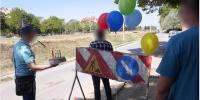
“Potholes!” That’s what Nikola Pisarev, a co-founder of the Contemporary Art Center (CAC) in North Macedoniona responded with when asked what sort of impact creative activism can have. Nikola went on to explain what he meant, describing a series of actions that they had staged in small towns and municipalities across the nation. As is the case in many countries, Macedonia is plagued with official corruption.
The Youth Activist Art Archive (YAAA) is a dedicated platform that highlights and celebrates the creative efforts of young individuals (26 years old and younger) actively participating in diverse social movements and causes. YAAA acknowledges the vital role and innovative vision of young activists who employ their artistic talents to envision and advocate for a brighter future.
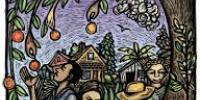
Ricardo Levins Morales is an artist and organizer based in Minneapolis, Minnesota. He was born into the anti-colonial movement in Puerto Rico, and when his family moved to Chicago in 1967, he became interested in activism. After leaving high school early, he worked in various industries and began to use art as part of his activism work.
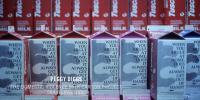
Peggy Digg’s The Domestic Violence Milk Carton Project consisted of an image printed by Tuscan Dairy Farms on over one million milk cartons, which were distributed during January and February of 1992 throughout New York, New Jersey, Connecticut, Maryland, Delaware, and Pennsylvania. This wide-reaching project sought to both raise awareness of domestic violence and distribute a helpline.
Although we are in the supposedly modern and advanced year of 2020, there are still at least 500 million women and girls that lack adequate facilities for menstrual hygiene management, according to the World Bank Organization.
Rooted in Native American and indigenous practices,[11] restorative justice is a set of principles and practices that aims to help communities heal from conflict and harm by developing a common understanding of the root causes and effects.[12] Restorative justice can occur in a variety of different contexts: in the workplace, at schools and within, or instead of, the criminal justice system.
The China Folk House project grew out of the Sidwell Friends School China Fieldwork Semester, a program which had ran for five years (2014 – 2018) that took students to Yunnan Province, China, for an integrated semester of experiential learning based at the Linden Center in Xizhou.
Empathy may be the cornerstone of any Global Justice movement, but how do we cultivate the conditions for empathy to thrive?
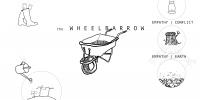
The wheelbarrow symbolises something universally useful, practical and pleasingly straightforward. A space to deliver things in an efficient and direct manner - no packaging and completely people powered.
A new exhibition titled “Afrofuturism: A History of Black Futures” will debut at the National Museum of African American History and Culture (NMAAHC) to examine Afrofuturist expression and culture as it relates to music, activism, art, and more.
IT’S 7 AM, and a thin layer of mist still hovers over the harbor in Talamone as fisherman Paolo Fanciulli stretches out his nets. Pulling them out of a plastic tub, he examines them section by section, setting the ripped ones aside to be repaired. It’s a time-consuming process—one that’s occupied men from this tiny village on the coast of Tuscany for centuries.
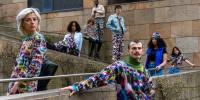
A start-up has launched a line of clothing that confuses artificial intelligence (AI) cameras and stops them from recognizing the wearer.
Italian start-up Cap_able is offering its first collection of knitted garments that shields the wearer from the facial recognition software in AI cameras without the need to cover their face.
Called the Manifesto Collection, the clothing line includes hoodies, pants, t-shirts, and dresses.
This action was suggested in the workshop assembly by a neighbor of Arrayán street itself. At the end of this street giving the market there was a wall in a state of collapse that
concerned the neighborhood. On several occasions, either neighbors or from the same Peña Bética in front of them, they had
given by the City Council, but without results. And every day having to go all the way through that gorge with two
Fashion designers from L.A. to Milan are picking up their shears in solidarity to do their part to prevent the spread of COVID-19 to at-risk patients and primary care providers.
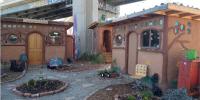
Members of three organizations – Artists Building Communities, Essential Food and Medicine, and Living Earth Structures – have built a kitchen, clinic, free store, stage, toilet, oven, and shower with and for a homeless community near Wood Street in West Oakland.