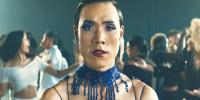
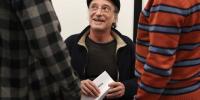
Eugene Lee Yang is an actor, filmmaker, producer, author, dancer, and digital content creator from Pflugerville, Texas. He received his education at the University of Southern California, and is most known for his contribution to the popular Youtube group, The Try Guys.
In March 1939, a 23-year-old Billie Holiday walked up to the mic at West 4th's Cafe Society in New York City to sing her final song of the night. Per her request, the waiters stopped serving and the room went completely black, save for a spotlight on her face.
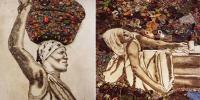
In 2008, my work as an artist took me to a gigantic landfill outside Rio de Janeiro called Jardim Gramacho. After operating for more than 30 years, the sanitary facility, once one of the largest in the world, had reached its maximum capacity and was on the eve of closing permanently.
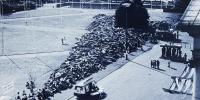
In 1982, for documenta 7, Beuys proposed a plan to plant 7000 oaks throughout the city of Kassel, each paired with a basalt stone. The 7000 stones were piled up on the lawn in front of the Museum Fridericianum with the idea that the pile would shrink every time a tree was planted. The project, seen locally as a gesture towards green urban renewal, took five years to complete and has spread to other cities around the world.
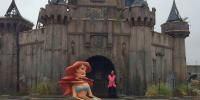
In August 2015, Weston-Super-Mare - a sleepy seaside town in Somerset, England - suddenly became the top destination for the metropolitan elite, welcoming celebrity guests like Brad Pitt, Jack Black and Mark Ronson. Overnight this quaint town, just 18 miles from Bristol, was transformed by anonymous street artist Banksy when he opened his very own dystopian Disneyland style theme park called ‘Dismaland’.
User @ArmoredSuperHeavy on Twitter recently posted a master document detailing their explorations into bookbinding, fanfiction preservation, and the online gift economy. Their bookbinding venture, named Dead Dove Publishing, is a project that seeks to preserve and legitimize fanworks and celebrate the fandom gift economy. The document explains their actions and the work they have done since they began two years ago.
K-pop fans and users of TikTok claimed tickets to Donald Trump’s Saturday night rally in Tulsa then did not use them, as part of a coordinated effort which helped to leave hundreds of seats empty in a 19,000-capacity venue.
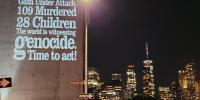
As the death toll from Israel’s attacks on the besieged Gaza Strip continues to rise, a guerrilla projection on May 13, 2021 illuminated a building in Brooklyn’s Dumbo neighborhood with messages of solidarity with Palestinians.
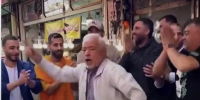
It all started when a 70-year-old fish market stall owner nicknamed “Booghy” was grooving in public, in violation of Iranian law.
A new form of protest against the government is rocking Iran: a viral dance craze set to an upbeat folk song where crowds clap and chant the rhythmic chorus, ‘oh, oh, oh, oh.’
Carlos Hernández Chávez is a Mexican-American muralist who brings the spirit of 20th-century Mexican muralism into modern New England. Chávez’s murals address key social justice themes, including immigration, workers’ rights, and cultural identity, challenging viewers to acknowledge and reflect on pressing societal issues.
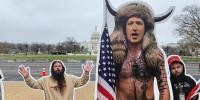
As tech leaders faced tough questions from Congress, SumOfUs, an 18 million member advocacy organization, was right outside with a larger-than-life installation of the January 6th Capitol riot that shows the role Big Tech played in sparking the insurrection.
Peter Marks Review from the Washington Post:
“As Far as My Fingertips Take Me,” a performance piece about the ordeal of seeking refuge by Tania El Khoury that’s being presented for the next 2½ weeks in the lobby of Woolly Mammoth Theatre. For this hypnotic, one-audience-member-at-a-time experience, you pass through the door of a white-walled booth and slip into a white lab coat before putting on a pair of headphones.
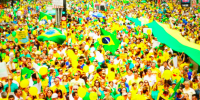
Vem Pra Rua is a nonpartisan, democratic, and pluralist movement that emerged in response to society’s fight for a better Brazil. Brazilians of all regions, social classes, and ages began mobilizing at the end of 2014—building on the 2013 marches that protested corruption, inequality, and other socio-economic and political problems.
Kendick Lamar is known as one of the most prolific, and socially conscious, rappers of our time. 'BLOOD.' is the second track off of Lamar's iconic album 'DAMN.' from 2017. What makes this song stand out is the sample used at the end of part one of the song.
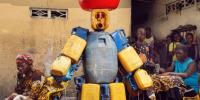
“So dramatic, so strong, so visual,” artist Stéphan Gladieu said of his first encounter with the revival of an ancestral folk art movement in Kinshasa, Democratic Republic of Congo. Kinshasa is the capital of Congo but also one of the many places American and European countries send their waste.
The Spanish artist Santiago Sierra is planning to immerse a British flag in blood donated by indigenous peoples from countries colonised by the British Empire.
The resulting artwork, titled Union Flag, is intended to be an “acknowledgement of the pain and destruction colonialism has caused First Nations peoples, devastating entire cultures and civilisations,” the artist said in a statement.
LOS ANGELES--(BUSINESS WIRE)--Activist and Academy-Award winning actress Susan Sarandon and Grammy, Emmy, and Tony Award-winning and Academy-Award nominated actress Cynthia Erivo starred in a new public service announcement (PSA) during the Oscars titled “Power to the Patients” which focuses on increasing awareness that hospital prices are now a patient’s right prior to receiving care.
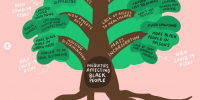
"When it comes to the effects of the virus on black lives, the roots run deep.
⠀⠀
This is one of the hardest illustrations I’ve ever done. Not because of the tree - but because of the overwhelming nature of the subject at hand. Seeing headlines like “Blacks are Dying at Higher Rates from Covid-19” SHOOK me!
⠀⠀
The coronavirus outbreak has prompted climate activists to abandon public demonstrations, one of their most powerful tools for raising public awareness, and shift to online protests.
This week, for example, organizers of the Fridays for Future protests are advising people to stay off the streets and post photos and messages on social media in a wave of digital strikes.
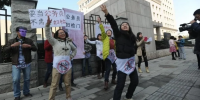
On November 26, 2012, about ten college students “flash mobbed” the front of the human resources and social welfare department of Hubei Province in central China. "Refuse to take off pants for inspection," "Ask about menstrual history, what does it have to do with being a civil servant." According to the current admission regulations, female candidates for civil service positions must go through a detailed gynecological examination.
The Violence Against Women (VAW) Art Map was conceptualized in the fall of 2018, in the wake of the #MeToo movement by Dr. Lauren Stetz, as part of her doctoral research in Art Education with a minor in Women's, Gender, & Sexuality Studies at Penn State University.
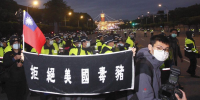
President of Taiwan, leader of the Democratic Progressive Party(DDP), Tsai Ing-wen, at a press conference with no early forecast on August 28, 2020, announcing that from January 1, 2021, American pigs containing ractopamine (Ractopamine) will be opened for those over 30 months old U.S. cattle are imported. Furthermore, the administrative order has only a 7-day notice period.
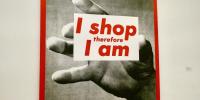
I Shop Therefore I Am (1987) is the work of Barbara Kruger . It became an iconic artwork, being reproduced on items such as shopping bags and other consumer products such as t-shirts. Kruger has often derived images from the mass media and pasted the words over them, particularly in Futura Bold . She then uses advertising to design her works.
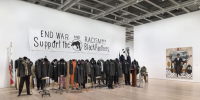
Henry Taylor (born 1958) is an American artist and painter who lives and works in Los Angeles, California. He is best known for his experimental figurative paintings and exploration of contemporary and relevant historical social issues. Taylor rewrites art history, often with art historical references, to amplify Black people who have been overlooked or undermined by the canon and systems of power and control.