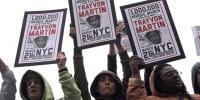
A march took place Wednesday evening in Manhattan calling for justice in the case of Trayvon Martin. He was an unarmed black teenager who was shot to death by a neighborhood watch captain in Florida last month.
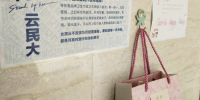
Since 2020, university students across China have launched a grassroots initiative to combat menstrual stigma by placing “menstrual pad mutual aid boxes” in campus restrooms. These boxes, often accompanied by signs reading “Take one if you need it, donate if you can,” provide free sanitary pads to anyone caught off guard by their period—offering both practical relief and a symbolic challenge to the cultural silence surrounding menstruation.
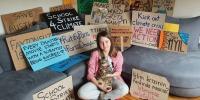
The large crowds and brightly coloured placards of the school climate strikes became some of the defining images of 2019.
“There would be lots of chanting and the energy was always amazing,” says Dominique Palmer, a 20-year-old climate activist from London who has been involved with the strikes for more than a year. “Being there with everyone in that moment is truly an electrifying feeling. It’s very different now.”
*We would like to thank everyone who who participated in a very successful first Butterflies for Bealtaine*
For the month of May, we invited all ages to creatively respond to the theme of The Butterfly and to share a change they wish for on a personal, community or global level.
In Ireland as in many parts of the world we have been in a quarantine situation because of the global pandemic. This environment informed our project.
In the 1980s, Holzer and Lady Pink used New York as a backdrop for their artworks: Holzer wheatpasted posters and slogans on walls throughout Manhattan, and Lady Pink spray-painted graffiti on buildings and subway cars. The two also collaborated on a series of paintings on canvas, such as this work, for which Holzer composed phrases and Lady Pink did the painting.
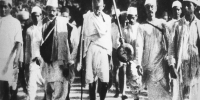
In 1930, the Indian National Congress adopted satyagraha (essentially, nonviolent protest) as their main tactic in their campaign for independence. Mahatma Gandhi was appointed to develop a plan of action; he proposed marching to the sea to make salt in defiance of the Salt Act of 1882.
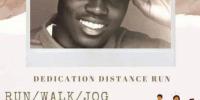
The running world will come together for a virtual run on Friday, May 8, to celebrate and honor the life of Ahmaud Arbery, who was reportedly shot and killed while out on a run on February 23.
It has been a long and exhausting battle for the bike activists in Puebla one of the cities in Mexico. Collectives and activist groups have long pushed for including bike infrastructure around the city, in a horizontal, democratic way.
She seeks to utilize her feminist art to spread awareness on mental health issues. Sravy is a nomad in her own right, and throughout her experiences in Asia she has noticed that there are stimas surrounding women's autonomy and how they handle mental health struggles.
TYRE NICHOLS WAS a photographer with an eye for the natural world. He was especially drawn to landscape portraiture, its calm and innocence. It is said that Nichols liked to crane his lens skyward, capturing what sunlight he could before it dissolved into the horizon. As he drove home after taking photos on January 7, he was pulled over by the Memphis police and what happened next was as tragic as it is terribly commonplace. Tyre Nichols is dead at 29.
Grandmas diving for seafood while immigrants wrestle with identity. Scrambling for self-worth in the face of suicide. Rock music in the face of fear. A noir murder mystery. Musings on death.
El Rey de la Ruina, aka The King of Ruin, is a local artist based in Madrid, Spain, who creates artistic activist pieces that range from the impact Covid-19 had on the social life of people in Spain, to the impact gentrification has taken on various groups of people. He tends to utilize (at least in his more recent pieces) bright colors and fun, geometric shapes in his art.
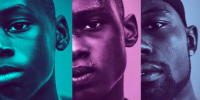
The latest Academy Award for Best Picture was earned by a film depicting the story of a poor, gay, black boy in South Florida. Moonlight, by director Barry Jenkins, has achieved great recognition for its beautiful and honest depiction of a storyline which challenges itself at every turn.
After J.Cole posted a song that implies that Noname can get her message across to a wider audience if she changes her tone, she releases another song in response. However, instead of explicitly responding to his critique, she uses the controversy to shed light on the death of Black female activist Oluwatoyin Salau, who was killed by her assaulter.
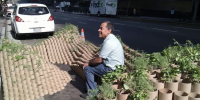
Originally a project of San Francisco-based art and design studio Rebar, Park(ing) Day participants from Tucson to Tehran set up temporary installations ranging from simple unrolled sod to art galleries and even free health clinics.
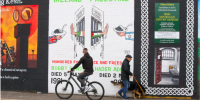
Palestinian and Israeli flags flutter in pro-Irish and pro-UK neighbourhoods in Northern Ireland, tapping into its own history of conflict and division that still affects everyday life despite a 1998 peace deal that largely ended violence.
It was 1967, and sentiment against the Vietnam War was in the air nationwide. The counterculture was flourishing on the heels of the Summer of Love. Organizers from Mobe — the National Mobilization Committee to End the War in Vietnam — initially called for a massive march on Washington.
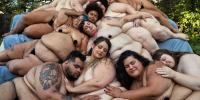
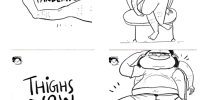
Mounica Tata launched Doodleodrama as an online journal to improve representation for her body type in mainstream media. “I’ve always been an overweight person and bullied and shamed for the same. Only fairly recently I’ve learned to make my peace with my body. My own journey with my body inspired/continues to inspire me to talk about it.”
The Harlem Festival of Culture not only pays homage to the past but also envisions a brighter future. It serves as a platform to showcase the rich diversity and dynamism of Harlem's artistic community, while also acting as a catalyst for social change and community empowerment. The festival boasts a lineup of artists from various genres and backgrounds, including jazz, soul, hip-hop, gospel, blues, rock, Latin, and Afrobeat.
Zero Abuse Project is a 501(c)(3) organization committed to transforming institutions in order to effectively prevent, recognize, and respond to child sexual abuse.
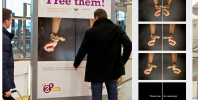
Develop an interactive poster that revolutionises the act of giving. It calls on people to donate, accepts credit cards and shows every donor what their donation does.
“Gravity of Equilibrium” revolves around Mass Shootings in USA. Mass shootings and guns are an incredibly divisive topics, one that is nearly impossible to engage opposing viewpoints in a discussion about. The majority of gun related debates devolve into charged arguments with parties feeling threatened. This effectively creates an environment where new perspectives and inputs are unable to be processed.
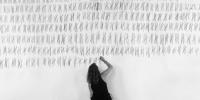
"I collected 83 images of disappeared women from Chinese social media. I printed them out, cut them, organized them, and made them into a tarot deck called "Missing Persons Notice.'"