Italian museum burns artworks in protest of budget cut An Italian museum on Tuesday began burning its collection of contemporary artworks in a singular protest against harsh budget cuts that have left many cultural institutions out of pocket.
This blogger documents all the cool things that are on their way to extinction in New York. A mix of preserving history and nostalgia through old school photography and new media. This website creates a nostalgic internet record of pre-internet New York.
On January 21, 2014, McDonald’s asked its customers to tweet supportive messages to the Olympians who would compete in the Sochi Games, along with the hashtag #CheersToSochi. However, within a couple of days, LGBT activists essentially hijacked the hasthtag from McDonalds.
With past government shut downs and teetering the fiscal cliff, debt
ceiling now eliminated, credit line increase after credit line
increase? I thought my timely art piece may be interesting for your
viewers and spark healthy/heated discussion.
K-pop fans and users of TikTok claimed tickets to Donald Trump’s Saturday night rally in Tulsa then did not use them, as part of a coordinated effort which helped to leave hundreds of seats empty in a 19,000-capacity venue.
By Lauren Barbato, Ms Magazine Blog
“I find this onslaught of anti-women legislation repulsive,” says 23-year-old Amanda Velez. “These proposed laws condescend to a level where women are treated as something much less than human.” A resident of Elizabethtown, Kentucky, Velez told me her feminist views are often met with hostility in her “typical Bible Belt” state.
But today, she’ll know she’s not alone.
About 6 months before the fall of the Berlin Wall in November 1989, installation artist Marc Thompson began conceptualizing and constructing an installation that would reflect the absurdities of the divided city. Thompson´s work was part of the Ressource Kunst exhibition.
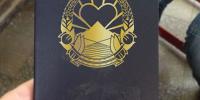
The Future Republic of Macedonia of the Former Republic of Macedonia
Devised, constructed and carried out all within 24 hours, the Future Republic of Macedonia of the Former Republic of Macedonia opened its borders for 2 hours on Saturday 22nd March, 2014.
The Canadian artist collective General Idea found its drive in the AIDS epidemic, becoming aesthetically and conceptually refined in the in the 1970s and ’80s, after long forays into absurdity and performances evocative of Dada and Fluxus.
It’s not easy to stop the construction of natural gas pipelines, but several years ago the ecological artist and activist Aviva Rahmani came up with an ingenious idea: what if you could protect threatened landscapes by turning them into art?
The story behind Thea, the 12-year-old child bride from Norway
By Andrew Russell - Global News
WATCH ABOVE: Hear the whole story of Thea, a 12-year-old child bride from Norway.
Her name is Thea.
She is a 12-year-old girl living in Norway and on Saturday she is set to marry a 37-year-old man named Geir, becoming the country’s first official child bride.
In November 2016, citizens of Flint, MI filed a historic class action law suit against both city and state for the damages wrought by lead contaminants in the water supply. The city's 100 thousand inhabitants have faced damages not only to their homes for the corrosive qualities of the water, but in myriad physical ailments; skin lesions, hair loss, high lead blood levels, vision loss, depression and anxiety are all reported symptoms.
Buses serving several routes in central Seoul have acquired a new and highly controversial passenger: a barefoot “comfort woman”, wearing a traditional hanbok dress with her hands resting on her knees.
"Late last night, an autonomous group of activists placed posters throughout the subway system, blocking out advertisements with their own materials protesting Israel's bombing campaign in Gaza.
The Search for Identity in a Country of ‘Disappeared’
By Marcela Valente
‘Theatre for Identity’ is the theme of a novel undertaking in the Argentine capital, where 41 plays are being put on every Monday in 14 theatres.
It appears Elon Musk has enemies all over the world.
The tech billionaire — currently the planet’s richest man and CEO of Tesla — has integrated himself into U.S. politics, becoming Donald Trump‘s head of a new Department of Government Efficiency (DOGE) and aligned himself with far-right politicians in Europe.
The author behind ‘The First Paradise of Fang Siqi,’ a novel that Han described as ‘a young girl falling in love with her rapist,’ has sent shockwaves through Taiwanese society.
On April 27, aspiring Taiwanese author Lin Yi Han committed suicide, leaving behind only her first, and sadly last, novel. The story, entitled “The First Love Paradise of Fang Siqi,” concerns the mental struggles of a young girl who is raped by her teacher.