In a sleepy town in Iranian Kurdistan, people take off their winter coats. It is evening, and outside one can just about discern the silhouettes of the mountains that lead to the Turkish and Iraqi borders. Inside, some 60 people fill the small community centre with a clammy heat. But it is not just warmth they are after. They have come for poetry.
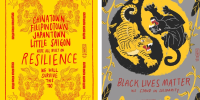
Unleashed by anxiety over the pandemic, the nationwide rise in anti-Asian hate has served as a call to action for many Asian American artists to take a stand: To actively challenge the historic negative stereotype of the vice- and disease-ridden Yellow Peril; to dismantle the pernicious and divisive myth of the model minority that pits achievements by Asian Americas as judgements against other communities of color; and to advocate for social justice, eq
On May 14, 2022, the Buffalo community suffered a devastating act of violence when a gunman opened fire at the Tops Friendly Market on Jefferson Avenue, killing ten people and wounding three. Many have asked how to help.
In partnership with Tops, the National Compassion Fund has established the Buffalo 5/14 Survivors Fund to provide direct financial assistance to the survivors of the deceased and those directly affected by this tragedy.
Watch Chadwick Boseman's Black Panther in Captain America: Civil War, and you'll see a charismatic character who fills a void in the conflicted do-gooder group. This T'Challa is accessible, awe-inspiring and perhaps most importantly, human. "I think the question that I'm trying to ask and answer in Black Panther is, 'What does truly mean to be African?'" the filmmaker recently told Rolling Stone.
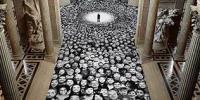
After winning the TED Prize on March 2, 2011, the French-artist JR launched the Inside Out Project, in his first TED Talk. Using his own artistic practice as inspiration, this participatory platform helps individuals and communities to make a statement by displaying large-scale black and white portraits in public spaces. Through their “Actions,” communities around the world have sparked collaborations and conversations.
The Colombian hip hop had an outstanding representation with the C15 group in the Fabrica of Rimas International Festival, a gathering of urban cultures, sponsored by Morocco, Colombia and Spain.
In response to white gentrifiers trying to silence go-go music on the corners of Florida Avenue and 7th Avenue, activists and D.C. residents poured into the streets by blasting go-go music and celebrating its rich history within the city. For those unfamiliar, go-go music is at the heart of D.C. culture and features live bands playing covers of, and sometimes original, music with all different types of drums and other percussion instruments.
Carlos Hernández Chávez is a Mexican-American muralist who brings the spirit of 20th-century Mexican muralism into modern New England. Chávez’s murals address key social justice themes, including immigration, workers’ rights, and cultural identity, challenging viewers to acknowledge and reflect on pressing societal issues.
“He describes it as a “family theme park unsuitable for small children” – and with the Grim Reaper whooping it up on the dodgems and Cinderella horribly mangled in a pumpkin carriage crash, it is easy to see why.
Banksy’s new show, Dismaland, which opened on Thursday on the Weston-super-Mare seafront, is sometimes hilarious, sometimes eye-opening and occasionally breathtakingly shocking.
Willie Mae Rock Camp for Girls is a non-profit music and mentoring program that empowers girls and women through music education, volunteerism, and activities that foster self-respect, leadership skills, creativity, critical thinking, and collaboration.
Project Catalyst specializes in designing culturally rich entertainment experiences that re-imagine the empowering possibilities of cinema and media from a multicultural perspective. Project Catalyst exemplifies the efficacy and essential value of art and cinema at the intersections of social justice and the modern technologies of everyday life.
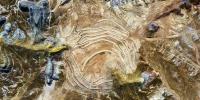
At first, you don’t know what you’re looking at. A gray expanse of uneven geometry surrounded by undulating brown. Shift your perspective a bit and it might be a close-up of a distressed textile, with subtle hues and textures surfacing as your eyes adjust.
And then the horizon comes into focus. Now you know where you are. In the distance are the classic jutting buttes of Monument Valley, familiar to anyone who’s ever seen a John Ford Western.
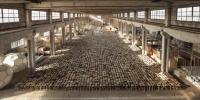
Chinese artist Ai WeiWei has drawn on the stool part of that French surrealist's pioneer work for his latest exhibition, the largest ever devoted to Ai, which opens in Berlin this Thursday. The show, entitled Evidence, is at Berlin's Martin-Gropius-Bau exhibition hall, and consists of either entirely new works, or pieces never seen in Germany before. The exhibition is huge, taking up 3,000 square metres in total and running across 18 rooms.
For over 60 years, Colombia has been facing war between guerrilla groups, the State, paramilitary groups and drug dealers. Hundreds of thousands of people have been killed, raped, displaced and threaten by this armed conflict. The common trait of this tragedy has been the people being in the middle, the people that still today pay the consequences.
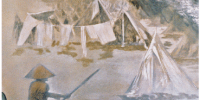
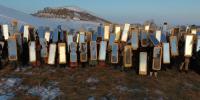
This protest installation was first used in 2016 at Standing Rock when the community banded together to protect the Missouri River from a Dakota Access Pipeline.
Elisa and Lily chose to create StyleLikeU as an alternative to this disempowering status quo. In 2009, the duo picked up a home video camera and launched their "Closet" series, documenting diverse individuals who were challenging fashion industry norms in their style.
Burners Without Borders (BWB) is a grassroots, volunteer-driven, community leadership organization whose goal is to unlock the creativity of local communities to solve problems that bring about meaningful change. Supporting volunteers from around the world in innovative disaster relief solutions & community resiliency projects, BWB is known for the unbridled creativity they bring to every civic project they do.
La Casa Negra is a moving artist squat that occupies houses destined for demolition as temporary venues for site specific performance art in Barranco (Lima, Peru). Artists use all of the available rooms (kitchen, bathrooms, stairs, backyard) to enact a series of critical art pieces, while using the space as a demonstration of artist resilience in an increasingly gentrifying neighborhood.
A toothless garbageman who once wandered Hong Kong’s streets with dingy bags of ink and brushes tied to his crutches is now the subject of a major retrospective. About 300 calligraphic works by the late Tsang Tsou-choi — who is best known by his self-dubbed title, the King of Kowloon — are showing at the ArtisTree art space in a high glass tower.
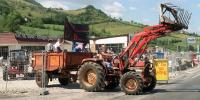
José Bové, a sheep farmer/activist in Aveyron in the Midi-Pyrénées region of France, is a modern day Astérix, a mythical Gaul who drubbed foreign intruders centuries ago. In Bové's case, the intruder was McDonald's, the American fast food chain.
For Nicholas Galanin, a Tlingit and Unangax̂ artist and musician, memory and land are inevitably entwined. The 45-foot letters of Never Forget reference the Hollywood sign, which initially spelled out HOLLYWOODLAND and was erected to promote a whites-only development.
A group of Chicago youth staged a “die-in’ at City Hall to demand that the city defund police and fund marginalized communities instead. The youth, all members of #NoCopAcademy, also announced that the organization is suing Mayor Rahm Emanuel for withholding critical emails regarding construction of the proposed $95 million building for a Police and Fire training center in West Garfield Park.
In 2009, conservative Prime Minister Silvio Berlusconi demoted the publicly-funded Italian Theatre Insitute (or ETI) to "disposable" status, hacking funding for the arts considerably. ETI promoted Italian companies abroad, managed the Teatro della Pergola in Florence, the Duse theatre in Bologna, and Rome's Teatro Valle--the oldest theatre in Rome, located between the Pantheon and Piazza Navona, Campo dei Fiori and the Senate.
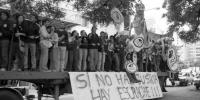
Faced with a lack of prosecution of those accused of crimes against humanity committed during Argentina’s military dictatorship, family members and descendants of the country’s estimated 30,000 disappeared took action.