In 1995, Bogota was a chaotic city. Among others, it presented high ranges of homicides, delinquency, corruption, no sense of belonging, traffic chaos and financial problems.
A feminist group in France has been transforming the streets of Paris after noting that just 2.6 per cent are named after notable women.
Tourists on the Ile de la Cité got a surprise when they found that almost all of the street signs in central Paris had been changed overnight.
The pro-democracy protests in Hong Kong have a new mascot: a roughly 12-foot-high figure of wood blocks holding a bright yellow umbrella in its outstretched right hand. The students call it Umbrella Man.
Umbrellas emerged as a symbol of the demonstrations after dozens of students wielded them on the night of Sept. 28 to fend off pepper spray as they jostled with the police.
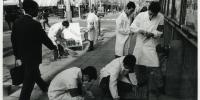
On October 16, 1964, the artist collective Hi Red Center, clad in sanitation masks and white uniforms and wielding small brooms and toothbrushes, spent several hours meticulously cleaning the streets of the Tokyo district of Ginza, amid the hustle and bustle of a “normal” day.
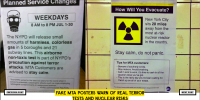
What would a chemical attack on NYC look like? How would poisonous gases spread, through the lines of the subway and above ground? These are some of the questions the NYPD and a team of researchers hope to answer this July, when they’ll disperse colorless, odorless, and apparently harmless gases called perflourocarbons around the city and track their movement.
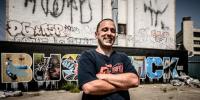
Conceived and curated by Bushwick native Joe Ficalora, the Bushwick Collective has evolved into an extraordinary open-air gallery since its first mural surfaced in 2011.
Attracting a wondrous array of local, national and international artists, it showcases first-rate street art -- from legendary Blek Le Rat stencils to huge collaborative walls by such world-renowned artists as Case Ma'Claim and Pixel Pancho.
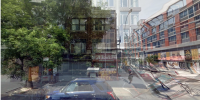
Vacated reverse engineers Google Street View to highlight the changing landscape of various neighborhoods throughout Manhattan and Brooklyn. The project finds buildings constructed in the past four years using the NYC Department of City Planning's PLUTO dataset, and it leverages Google Street View's cache to visualize absent lots just before new buildings were constructed.
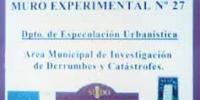
This action was suggested in the workshop assembly by a neighbor of Arrayán street itself. At the end of this street giving the market there was a wall in a state of collapse that
concerned the neighborhood. On several occasions, either neighbors or from the same Peña Bética in front of them, they had
given by the City Council, but without results. And every day having to go all the way through that gorge with two
Members of this organization begin the narrative process by examining city neighborhoods and commercial districts for compelling structures that appear to have fallen into disuse —“hidden gems” of the built environment. In varying states of repair, these buildings suggest only stories about the past, not the future.
Los Angeles is at a critical moment when it comes to art. Not because it's "underappreciated as a world art center" as The New York Times informed us in 2011. Or because it's a "burgeoning art capital" as The New York Times revised in 2014. No, it's because L.A. has actually moved past the "up-and-coming" stage into a fully integrated part of the art world.
"Improving
the livability of our towns and cities commonly starts at the street,
block, or building scale. While larger scale efforts do have their
place, incremental, smallscale improvement efforts are increasingly seen
as a way to stage more substantial investments. This approach allows a
host of local actors to test new concepts before making substantial
"This project took aim at a public relations campaign produced by The Union Square Partnership, a local Business Improvement District (BID) attempting to privatize the north end of NYC’s Union Square park and install a high-end celebrity chef restaurant. They hosted historical walking tours of the park for decision-makers, as a means of getting buy-in for their development initiative.
"The Uni Project aims to do one thing and do it well: temporarily
transform almost any available urban space into a public reading room
and venue for learning. We start with the conviction that books and
learning should be prominent, accessible, and part of what we expect at
street-level in our cities." (From site.)
Shouting is one of Xu Zhen’s early works questioning the limits of individual expression. First exhibited at the 51st Venice Biennale in 2005, the video shows Xu hiding in crowds and performing a series of loud screams in Shanghai.
The U.S./Iraq War Memorial is an augmented reality public art project and memorial, dedicated to the thousands of individuals who have died on both sides of the conflict.
The New York City subway is many things, but clean isn’t necessarily one of them.
It doesn’t exactly smell great, either.
While the MTA hedges on solutions (and continues to debate whether eliminating trash cans from the stations actually solves sanitary issues), the artist and School of Visual Arts student Angela H. Kim is waging a personal guerilla war against the olfactory offensiveness of it all.
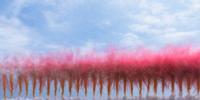
On June 26, contemporary artist Cai Guo-Qiang released the daytime firework display ‘When the Sky Blooms with Sakura’ at Yotsukura Beach in Iwaki City, as commissioned by Saint Laurent’s creative director Anthony Vaccarello.
In 2009, the dissident artist created a work to honour the thousands of children who died in the Sichuan earthquake. He recalls how the project, Remembering, angered China’s rulers – and changed his career for ever
This is an edited extract from The Start podcast
In France, abstention, vote of protest, lassitude or violent reactions rise from all over the crisis of our "representative democracy ».
What about thinking the other way round ? What if we reappropriate the iconography of the election?
“Discovering Columbus,” by the Japanese artist Tatzu Nishi.
Nishi built a living room around the sculpture in Columbus Circle in New York City. The living room is mounted on scaffolding and turns the sculpture into a domestic center-piece.
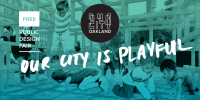
Our City is a startup nonprofit based in Oakland and working with cities everywhere. They work with governments, cultural institutions, companies, community organizations, designers, and residents to produce
events, installations, and workshops that use public design to improve cities.
A group of unidentified guerrilla activists staged a unique pro recycling flashmob in a Quebec mall in July 2015. An actor 'forgot' an empty water bottle on the ground in a food court a couple of feet from a recycling receptacle. Numerous people walked past the bottle and did nothing. Finally a woman walking past it reached down and recycled the bottle. She was then given a standing ovation and thunderous applause from the entire food court.