ONGOING ORGANIZATION:
CALLED: Iranti [pronounced írantì] is the Yoruba word for ‘memory’. Largely found in South West Nigeria and parts of Benin Republic, the Yoruba people consider memory a prized form of intelligence which determines how often one remembers what they see and hear.
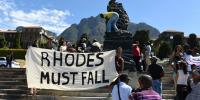
This series of protests began on the UCT campus in an effort to remove the bronze statute of Cecil Rhodes in the center of campus due to the belief that Rhodes represents the oppressive colonization of South Africa that eventually led to apartheid.
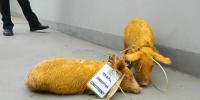
In February , two leaders of a guerrilla movement here traveled to the financial district carrying a wooden container that contained three pigs, each painted yellow from snout to tail.
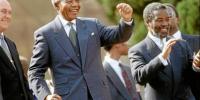
Mandela's notion of manhood changed over time. In the early days, he evoked the image of toughness to deal with an enemy that would not respond to reason. When it became possible to secure peace through talking, Mandela adapted. After his release his image was one of warmth and inclusiveness, embracing those who feared majority rule and even his former enemies.
Photographer Thapelo Motsumi is one of many young South Africans who has worked with the Umuzi Photo Club to develop his artistic skills and engage his community. Now this “drop out” has had two exhibitions in London and has been entrusted with Mandela’s football jersey. By GREG NICOLSON.
As massacres, civil wars, and violence permeated communities, people have searched for asylum in other countries. Due to its location and relative safety, Spain has become a common destination for immigrants seeking a better life. Female immigrants in particular tend to experience much more arduous journeys in that they frequently are subjugated to sexual abuse.
Richard Turere, 13, has devised an innovative system to protect his family's livestock from the wild beasts. He created "Lion Lights," which keeps the predators away from the family's enclosure. The Kenyan boy will speak about his invention at the TED 2013 conference.
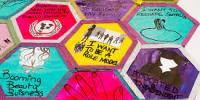
Drama Queens Ghana's “MoonGirls” is an Afrofuturistic graphic novel series. Through an Afrofuturistic lens, “MoonGirls follows the adventures of 4 African "supersheroes" with varying superpowers to save the world from a diverse range of forces; from patriarchy, rape culture to pollution and global warming.
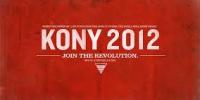
In 2004, the United Nations called the LRA crisis in northern Uganda the “most forgotten, neglected humanitarian emergency in the world.” Invisible Children was founded to change that and to fight against the false notion that our responsibility to each other stops at our own nations’ borders.
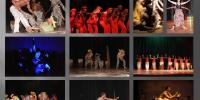
The Uganda National Contemporary Ballet (UNCB) presented a new powerful and moving production advocating for the child soldiers all over the world at the National Theatre in Kampala.
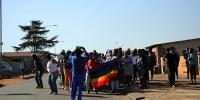
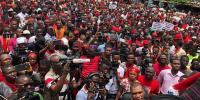
Thousands of people protested in Ghana’s capital Accra on Wednesday against the expansion of its defence cooperation with the United States, in a rare public display of opposition to the growing foreign military presence in West Africa.
Demonstrators blowing vuvuzelas and beating drums filled Accra’s business district, holding placards criticising a new deal with Washington that they say threatens Ghana’s sovereignty.
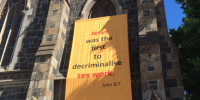
A big yellow banner hangs off the Central Methodist Church in Cape Town, South Africa proclaiming that *"Jesus was the first to decriminalise sex work - John 8:7"*
Students have accused university management of having a lack of concern about the issue.
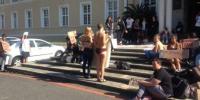
CAPE TOWN – University of Cape Town (UCT) students have stripped to their underwear to highlight their concerns over rape culture on campus.
Dozens of students have gathered outside the Bremner Building to discuss sexual assault and sexual harassment at the university.
In Women Are Heroes, JR introduces women who sometimes look death in the face, who go from laughter to tears, who are generous, have nothing and yet share, who have had a painful past and long to build a happy future.
One of the most pressing questions before us in the United States now is how to resolve the tension between our personal visions and needs, on the one hand, and the demands of being a member of a community, on the other.
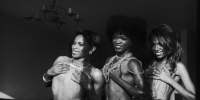
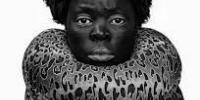
Step into the captivating world of Zanele Muholi, the activist and masterful photographer from South Africa. Through their lens, they unveil the realities found within LGBTQI+ stories, challenging norms and reshaping perceptions of beauty. Each intimate and evocative portrait captured by Muholi becomes a vessel for social change, dismantling stereotypes, and amplifying the voices of those historically silenced.
Activist Boniface Mwangi on confronting corruption in his homeland, and director Sam Soko on recording his campaign
Kenyan director Sam Soko’s debut documentary feature, Softie, opens with the film’s protagonist, Boniface Mwangi, sourcing 1,000 litres of pigs’ blood. “I’ve found a van for you. When do you want it? When are you getting the blood?” Mwangi asks.
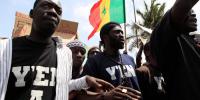
"Y’en a Marre (“We're Fed Up") first emerged in 2011 as a grassroots campaign against injustice and inequality in Senegal. Spearheaded by the hip hop group Keur Gui Crew in response to local power outages, the nascent protest movement went on to mobilize against the controversial bid by Senegalese president Abdoulaye Wade to remain in office for a third term.
Zanele Muholi, the self-proclaimed visual activist and photographer, investigates the fraught relationship between post-apartheid South Africa and its queer community, who, despite being constitutionally protected since 1996, remain a constant target of abuse and discrimination.
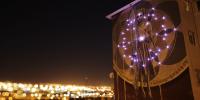
In Cape Town, South Africa the design firms Design Indaba Trust and Thinking have teamed up with artist Faith47 to help raise funds to bring more light to their urban city. Their goal is to raise funds to light up 700 meters of Manwabisi Park, which will ultimately reduce the crime rate in the area through more light. In order to get the community involved in the project, they have combined street art with community engagement.
The Rwanda Film Institute dedicates a lot of its energy to the education of individuals in the field of filmmaking. Through our Kwetu Film School, we look to consistently breed the next generation of Rwandese filmmakers. This is an essential part of our overarching goal of the development of Rwanda culturally, economically, and communicatively through the growth of filmmaking as an industry.
The Women Are Heroes project has various steps in Africa, in Kenya, Sierra Leone, Liberia and Sudan.
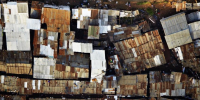
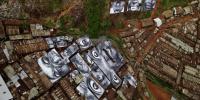
In January 2009, 2000 square meters of rooftops are covered with photos of the eyes and faces of the women of Kibera, in Kenya. Most of the women have their own photos on their own rooftop and for the first time the material used is water resistant so that the photo itself will protect the fragile houses in the heavy rain season.
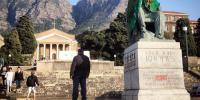
On August 14th 2014 several prominent statues within the city centre and the southern suburbs of Cape Town got redressed in green blankets, equipped with miner gear or carrying grocery bags. The statues – mainly of which represent colonial figures – were redressed in light of what has come to be known as the Marikana Massacre: the shooting of 34 miners by the local police force of Marikana, South Africa on August 16th, 2012.
The Green Belt Movement (GBM) was founded by Professor Wangari Maathai in 1977 under the auspices of the National Council of Women of Kenya (NCWK) to respond to the needs of rural Kenyan women who reported that their streams were drying up, their food supply was less secure, and they had to walk further and further to get firewood for fuel and fencing.