In the mid early 2000s, religious advocates tried a new strategy: promoting the theory of “intelligent design” to be taught in schools. As the Kansas School Board considered the argument, Prophet Bobby Henderson saw an opportunity. His now famous, “Open Letter to the Kansas School Board” began:
The Iranian filmmaker Mohsen Makhmalbaf opens “The Gardener” with the declaration: “I am an agnostic filmmaker.” From anyone else, this might seem like a simple statement, but not from the complex Mr. Makhmalbaf. In 1974, when he was 17, religious and involved in a guerrilla group, he stabbed a policeman, for which he received a bullet to the stomach and a prison sentence.
Protesters left 7,000 pairs of shoes in front of the Capitol building Tuesday to symbolize the number of children killed by gun violence in the United States since the Sandy Hook Elementary School shooting in December 2012.
From 8:30 am to 2 pm, the shoes were displayed on the southeast lawn in the hope of sending a clear message to Congress: Reform gun control legislation or more children will be killed by gun violence.
Art of the Umbrella movement refers to artistic works created as part of the Umbrella Movement in Hong Kong which demanded democracy in the election of the territory's top leader. Most of the physical works of art are located within the three main protest sites of Admiralty, Causeway Bay and Mong Kok.
El Sistema, also known as The National System of Youth and Children’s Orchestra and Choir, was established in Venezuela in 1975 by José Antonio Abreu, a Venezuelan educator, musician and activist. The music education program operates within the voluntary sector and is funded publicly.
Police dogs and firehoses is, for most of the world, the image of Birmingham made by Bull Connor and the Birmingham Police Department during the Birmingham Campaign of the African American Civil Rights Movement.
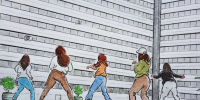
The Islamic Republic has always frowned upon dance but recently even a simple choreographed or ‘synchronized movement’ – as the regime calls it – has become an act of protest.
From Black Power to Migrants’ Power
BY Robin Cembalest POSTED 01/22/13
As ’60s activist art enters museums, a new generation is creating an iconography of protest for today
After a first illegal exhibition on the walls of the Cité des Bosquets, JR settles in the heart of this neighborhood and the neighboring projects of La Forestière, in Clichy-sous-Bois, where the 2005 riots started in the French suburbs.
The first portraits are displayed on the walls of the last popular neighborhoods of the capital, in Eastern Paris.
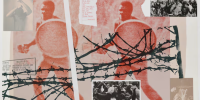
In 1978, while studying print-making in Hamburg, Gavin Jantjes was deemed a persona non grata by South Africa. His crime? Creating a series of prints that documented the violence and discrimination in the apartheid state, which he gathered together under the tongue-in-cheek name of a "colouring book".
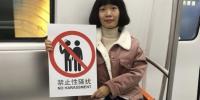
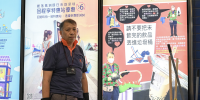
Zheng Xi 郑熹, a Ph.D. candidate with a focus on gender studies at Zhejiang University in Hangzhou. Zheng has launched a campaign asking city governments around China to display anti-sexual-harassment logos, complete with a groper’s “salty-pig hand” visual (etymological context here), alongside other commonly displayed public safety logos on places like subway trains and buses.
Women in China are covertly resisting government crackdowns on discussions over their Me Too movement with a clever workaround.
The phrase “rice bunny” (米兔), pronounced as “mi tu,” has popped up on social media networks after censors removed posts that mentioned sexual harassment or the hashtag #MeToo. While those phrases are heavily monitored, Rice Bunny isn’t.
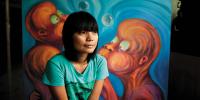
In the country formerly known as Burma, these free thinkers are a force in the struggle for democracy.
By Joshua Hammer
Photographs by Adam Dean
Smithsonian Magazine, March 2011
In its thirteenth year, the annual Miss Talavera Bruce beauty pageant is held in unlikely surroundings: a women’s prison in Rio de Janeiro, Brazil. The Instituto Penal Talavera is the only maximum-security women’s prison in the city with inmates serving life sentences for murder, fraud and drug trafficking.
Luke Ching Chin Wai is a conceptual artist and labour-artivist in Hong Kong. Since 2013, he has worked undercover in different low-paid jobs in the city, including as a security guard, supermarket cashier worker, and metro cleaner to learn about poor people's working conditions. He then uses these experiences to create art and push for improved labour rights.
GAME ON! Its gonna be a good Spring!" Connie Bacon.
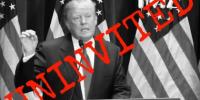
Activists and the politically aware will march with the message that Donald Trump and his beliefs are "UNWANTED".
Visions from the Inside is a project enlisting 15 artists from across the country to create a piece of art based off letters from women in detention. The initiative, a collaboration between CultureStrike, Mariposas Sin Fronteras and End Family Detention, illuminates the horrific realities of life inside some for-profit detention facilities in the U.S., as well as the resilient spirit that keeps the inmates going.
Counterspace is an independent curatorial platform functioning as the first decolonial thinktank mapping cultural activism worldwide. It shapes collectively decolonial toolkits with common tools and resources, and a global directory browsable by continent, praxis, and social construct, as a Beuys-inspired ‘social sculpture’ revisited, and an alternative map of the universe.
At least nine protesters were arrested during a protest Tuesday at Geo Group headquarters — a Florida-based private prison company that operates facilities nationwide.
"This Ain't a Eulogy" is both a staged performance and a durational, outdoor, public performance that reclaims and takes public space. The artist statement is as follows:
The signature angst of our time was profoundly expressed in the poems submitted for WOMAWORDS Literary Press June 2020 edition, Imaging Life After COVID-19, offering women poets an opportunity to write about their experience of the pandemic and their vision of or for the future. The universal trauma wrought by this virus, invisible and silent and pouncing with madness and mendacity, brings us to a place we’d like to forget but never will.
The kidnapping and enslavement of African people was the life-blood of transnational corporations like the "Royal African Company." In law, these human resource corporations were called "artificial people." Their human cargo was called "cargo."
Since the beginning of Bulgaria's transition to democracy, the monument’s meaning and future has been the subject of heated debates. Opponents to the monument aren’t happy about the presence of such a dominating foreign army monument in the country that is situated higher and more central than national symbols. In recent years, the monument has turned into a canvas for anonymous political statements on multiple occasions.