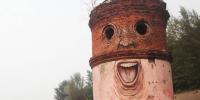
In his ongoing street art series “The Living Wall,” Russian artist Nikita Nomerz brings life to decrepit buildings in Russia by painting faces on them. Nomerz travels extensively around Russia and makes an effort to paint a character in each place he visits. He talks about his art in this interview with Global Street Art.
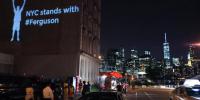
Typical mediums of street art include spray paint, stickers and stencils. But mobilized digital media projection has become the latest tool in some activist's artilleries. Vanguards of this innovative technique include members of The Illuminator project. Created in March 2012, The Illuminator is a cargo van equipped with audio and video projection capabilities.
In March this year, less than 100 days since he took office again, Luis Castañeda Lossio, Mayor of Lima, announced that the Municipality would remove the street art murals painted on the walls of downtown Lima’s historical city streets. “Lima has to recover all the architectural quality it has. They have chosen us and we will comply with the obligation that the population has consigned us,” said the mayor.
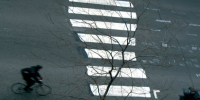
In 2001, Peter Gibson, a street artist, began by painting bike additional bike lanes onto the streets in Montreal because he was tired of how cars dominated the road. This transferred into more works criticizing car culture in general. Some of his work includes a crosswalk turned into a large footprint and lines on the road transformed into life lines.
Google entered the art game in 2011 with the introduction of its Art Project, working with 17 museums and expanding further to over 150 institutions in 2012. Last June, Google added 5,000 images of street art from around the world to the project and today it has announced that it will be doubling that number to 10,000 with the launch of the second edition of its Street Art Project.
In a twist on the Broken Windows Theory, street artists are using their skills to combat urban blight in Baltimore with "The Slumlord Project". By drawing the attention of neighbors to abandoned and vacant properties and giving pertinent ownership information to take action on, 17 artists are spray painting and wheat-pasting in a D.I.Y.
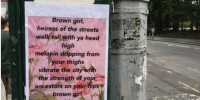
You’ll find Johanna Toruno on the streets of NYC plastering pictures of her flower-filtered poetry, Kendrick Lamar, and Selena on blank walls, street lights and buildings. When I came across The Unapologetically Brown Series on Instagram I was intrigued not only by the name but by the concept of being unapologetic and brown as the premise for a body of street art.
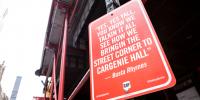
JAY SHELLS DROPS “RAP QUOTES,”
HIS MOST SITE-SPECIFIC STREET ART PROJECT YET
By Aymann Ismail | March 25, 2013 - 12:30PM
After schooling New Yorkers on etiquette via numerous unsanctioned interventions, artist Jay Shells channeled his love of hip hop music and his uncanny sign-making skills towards a brand new project: “Rap Quotes.”
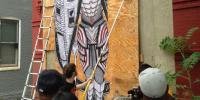
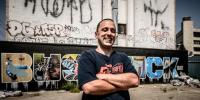
Conceived and curated by Bushwick native Joe Ficalora, the Bushwick Collective has evolved into an extraordinary open-air gallery since its first mural surfaced in 2011.
Attracting a wondrous array of local, national and international artists, it showcases first-rate street art -- from legendary Blek Le Rat stencils to huge collaborative walls by such world-renowned artists as Case Ma'Claim and Pixel Pancho.
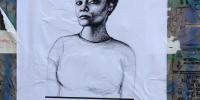
Stop Telling Women to Smile is a street art project by Tatyana Fazlalizadeh that addresses gender based street harassment.
Street harassment is a serious issue that affects women world wide. This project attempts to take women's voices, and faces, and put them in the street - creating a presence for women in an environment where women are a lot of times made to feel uncomfortable and unsafe - outside in the street.
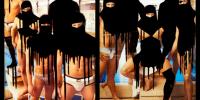
Princess Hijab is an anonymous female street artist working primarily in Paris, France. Her art centres on veiling the main characters of subway advertisements using black paint. Few facts are known about Princess Hijab.