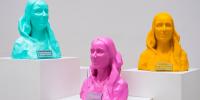
MONUMENT #1 is a series of sculptures by the Bulgarian artist and designer Erka, created in collaboration with Fine Acts. The work seeks to raise awareness about the lack of monuments honoring notable women in Sofia, the capital of Bulgaria - a EU member state.
The brightly-coloured busts were placed at some of the most central locations across Sofia during a covert early-morning action on Wednesday, March 22.
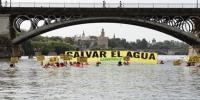
A protest on June 18, 2022 took place in the Guadalquivir River in Seville, where fifty Greenpeace activists used their bodies and environment to stage a demonstrative performance, highlighting the water crisis that the Andalusian region is predicted to face as a result of anthropogenic climate change. The area is at extreme risk of increased temperatures and pervasive droughts, which will impact the river that is the subject of the demonstration.
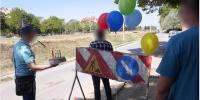
“Potholes!” That’s what Nikola Pisarev, a co-founder of the Contemporary Art Center (CAC) in North Macedoniona responded with when asked what sort of impact creative activism can have. Nikola went on to explain what he meant, describing a series of actions that they had staged in small towns and municipalities across the nation. As is the case in many countries, Macedonia is plagued with official corruption.
French street artist Roti installed a 4-ton marble sculpture in Independence Square in Kiev Ukraine, as an expression of solidarity with government resistors and protestors. The sculpture depicts a woman's body emerging from water.
One of the oldest forms of human expression is art, so it’s no surprise that art is constantly used to critique another of humanity’s oldest practices, violence and war. In the world of art activism, the power of creativity and innovation has been used to create commentary about war since the beginning of time. Art that speaks out against the atrocities of violent conflict embodies empathy, care, and a plethora of other human emotions.
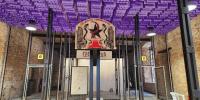
The Mexican Pavilion is an immersive space based on a 1:1 scale fragment of the expanded model of the campesino basketball court, an infrastructure that has become repurposed as a space for poly- and pluri-valent processes of decolonisation in Mexico’s indigenous communities.
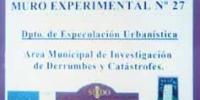
This action was suggested in the workshop assembly by a neighbor of Arrayán street itself. At the end of this street giving the market there was a wall in a state of collapse that
concerned the neighborhood. On several occasions, either neighbors or from the same Peña Bética in front of them, they had
given by the City Council, but without results. And every day having to go all the way through that gorge with two
Iva Hladis was born in Czechoslovakia in 1965.
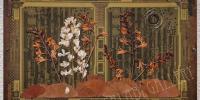
In 2005 her attention turned to the issue of global warming and world destruction with a new series of artworks titled “Origins Extinct”; assemblages of used computer chipboards, real botanicals, bugs, Czech glass beads, found objects, wires and pearls.
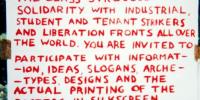
Between the late 1960s and 1970s numerous alternative printshops were set up across the UK, with the founding objective of producing, providing or facilitating the cheap and safe printing of radical materials. They were started by libertarians, aligned and non-aligned Marxists, anarchists and feminists, and as such were constitutive of the fractured and fractious politics of the post-1968 left.
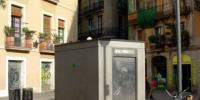
For three days, Ruben Santiago installed, without any official authorization, a hydro-massage shower in a public bathroom in the Gothic Quarter of Barcelona. The installation also made available to users bath gel, shampoo and towels that were regularly replaced.
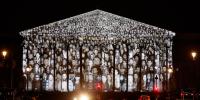
Renowned French artist JR and Oscar-nominated American filmmaker Darren Aronofsky have collaborated on The Standing March, a major public artwork exhibited in Paris during the UN’s COP21 climate conference. The video projection will remind leaders that the world is watching as they gather to negotiate a deal aimed at keeping global warming below 2°C.
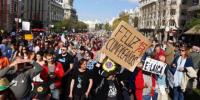
On Wednesday, December 15th 1976, a referendum was held in Spain. The question was to pass or not to pass the Ley para la Reforma Política (Political Reform Act). This Act was the legal instrument that allowed Spain to transition between Francisco Franco’s dictatorship to a democratic constitutional regime, a parliamentary monarchy.
The 15M movement in Spain grew out of a desire for liberation and greater access to social and political rights for marginalized groups. At its core the activists of 15M were visionaries and used voting for a utopian society as a creative act to reimagine the world they created. Reality is socially construed by the forces that determine individual agency.
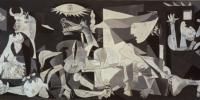
Pablo Picasso painted Guernica in just five weeks in the spring of 1937.
Then living in Paris, Picasso, fifty-five, was already well-known. Born in Spain in 1881, he went to Paris in 1900; he had visited Spain in 1934 but would never return.
The current cultural and political context in Macedonia marginalizes lesbians and women in general, and the dominant political party forces the traditional role of the woman, where she is a mother, a housewife, and of course, heterosexual. Furthermore, the major TV stations are flooded with Turkish soap operas, where traditional values are the leitmotif of the show.
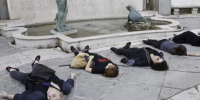
On September 2nd 2015, a die-in protest to advocate against gender violence was carried out by a group called Women in Black (Olmedilla, 2015). This form of protest was likely inspired by other die-in protests in Spain and represented Spanish women who have died due to domestic violence (DV). A group of women dressed in black clothing gathered on the streets of Madrid. One by one they fell to the ground and lay there, acting dead.
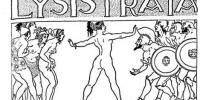
Lysistrata, by Aristophanes, was first performed in Athens in 411 BC. The play, while fictional, can be read as an early example of creative activism. It is about Lysistrata's quest to end the war between Athens and Sparta. She gathers the women of Athens and makes them swear an oath to deny their lovers and husband sex until they end the war.
Artist Daniel Soares pasted Photoshop toolbar stickers on these H&M posters as a nice little reminder that not all is as it seems. Y'all know how Photoshop messes with our perception of beauty, and I think this is a smart little stunt to snap us back into reality when we start to wonder why we never look like the girls on the posters we walk past every day.
Two design students were awarded the Futurapolis prize last Wednesday for their project to adapt the Furan (underground river) , a response to the migration crisis.
This project was made by the foundation Obra Social la Caixa with the intention to change the conversation and strategies while working with youngsters. Before this initiative, say the Director Claudio Zulian, the foundation would speak only about the lives of these girls and boys. However, they decided to involve them inside other stories as actors of a film project.
This piece is fascinating because of its use of just a few words and country names, muted colors, and the recreation of famous art. The artist used this canvas to depict a concern about events happening in the Gaza strip.
This article was published on the guardian website:
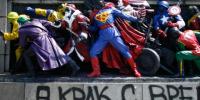
-Russia not amused at Red Army statue re-invented as Superman and friends-
Clenched teeth in Moscow over 1950s war memorial in Sofia given makeover by spray-painting street artist
By Tom Parfitt in Moscow
The Guardian, Wednesday 22 June 2011