change
region
medium
issue
despondent apostate
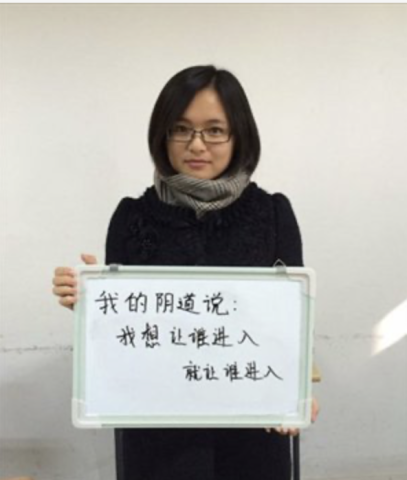
In November 2013, a group of 17 female students at Beijing Foreign Studies University sparked national debate when they staged a bold social media campaign in support of an upcoming performance of The Vagina Monologues, a feminist play by Eve Ensler. The students posted photos of themselves holding handwritten signs with messages such as “My vagina says: I want freedom” and “My vagina says: No means no.” The aim was to promote awareness around women’s bodily autonomy, sexual consent, and gender equality—a radical move in a society where public discourse on female sexuality remains highly taboo.
The campaign, organized by a grassroots student group known as the “Gender Equality Action Group,” quickly went viral, generating both praise and backlash across Chinese social media. Supporters hailed the campaign as an unprecedented moment of feminist activism, applauding the students for their courage in confronting misogyny and social conservatism. Critics, including some state-affiliated media such as Global Times, denounced the campaign as “vulgar” and “attention-seeking,” accusing it of inappropriately borrowing Western feminist discourse.
Despite the controversy—and perhaps because of it—the incident became a milestone in the history of contemporary Chinese feminist movements. It highlighted a generational shift in attitudes toward gender and sexuality, as well as the tensions between global feminist frameworks and Chinese cultural norms. The campaign also demonstrated how young women in China have increasingly turned to performative activism and digital platforms to voice dissent in an environment of strict ideological control.
What emerged from the Vagina Monologues campaign was not just a dispute over a play, but a deeper conversation about the politics of the female body, the limits of public discourse, and the role of youth activism in reimagining gender in a rapidly changing China.