It's My Body! was initially a project for Stephen Duncombe's Media Activism class during Spring 2012. We designed and developed the concept for the class, but have yet to set up the actual website. The images below show the site's layout.
From Variety:
YouTube launched a campaign with the hashtag #DearMe — encouraging users to upload “video letters” with advice to their younger selves, aimed at helping girls deal with problems — and within an hour it became the No. 1 trending topic on Twitter both in the U.S. and worldwide.
Marisela Escobedo was 52 when she was shot dead on a sidewalk outside of the Government Palace of Chihuahua City, northern Mexico. She had set up camp in one of Mexico’s most dangerous cities – a place where people won’t leave their homes at night to protest day and night against corruption and impunity in her daughter’s murder case.
Miku is a Japanese virtual idol. She is 16 years old. Miku is created in 2007 and has been heavily promoted since 2008 and was originally aimed at professional musicians. On September 12, 2007, Amazon.co.jp reported sales of Hatsune Miku totaling 57,500,000 yen, making her the number one selling software of that time. She was the first vocal to be developed and distributed by Crypton Future Media and sung in Japanese.
Fanfiction is political, subversive, radical. Writing Harry Potter as a girl, Hermione as black, or Ron as transgender exposes people to narratives written from the perspective of marginalized communities. But is writing fanfiction a type of activism?
Meet To Sleep, a campaign started by Blank Noise, asks citizens from all across India to come to different public spaces like parks, and sleep there in order to take back free spaces without being afraid for their safety. The first meet was organised in November, 2014, in Bengaluru’s Cubbon Park. And since then there have been eleven meets across various cities including Jaipur, Pune, Mumbai, and Bengaluru.
Jes Baker is cutting retailer Abercrombie & Fitch down to size. Baker, who blogs under the name "The Militant Baker" and wears a size 22, changed the brand's A&F logo to "Attractive & Fat" in a mock, black-and-white Abercrombie ad to challenge the line's branding efforts.
A photography project on China's marriage market has recently reignited the debate about marriage in China, and the phenomenon of women deemed too old to marry, or "leftover women" in the country.
V-Day is a global activist movement to end violence against women and girls. V-Day is a catalyst that promotes creative events to increase awareness, raise money, and revitalize the spirit of existing anti-violence organizations. V-Day generates broader attention for the fight to stop violence against women and girls, including rape, battery, incest, female genital mutilation (FGM), and sex slavery.
This special EDition is a revolutionary chant against the menacing cantankerous demonic , satanic COVID 19. And again doubles as a bold and poetic supplication to the great Almighty God to release us off this pandemic bondage. This Edition is a poetically driven spiritual prayer for freedom of expression and freedom after expression.
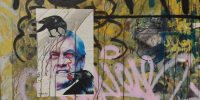
"The walls of the streets of downtown Santiago are covered with stickers, art, words and posters.
The messages are varied and range from "Feminist power" to "All cops are bastards". They have taken over the walls of Zona Cero (Ground Zero), the name given to the area around Plaza de la Dignidad, where anti-government protests have been held - and at times brutally repressed by police - since 18 October.
This week's Swede of the Week is Tomas Gunnarsson, whose quest to find Sweden's "Sexist of the Year" has found a viral following across the country. He says Swedes who buy into the 'most equal country in the world' label are delusional.
Who was the most sexist person in Sweden in 2013?
The young Chinese feminists shaved their heads to protest inequality in higher education and stormed men’s restrooms to highlight the indignities women face in their prolonged waits at public toilets.
“So dramatic, so strong, so visual,” artist Stéphan Gladieu said of his first encounter with the revival of an ancestral folk art movement in Kinshasa, Democratic Republic of Congo. Kinshasa is the capital of Congo but also one of the many places American and European countries send their waste.
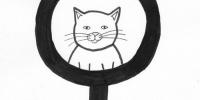
"Cats Against Cat Calling" began online as a movement under same slogan, powered through Hollaback! Hollaback! is an activist collective seeking to end street harassment. Working through a network of activists in various locations, Hollaback! encourages individuals to stand up for themselves against uncomfortable interactions in public.
Founded by Frankie Hutchinson, Emma Burgess-Olson and Christine Tran, Discwoman is a New York-based platform, collective, and booking agency—representing and showcasing cis women, trans women and genderqueer talent in electronic music. Started as a two-day festival in September 2014 at Bossa Nova Civic Club Discwoman has since produced and curated events in 15+ cities—working with over 150 DJs and producers to-date.
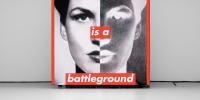
Untitled (Your Body is a Battleground) is an iconic 1989 silkscreen portrait made by artist, feminist and activist Barbara Kruger .
Though the poster was meant for the pro-choice march on April 9th, 1989, in DC, the portrait is now used mainly to voice the artist’s own opinion about gender inequality. The piece is much more relevant in today’s society, where it controls the way we view and treat women’s bodies.
John Shore and his wife Catherine had been attending the First Presbyterian Church of San Diego for six years when they were nominated to serve as deacons. But before they could be ordained, they were asked to sign a document agreeing that no person in a same-sex relationship should hold any position of authority within the church, which is one of the city’s oldest. It was 1990.
Hundreds of women clad in red, their heads bowed and topped with white wimples, moving slowing in formation with clasped hands is the most unforgettable image from the weeks of recent protests throughout Israel against the judicial reforms proposed by the extreme right-wing government.
The Enchanted Doll is the famous brand of the Russian jeweler artist and designer Marina Bychkova who makes absolutely incredible porcelain and polyurethane dolls for adults. Marina was born in the city of Novokuznetsk in the USSR and since 1997 she lives in Vancouver, Canada.
It’s the radiant baby, the barking dog and the dancing man; the badges and the t-shirts; the unmissable mural spelling out CRACK IS WACK. Keith Haring’s career was short but spectacular, and he leaves behind a lasting legacy. From his chalk drawings in city-wide subway stations, to his collaborations with the superstars of his day, Haring’s life was founded on a belief in the power of people to change the world.
Daniel Arzola, a digital artist and activist originally from Maracay, Venezuela, began his series, 'No Soy Tu Chiste' ('I Am Not A Joke') in 2013 intent on combating the stereotypes and cruelty so often facing LGBT identifiers; youth in particular. The project went viral in 2014, around the same time it teamed up with the It Gets Better Project based in the United States.
"The thing about this is that sculptures like these in art history were for the male gaze. Photoshop a phone to it and suddenly she’s seen as vain and conceited. That’s why I’m 100% for selfie culture because apparently men can gawk at women but when we realize how beautiful we are we’re suddenly full of ourselves…" —Kiyun Kim