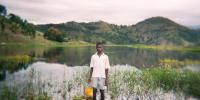
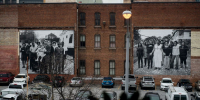
The Haitian Creole word "konbit" denotes the idea of similar talents joining together to work towards a common goal. The founders — a group of photographers, educators, and artists — came up with the idea for Fotokonbit a few years ago to "empower Haitians to tell their own stories and document their community", but it was the 2010 earthquake that gave the group new urgency.
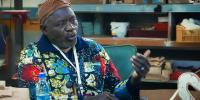
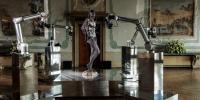
The veteran Malian master puppeteer Yaya Coulibali, born in 1959 in the village of Koula, around 100 kilometres north-east of Bamako, has more than half a century of experience in puppetry and has toured the world to perform his art.
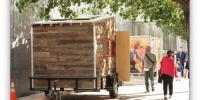
The project consists of a small mobile workspace and a micro artist residency program composed by two tiny art studios founded in Oakland. Studio 1 is a solar powered art studio which was built on the back of a flatbed trailer and Studio 2 was built in collaboration with students at Stanford University, both spaces are composed of second-hand materials.
In her curatorial project Making Way, Ruth Simbao brought together works that complicated the idea of globalization’s effect on African nations, especially the idea that the new phase would usher in an almost frictionless movement of labor and capital across borders. Works by artists like Athi-Patra Ruga reflected on questions of how bodies moved through settler colonialist spaces.
IMAPCT are youth activists who view the creative arts and leadership training as a way to develop ourselves and change the world in a positive way. They believe that they must be the message that bring through hardwork, focus, discipline, unity and the principles of S.O.S. safe space, outstanding effort and service to their family friends and community.
Ghana ThinkTank is an international collective that “develops the first world” by flipping traditional power dynamics, asking the “third world” to intervene into the lives of the people living in the so-called “developed” world.
T.I.E. is a residential, 24-hour, intensive experience during which participants will be: introduced to aesthetics of Immersive Theatre, guided through a practical exploration of these strategies, and mentored in the creation of an immersive, theatrical experience about a social justice issue -- a piece that can be shared at the end of the workshop with an invited audience of their choice
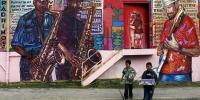
CENTRO San Antonio's Art Everywhere Project will celebrate its 5th anniversary in May.
As of May 2024, the project had seen numerous artists from the city's urbancore decorate areas of the city with elaborate murals reflecting the city's history and the diversity of cultures in the city.
“My intention was not to disappear in the environment but instead to let the environment take possession of me” Said Liu Bolin. With his strong photography, Bolin vanishes into the city, creating a powerful statement about our relationship, as humans, to our surroundings.
"Gardens Speak is an interactive sound installation containing the oral histories of ten ordinary people who were buried in Syrian gardens. Each narrative has been carefully constructed with the friends and family members of the deceased to retell their stories as they themselves may have recounted it. They are compiled with found audio that evidences their final moments.
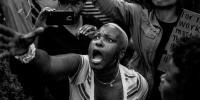
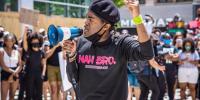
When dancer Sheen Jamaal saw a video of protestors doing the Cupid Shuffle in New Jersey, inspiration struck to do something similar in New York. He immediately called his friend and collaborator Allison “Buttons” Bedell, and the seed for the Dance For George protest was planted.
The Bruce High Quality Foundation University (BHQFU) is an unaccredited, free collaborative school founded by the eponymous artist collective and presented by Creative Time.
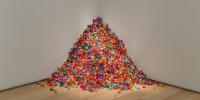
Felix Gonzalez-Torres produced meaningful and restrained sculptural forms out of common materials. “Untitled” (Portrait of Ross in L.A.) consists of an ideal weight of 175 pounds of shiny, commercially distributed candy. The work’s physical form and scale change with each display, affected by its placement in the gallery as well as audience interactions.
Rooted in Native American and indigenous practices,[11] restorative justice is a set of principles and practices that aims to help communities heal from conflict and harm by developing a common understanding of the root causes and effects.[12] Restorative justice can occur in a variety of different contexts: in the workplace, at schools and within, or instead of, the criminal justice system.
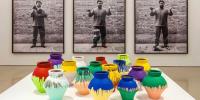
MIAMI — Officials at the recently inaugurated Pérez Art Museum Miami confirmed on Monday that a valuable vase by the Chinese dissident artist Ai Weiwei had been deliberately destroyed by a visitor in what appeared to be an act of protest.
Samaria Rice, left, and Terrence Spivey welcome the crowd at the Tamir Rice Sweet 16 event to raise funds for a new youth oriented cultural center Thursday, June 14th, 2018, at the Cleveland Museum of Art in Cleveland, Ohio. Photo by Tim Harrison/Special to The Plain Dealer
Inspired to carry on Tamir's legacy
The Ogden Ar(t)chives Mailbox is a community project that was initiated by Ogden poet, Angelika Brewer. The project involves a metal sculpture of a mailbox, which has various decorative elements such as a typewriter, a birdcage, and a heart. The mailbox serves as a platform for the public to submit their creative works such as poems, drawings, letters, or anything that can fit in an envelope.
Miles Greenberg is a performance artist from Canada who specializes in time, endurance, and the human body. His art is often complicated and deep into the human experience, with physical endurance mixed into visual metaphors that create deep, profound statements of the human condition.
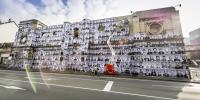
After winning the TED Prize on March 2, 2011, the French-artist JR launched the Inside Out Project, in his first TED Talk. Using his own artistic practice as inspiration, this participatory platform helps individuals and communities to make a statement by displaying large-scale black and white portraits in public spaces. Through their “Actions,” communities around the world have sparked collaborations and conversations.
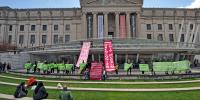
On Sunday, April 29, dozens of protesters occupied the Beaux-Arts Court at the Brooklyn Museum as they reiterated demands for a decolonization commission, about which the art institution has remained silent. The calls for the commission come after the criticisms that followed the appointment of two white curators to the museum, including in the field of African art.
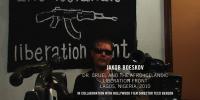
By 2010, the Nigerian film industry, also referred to as “Nollywood,” had become the second-largest film industry in the world. Today, the accessibility of digital video technology continues to enable prolific amateur filmmakers to produce wildly popular low-budget and direct-to-DVD films, which deal with timely issues of religion, poverty, and corruption.
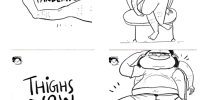
Mounica Tata launched Doodleodrama as an online journal to improve representation for her body type in mainstream media. “I’ve always been an overweight person and bullied and shamed for the same. Only fairly recently I’ve learned to make my peace with my body. My own journey with my body inspired/continues to inspire me to talk about it.”
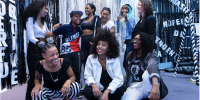
As Black History Month commemorations start to wind down, one festival is just gearing up. Afropunk the Takeover — Harlem, running from Tuesday through Feb. 25, will celebrate black culture with music, art, film screenings, discussions and comedy.
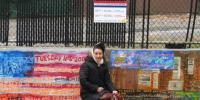
The "Democracy Wall" in the Carroll Gardens section of Brooklyn, New York was established in 2009. This wall is a long-term, community art activist project that is part wall mural, part past information archive.