FROM THE NEW YORK TIMES:
" While filming a documentary about divisive oil refinery ventures in the subzero cold of Fort McMurray, Alberta, the director David Dufresne said he wasn’t considering only pollution in that Canadian boomtown or the vast tar sands beneath its frozen ground. He was also thinking deeply about technology, about making a new kind of hybrid media, a docugame.
The stunt aims to show the impact of climate change by live streaming the sculpture melting.
A climate change group is raising half a million dollars with the goal of carving President Donald Trump’s face into an arctic iceberg.
The Finnish group Melting Ice is spearheading the initiative with the intention of carving a 115-foot ice sculpture of Mr Trump’s face, and have dubbed the effort “Project Trumpmore”.
"Divided we are weak. Together we are strong."
Those were the words tweeted by openly gay football star Michael Sam, thanking his University of Missouri family for their support. He posted the message after arriving at the school and seeing a group of Mizzou students surrounding the perimeter in order to block out a Westboro Baptist Church protest.
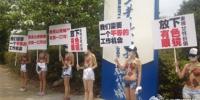
Female students from the Guangdong University of Technology in Guangzhou called for equal job opportunities and for people to "pay attention to the value of women" while protesting on the school's campus, shirtless and covered in body paint.
The photos, taken by ogling passersby, have been circulating on Weibo and naturally netizens stand divided on whether the semi-naked protests were empowering or counterproductive...
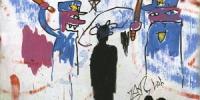
Jean-Michel Basquiat was an American artist who rose to fame in the 1980s. He is known for his graffiti-inspired paintings that often engage with issues surrounding racism and inequality. Basquiat's work challenged the status quo and incited a powerful social commentary on the struggles of marginalised social groups.
Amongst the European network of cultural institutions there has been widespread recognition that the climate crisis is a cultural crisis. In 2019 members of the European Theatre Forum convened and adopted the Dresden Convention, a revolutionary text that aimed to lower the carbon footprint and better the sustainable practices of the theatre and cultural sector at large.
Our Action: We set up “I’m every Woman” as a 3D street installation. It took place on the Boardwalk, Cork City on the weekend of International Women’s week.
Our aims were to promote gender-equality. As a group we identified women as locally and globally dehumanized. We challenged this by honouring women and interacting with people we encountered to celebrate women, both locally and globally.
La Casa Invisible project was started in 2007 in Malaga, Spain, when a group of socially involved participants squatted in a run-down building, aiming to eventually claim the legal rights to the property (Moor & Smart, 2016). The space was opened to local artists and creators, quickly becoming a hub for free local music, performances, and seminars as well as creating an important meeting space for social groups (Moor & Smart, 2016).
TimCon28 was a scavenger hunt that infiltrated the historic Waldorf-Astoria hotel in midtown Manhattan. Under the guise of attending the "Timothy Convention", forty people explored back passages and service areas, interacted with unsuspecting hotel guests, infiltrated official hotel events like the Annual Disney Service Awards, and solved historic clues that led to birthday cake on the roof.
The New York-based artist has created a free-to-download poster in support of the ESEA community. Produced in response to the Covid-related surge in anti-Asian hate crimes, it can be used in a variety of ways to raise awareness and support the cause.
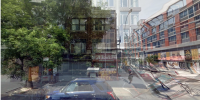
Vacated reverse engineers Google Street View to highlight the changing landscape of various neighborhoods throughout Manhattan and Brooklyn. The project finds buildings constructed in the past four years using the NYC Department of City Planning's PLUTO dataset, and it leverages Google Street View's cache to visualize absent lots just before new buildings were constructed.
I must first come clean, I studied fine arts in high school from years nine to 12. Since my studies were concluded, I had never held a paintbrush again.
In the UK, the secretary of state Theresa May is attempting to pass a new investigatory draft bill that would essentially rid all British citizens of the right to privacy and security on the internet. Internet providers will be required to maintain user's browser history for 12 months amongst other things. In light of these revelations, it seems privacy will no longer be a basic human right, but an add-on option to our internet services.
An artist in Culiacan, Mexico—which has the highest rate of gun deaths in the country—has found a way to transform the agents of death into seeds of life.
In 2008, artist Pedro Reyes started running television ads urging locals to exchange their guns for food coupons to be redeemed at local stores.
The campaign—Palas Por Pistolas, or “Shovels for Guns"—collected 1,527 guns, which Reyes publicly smashed with a steamroller.
Access Denied is a working project that started in 2015 that deals with inaccessible art spaces around Los Angeles. I am a physically disabled person who has been going to visit art shows for over 10 years and during that time I have experienced many instances of Inaccessibility. After many instances of exclusion I could no longer ignore my experience so I decided to make work about my denied access.
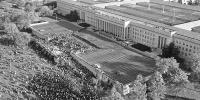
It was 1967, and sentiment against the Vietnam War was in the air nationwide. The counterculture was flourishing on the heels of the Summer of Love. Organizers from Mobe — the National Mobilization Committee to End the War in Vietnam — initially called for a massive march on Washington.
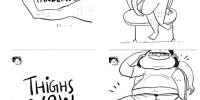
Mounica Tata launched Doodleodrama as an online journal to improve representation for her body type in mainstream media. “I’ve always been an overweight person and bullied and shamed for the same. Only fairly recently I’ve learned to make my peace with my body. My own journey with my body inspired/continues to inspire me to talk about it.”
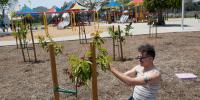
DEL AIRE, Calif. — Fruit looms large in the California psyche. Since the 1800s, dewy images of oranges, lemons and other fruits have been a lure for seekers of the state’s postcard essence, symbols of fertile land, felicitous climate and the possibilities of pleasure.