change
region
medium
issue
despondent apostate
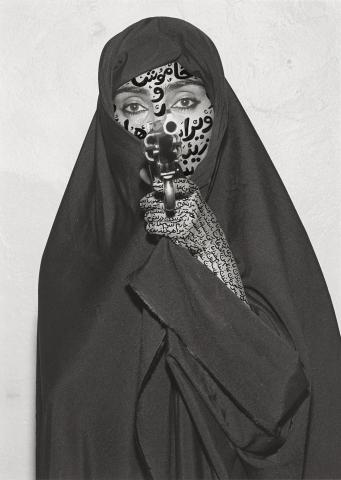
Shirin Neshat’s Women of Allah is a photographic series exploring the complex identities of Muslim women in post-revolutionary Iran. Combining black-and-white portraits, Persian calligraphy, and symbolic elements such as guns and veils, Neshat interrogates themes of martyrdom, violence, femininity, and resistance. The works challenge Western stereotypes of Muslim women as passive or oppressed, while also critiquing the Iranian regime's militarized constructions of female martyrdom and religiosity.
The contradictions between piety and violence, empowerment and suppression, are most prevalent in the use of calligraphic text that is applied to each photograph. Western viewers who do not read Farsi may understand the calligraphy as an aesthetic signifier, a reference to the importance of text in the long history of Islamic art. Yet, most of the texts are transcriptions of poetry and other writings by women, which express multiple viewpoints and date both before and after the Revolution. Some of the texts that Neshat has chosen are feminist in nature. However, in Rebellious Silence, the script that runs across the artist’s face is from Tahereh Saffarzadeh’s poem “Allegiance with Wakefulness” which honors the conviction and bravery of martyrdom. Reflecting the paradoxical nature of each of these themes, histories, and discourses, the photograph is both melancholic and powerful—invoking the quiet and intense beauty for which Neshat’s work has become known.
As an outspoken, feminist, and progressive artist, Neshat is aware that it would be dangerous to show her work in conservative modern-day Iran, and she has been living in exile in the United States since the 1990s. For audiences in the West, the “Women of Allah” series has allowed a more nuanced contemplation of common stereotypes and assumptions about Muslim women and serves to challenge the suppression of female voices in any community.