When Tracey Emin aired her dirty laundry in the 1999 Turner Prize exhibition at Tate Britain, she set a new standard for confessional art. She conceived of the installation, titled My Bed (1998), after a long, bedridden bender following a bad break-up. When Emin finally left her sheets, she examined the mess she’d created.
Australian recycling initiative MobileMuster, a free mobile phone recycling program that accepts all brands and types of mobile phones, teamed up with artist Chris Jordan and college students from Melbourne, Australia to create a public installation. The installation, which is composed of over 8,000 discarded mobile phones, was presented in Melbourne during the Sustainable Living Festival, which takes place in February.
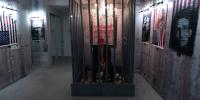
For one day, a group of artists known as the INDECLINE Artist Collective turned a hotel room in New York City's Trump International Hotel into a single jail cell for Donald Trump without the hotel's knowledge. The inside the jail cell was a Donald Trump impersonator in a suit and a "Make America Great Again" hat and at his feet were McDonald's food wrappers and live rats.
The Haitian Creole word "konbit" denotes the idea of similar talents joining together to work towards a common goal. The founders — a group of photographers, educators, and artists — came up with the idea for Fotokonbit a few years ago to "empower Haitians to tell their own stories and document their community", but it was the 2010 earthquake that gave the group new urgency.
The aim of the action is to create a fractal network of poets, where their poems will be recited, recorded, set to music, will be activistically acted as performance material in order to resist the censorship of art.
The field of action is the poets who will be born and the network that will be created by the restless artists.
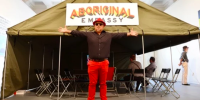
Richard Bell has often called himself ‘an activist masquerading as an artist’. Aboriginal journalist and radio broadcaster Daniel Browning has suggested that Bell is also ‘a megaphone.
Se sacuden la desconfianza y entran al camión. En él no hay frutas, ni verduras, ni carnes. El piso, igual que el techo y las paredes están inmaculadas y pintadas de blanco. Solo ellos y algunos compañeros inmortalizados en fotos llenan el espacio.
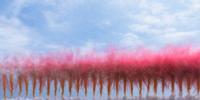
On June 26, contemporary artist Cai Guo-Qiang released the daytime firework display ‘When the Sky Blooms with Sakura’ at Yotsukura Beach in Iwaki City, as commissioned by Saint Laurent’s creative director Anthony Vaccarello.
CLEVELAND, Ohio – Dana Schutz, the acclaimed New York artist who trained at the Cleveland Institute of Art, famously stirred controversy at the 2017 Biennial at the Whitney Museum of American Art with “Open Casket,’’ her painting depicting Emmett Till’s body in its coffin.
Till, a black 14-year-old, was murdered and mutilated by white men in Mississippi in 1955 after having been falsely accused of flirting with a white woman.
Asaf Hanuka is a cartoonist and illustrator based in Tel Aviv, Israel. His illustrations span the themes of technology, revolution, war, Judaism, and depictions of family life and the individual in modern day society.
The project (created in 2009-2010) consists of painted plats and posters depicted with drawings of police torture scenes. Images also include snippets of email exchanges. The plates have been exhibited in numerous galleries in Ukraine, and posters were hung in public spaces.
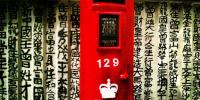
A toothless garbageman who once wandered Hong Kong’s streets with dingy bags of ink and brushes tied to his crutches is now the subject of a major retrospective. About 300 calligraphic works by the late Tsang Tsou-choi — who is best known by his self-dubbed title, the King of Kowloon — are showing at the ArtisTree art space in a high glass tower.
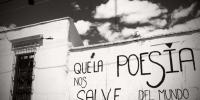
The Acción Poética movement is a literary phenomenon that began in Monterrey, Mexico in 1996. It was founded by Mexican poet Armando Alanis Pulido and involves painting and intervening abandoned walls in cities with fragments of poetry. The content is usually love poems or optimistic phrases. Also, some phrases refer to the current situation in the cities (though one of their rules is to not talk about politics or religious beliefs).
A unique piece captured significant attention at the Central Academy of Fine Arts undergraduate graduation exhibition in June. The work featured an "anime-style" girl's skull linked to a human skeleton and internal organs, all encased within a thin film. As visitors entered the exhibit area, her breathing and gaze would alter accordingly.
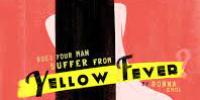
New York artist Donna Choi wanted to create a “weird, memorable way” to discuss fetishization of Asian women, so she put together a satirical series about how to diagnose Yellow Fever—the specific obsession many Western men have with Asian culture.
The over-the-top series is a discussion of race crafted for the attention span of the Internet.
I emailed with Choi about her thinking behind the Yellow Fever series.
While meditating in front of a Nepalese Sarasvati statue on New Year's Day in 1991 at her California home, Mayumi received a calling that brought a sudden halt to painting. Having witnessed the horrors of atomic bombings as a child and later, watching her beloved Japan become a leader in nuclear-energy, and seeing the effects of depleted uranium, Mayumi had to pursue a global cause greater than her art or feminism.
In a massive act of ‘brand vandalism’ just two days before the launch of the UN COP21 Climate Conference, 600 anti-advertisement posters have been installed in outdoor media spaces throughout the streets of Paris. The posters display artwork from over 80 artists from 19 different countries, including big names such as Banksy-collaborator Paul Insect, Alex One, Know Hope, Escif, Cleon Peterson, Hyuro, Jimmy Cauty, Ron English and many others.
The Guardian:
Olafur Eliasson is putting the chill into climate change. The revered Scandinavian artist has placed 24 large blocks of centuries-old ice, harvested from the Nuup Kangerlua fjord in Greenland, in a circle outside the Tate Modern in London, with another six on display in the City.
Recurrent themes in Emily Jacir's practice—which spans a range of strategies including film, photography, interventions, archiving, performance, video, writing, and sound—are silenced historical narratives, resistance, movement, and exchange.
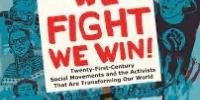
Greg Jobin-Leeds, a long-time social activist, collaborated with AgitArte, a collective of artists and organizers, to capture the stories of today’s social movements and the activists behind their success with the release of When We Fight, We Win: Twenty-First-Century Social Movements and the Activists That Are Transforming Our World.
Rufina Bazlova is not afraid to surrender her art to activism. Born in Belarus, a former Soviet republic ruled by the authoritarian leader Aleksandr Lukashenko for 29 years now, Bazlova knows all too well that being apolitical is a privilege many Eastern Europeans cannot afford. 2020 was a pivotal year for Belarus, not only because of the COVID-19 pandemic but also the presidential elections, which declared Lukashenko president for the sixth time.
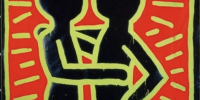
Keith Haring is known to be one of the biggest artists raising awareness for HIV and AIDS, considering he had also passed away from HIV. Starting his career covering ads with spray paint and chalk in subway stations in New York City, his work started trending and he became an activist for this cause.
The Eye that Cries (El Ojo que Llora, in Spanish) is a memorial that was born as a private initiative designed to honor the thousands of victims as a result of terrorism in Peru, to strengthen the collective memory of all Peruvians and to promote peace and reconciliation in the country.
The Brooklyn Paper
March 26, 2012
BY ELI ROSENBERG
Occupy Wall Street wants to occupy your wall space.
A collective of poster printers in Gowanus is attempting to help reignite the social movement’s flames for a May 1 “General Strike,” with a handful of new pin-ups it hopes will be as arresting as the image of a ballerina atop a bull that kicked off the whole protest in September.
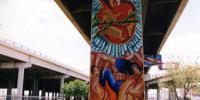
In El Paso more than 100 murals have been painted since the mid-1960s. The murals, located throughout the city's various corridors, often depict themes common to Chicano muralism, such as mestizo heritage or social problems, but they also tell unique stories about the "merging of ideas, cultures, and dreams" along the United States-Mexico border.