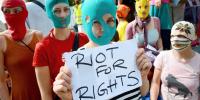
DEPENDING on your taste, punk died in 1979, or maybe 1994, or whenever studded leather cuffs became a must-have mall-girl accessory. Now, suddenly, punk has been resurrected, stitched together anew in the form of the well-accessorized Russian women who call themselves Pussy Riot.
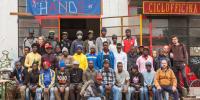
Their name, Sapeurs, comes from the French slang se saper, meaning to dress with class, but also from the acronym of their social group : La Société des Ambianceurs et des Personnes Élégantes (the Society of Ambianceurs and Elegant Persons). La Sape can be traced back to the early years of colonialism.
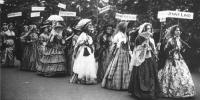
On June 17, 1911, a week before the coronation of King George V, women from diverse backgrounds united in costume and with installations over a shared political view - that of rallying the right for women to vote. Known as the Women's Coronation March, women thronged the streets between Blackfriars Bridge and Albert hall in a five-linked chain, dressed for the most part in white.
Heroin sold in the northeast, specifically in New York, Pennsylvania, and New Jersey tends to come in little glassine baggies. The art comes from the individual and unique "stamp" on said baggie sold to a user.
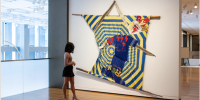
Natalie Ball’s work challenges dominant stories of Native American identities, taking to task the historical and visual legacies that misrepresent what it means to be “Indian.” She dives deeply into Indigenous histories and forms of knowledge, the use of language, and a wide range of materials—including animal hides, clothing, and synthetic hair—to create a new narrative around Indigenous experiences and identities.
An anti-Nazi organization called Exit-Deutschland targeted a right-wing Rock Festival in a city called Gera. They got in contact to the festival organizers by using a fictitious name, and they distributed 250 trojan t-shirts with a writing “Hardcore Rebels” during the festival. When the recipients of the shirts went back home and washed them.
They call themselves feminist masked avengers in the tradition of Robin Hood, Wonder Woman and Batman. They wear costume gorilla masks to remain anonymous, and they are devoted to fighting sexism and racism within the visual art world internationally.
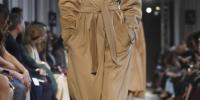
A woman dressed in western clothes and a hijab is a common sight across Europe’s capital cities – a fact now reflected on the catwalk at Milan fashion week.
Halima Aden, a Somali-American model, is fast becoming fashion’s face of 2017, currently stealing the show at fashion week from the catwalk superstar Gigi Hadid.
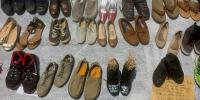
Walking the rows of shoes—favorite slippers, old Army boots, gold stilettos—it’s the baby shoes that stop you cold. Shoes began to fill a plaza opposite Puerto Rico’s Capitol building, and by Sunday morning, there were more than 3,000 pairs, a growing memorial to the roughly 4,645 people estimated to have died in the aftermath of Hurricane Maria.
The internet has reshaped the ways we learn and communicate. Information becomes heuristic, concomitantly - knowledge becomes protean. If you dedicate enough time to any particular platform, you are likely to acquire a community with congenial individuals. Social media’s proliferation has obfuscated the lines between reality and fiction. Embraced as a tool for many, these digital spaces typically have no monitoring process.
"Superbarrio Gomez and his journey in the construction of a "politics of the possible" (1) , an alternative political imaginary constituted via popular culture and the construction of a national and transnational social movement. Superbarrio makes evident the collapse between politics and performance; he forces us to think beyond the performance of politics in order to understand the politics of performance.
"What the Skirt Lifts", created by a student in France, is a day long protest against gender discrimination where male and female students were encouraged to wear skirts to school.
From 99 Percent Invisible:
By the late 1980s, AIDS had been in the United States for almost a decade. AIDS became the number one killer of young men in New York City, then of young men in the country, then of young men and women in the country.
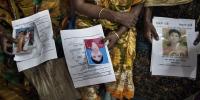
On April 24, 2013, more than 1,000 lives were taken in the Rana Plaza Collapse. While history remembers this tragic event as the deadliest garment factory accident, activist and photographer Taslima Akhter reveals a story of dreams crushed by structural murder. Dedicating her career to the lives and struggles of garment workers in Bangladesh, she has continued to foster a community rallying together for safer working conditions.
Maryland Hall, in partnership with the Banneker Douglass Museum and Maryland Commission on African American History and Culture, invited Maryland-based Black artists, whose work encapsulates activism and social justice and using the creative process to educate their audiences about diversity, equity and inclusion to send proposals to take one of six 5 ft.
The Mischief Makers built a giant bird as a symbolic way of opening up Serb borders and made an impressive mosaic on the same theme, possibly to be used in a new youth centre. Clowns trained and joked about at the final parade to end the week of workshops. An other impressive feature of the activities in Novi Sad was the quickly formed samba band, which did a couple of stunning performances in the centre of town.
For Auli'i Cravalho, actions speak louder than words.
On Thursday night, the Moana voice actress stepped out for the premiere of Prime Video show The Power. There, the 22-year-old decided to raise awareness on missing indigenous women and girls by wearing a red lipstick-made handprint across her mouth and face.
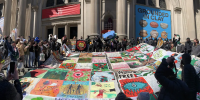
Hundreds of artists, cultural workers and activists gathered on the steps of the Metropolitan Museum of Art on Fifth Avenue in New York on Sunday (24 March), demanding that the most visited museum in the US publicly call for a ceasefire in the war in Gaza and commit to preserving Palestinian cultural heritage.
The project responds to the urgency that many asylum seekers and refugees have as soon as they touch a new country's soil: working and learning the language. The project, located in the former army barracks 'Caserma Piave' in Treviso, started as a grassroots initiative.
"A Night of Philosophy and Ideas is a thinker’s lollapalooza. The free, 12-hour weekend lyceum at the Brooklyn Public Library includes spirited debate, live music, theater, performance art pieces, and film screenings. At any given hour, five or six different events will be taking place simultaneously. Visitors are encouraged to come and go as the spirit moves them.
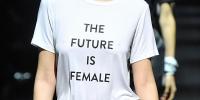
After eight days of fall/winter New York Fashion Week, the most prominent trend—pervading both the runways and streets—has been social and political activism. To outsiders, New York Fashion Week may seem trivial in a time of more pressing news, but beyond being an escape, it’s a representation of how art can comment on social and political issues.
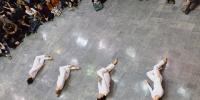
A viral video of a student dance performance in southern China’s Guangxi Zhuang Autonomous Region has won praise for speaking out against so-called ghost marriages, which many today see as an archaic and even dangerous tradition.
When we think about the protectors of our oceans, our mind is instantly drawn to the image of the lifeguard. Pamela Anderson and David Hasselhoff in bright red swimsuits, their enviable bodies on show, as they run along the coastline. As a result our concept of the role has an elitism about it.
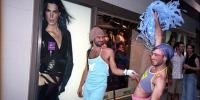
"On July 5, 2002, a strange new brand began cropping up in the streets of Barcelona. That day, at the height of sales season, more than fifty people rushed through the center of Barcelona to the Bershka clothing store to perform the very first Yomango fashion show.
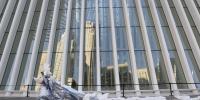
At 12:00 noon (New York time) on November 19, 2016, Chinese artist Ning Kong, wearing a wedding dress with hundred dove, appeared at the 911 site in New York. Even though the theme of performance art is calling for peace, the police banned it and showed the handcuffs because doing performance art was not allowed at the 9/11 site. So Kong Ning turned to Times Square, New York, successfully completing her performance art.