Video of Mary Perry Stone's social protest art created in the 1960s . Civil Rights, and the Vietnam War were her subjects. Mary never stopped being an activist and a few of her later works are also in the video.
The Nanny Van is a public art initiative run by REV- and the National Domestic Workers Alliance. This project aims at shorting distances, gaps and obstacles between domestic workers and the proper information of their rights. Therefore, Nanny Van is a smartphone app every person can download in order to access information about the legal conditions and state any kind of questions or claims.
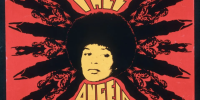
When the U.S. government came after Anglea Davis, art came to her defense. Targeted by the Federal Bureau of Investigation as one of its “10 Most Wanted” in 1970, tracked down, jailed and accused of three capital crimes, artists and activists around the world rose to her defense. She would be found not guilty on all counts.
“As an educator, I want people to have a sense of empowerment. I want them to have ownership of their own creative experience. It’s a very humane thing knowing we are inherently creative.”
“Mapping skin deep” is an audiovisual public installation consisting of portraits with testimonies from refugee/undocumented immigrants currently residing in Montreal and elsewhere. Their bodies have been scarred in post-production tracing the route they took from their homeland to Montreal, hence mapping them skin deep.
Action as a response to viral video of Attorney Aaron Schlossberg's racist rant against Spanish speaking customers and employees at a midtown restaurant. The "Latin Party" included food, music, and dance celebrating Latina/o culture in the US.
From FB event page:
The Haitian Creole word "konbit" denotes the idea of similar talents joining together to work towards a common goal. The founders — a group of photographers, educators, and artists — came up with the idea for Fotokonbit a few years ago to "empower Haitians to tell their own stories and document their community", but it was the 2010 earthquake that gave the group new urgency.
The global response to COVID-19 has made clear that the fear of contracting disease has an ugly cousin: xenophobia. As the coronavirus has spread from China to other countries, anti-Asian discrimination has followed closely behind, manifesting in plummeting sales at Chinese restaurants, near-deserted Chinatown districts and racist bullying against people perceived to be Chinese.
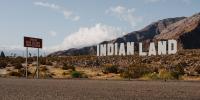
For Nicholas Galanin, a Tlingit and Unangax̂ artist and musician, memory and land are inevitably entwined. The 45-foot letters of Never Forget reference the Hollywood sign, which initially spelled out HOLLYWOODLAND and was erected to promote a whites-only development.
Black Lives Matter has pushed the national conversation on race—but the trauma and pain behind the fight against systemic racism can weigh heavily on black organizers and the communities they serve.
This was the case for Kleaver Cruz, a 27-year-old writer and community organizer at Black Lives Matter: NYC. A few days after Thanksgiving, he woke up deeply saddened, physically unable to move.
In 1988, rap group the N.W.A from Compton, California released their second album, “Straight Outta Compton”. Without any radio play or media coverage, the album still managed to become an underground hit, and the notorious rap group successfully introduced socially conscious gangsta rap into the mainstream.