In this series featured in the 2019 Whitney Biennial, artist Alexandra Bell edited headline pages from the New York Daily News in 1989 concerning the case of the Central Park 5. Through redaction, highlighting, and censoring, Bell shows how the teens accused of this crime were painted as a pack of animals by the media.
Over the course of a semester, fashion hactivist and fashion social justice scholar, Otto Von Busch, facilitated a course on "Critical Fashion and Social Justice," where graduate fashion students at Parsons design school researched, contextualized and at times critiqued case studies on various examples of "fashion social justice." Case studies included traditional fair trade companies and non profit organizations that have used fashi
The video: https://www.youtube.com/watch?v=Rg58d8opQKA
From Flavorwire:
“Another world is possible!” — so goes the popular activist chant at rallies and marches. Yet one of the most difficult aspects of sustaining a grassroots political movement can be imagining that other world and persisting even when it seems far away.
A CALL TO ARTISTS:
The American Friends Service Committee (AFSC) has created a new, nationally touring poster exhibit called All of Us or None: Responses and Resistance to Militarism. The exhibit will launch in June and is already scheduled to travel to Chicago, Greensboro, Providence, and San Francisco with many other stops anticipated. We are looking for some additional work to include in this show.
A group of clergy members wanted to change the conversation when they heard that a Florida police department was using mug shots of young black men as targets for shooting practice.
“#UseMeInstead,” the religious leaders said, tweeting photos of themselves in hopes that their solidarity would cause cops to “think twice” before pulling the trigger.
But the well-intentioned hashtag is provoking mixed responses.
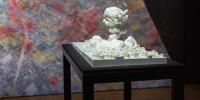
Forensic Architecture's Cloud Studies is a project that investigates the impact of toxic clouds on colonised and oppressed communities. The clouds, originating from sources like tear gas, industrial emissions, chemical weapons, and forest fires, often go unaddressed due to doubt and denialism.
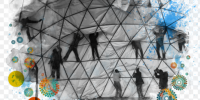
Surrounded by a jungle of tents and mud, the Good Chance Theatre was set up last year by British playwrights Joe Murphy and Joe Robertson. The refugee camp theatre has been derided by many, but for the thousands of migrants who have journeyed across the world to Calais, the small dome has been the first and only place into which they have been welcomed, and their voice valued.
Last June, Harris Reed became a member of the “Class of 2020” -- the crop of young fashion talent who graduated into an industry on rocky ground due to the pandemic. Over the eight months that have passed since earning his cap and gown at Central Saint Martins, Harris seems to have done a good job of finding his feet.
Text taken from website:
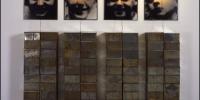
By appropriating mementos of other people’s lives and placing them in an art context, Boltanski explores the power of photography to transcend individual identity and to function instead as a witness to collective rituals and shared cultural memories.
"The Shortest Way with the Dissenters;" Or, "Proposals for the Establishment of the Church" is a pamphlet by Daniel Defoe, first published in 1702. Defoe was prompted to write the pamphlet by the increased hostility towards Dissenters in the wake of the accession of Queen Anne to the throne.
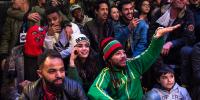
In Tunisia, a country gripped by economic uncertainty and still in the midst of rebuilding its identity after the Arab Spring, hip-hop culture is viewed as part of an ongoing dissident movement. Just a few events, such as the recent Mafia Wallitili Festival in the heart of downtown Tunis, offer the local hip-hop community an opportunity to share their values with the broader population.
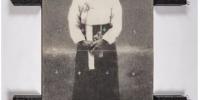
In the series The History of Korean Women, Cho's suggests that the cost of that gain cannot be paid for by a cultural amnesia masking the pain and suffering of previous generations. Here the semantic emphasis is on the official - the status of women and their contribution to the survival and growth of Korea. Their efforts have gone uncelebrated due to their relegated status within a five hundred year old social system.
By Latoya Peterson, Racialicious
Looking for a way to celebrate the folks who raised you–but from a slightly different perspective than you would get down at Hallmark? The good people over at Strong Families (a project of Forward Together/Asian Communities for Reproductive Justice) present Mama’s Day, a multicultural, queer-friendly celebration of the folks who do some of the most significant (and unpaid) work in our society.
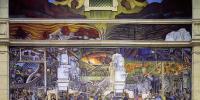
Almost all of Rivera's art told a story, many of which depicted Mexican society, the Mexican Revolution, or reflected his own personal social and political beliefs, and In the Arsenal is no different. The woman on the right side of this painting in Tina Modotti, an Italian photographer and revolutionary political activist, who is holding ammunition for Julio Antonio Mella, a founder of the internationalized Cuban communist party.
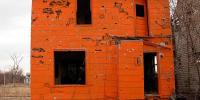
In the "D", "D" doesn't really stand for "Detroit", but "Demolition." Take a look around and you'll notice a great number of buildings marked on the front with a circled "D" in faint chalk. Off to the side, many of these same buildings will also have a noticeable dot, courtesy of our own native son, Tyree Guyton.
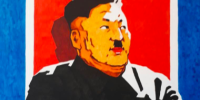
Song Byeok is one of the most acclaimed Korean artists living today. He is from North Korea, where he was a propaganda artist for the North Korean government for two decades. After defecting in 2002, Byeok has turned his prolific creativity into powerful, satirical art using North Korea’s ruling culture as motifs.
The Tel Aviv Museum of Art is joining the countrywide judicial overhaul protests planned for Thursday, March 23, and will darken the halls and galleries of the museum, closing exhibits to the public and canceling planned tours and lectures.
The only exhibit that will be open to the public, for free, is the exhibit of Israeli art from the museum’s collection, “Material Imagination: Center of Gravity,” which has been open for a year.
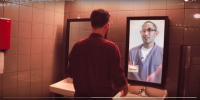
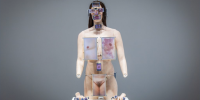
Filip Custic (Santa Cruz de Tenerife, Spain 1993) works across photography, performance and video to address themes around identity, body and our relationship with technology. Mirrors and screens are a recurring features, a reference to our age of image-obsession and selfies, and Custic also uses symbols, references to science, and art-historical borrowings in his art.