Bit Rosie showcases female music producers in high quality performance videos and short documentaries. Our videos and digital archive project with the New York University library document the work of women using music technology to make sounds across genres and locales.
Bit Rosie is directed and produced by Adele Fournet.
http://www.adelefournet.com/
The Peace Piece was conceived by artist Adelle Lutz as a reaction to the declaration of the American war with Iraq in the Spring of 2003. Lutz combined her talents as a costume designer and artist to create a project that would remind the Americna public that the majority of war victims suffering in Iraq were women and children.
The Women Are Heroes project has various steps in Africa, in Kenya, Sierra Leone, Liberia and Sudan.
In January 2009, 2000 square meters of rooftops are covered with photos of the eyes and faces of the women of Kibera, in Kenya. Most of the women have their own photos on their own rooftop and for the first time the material used is water resistant so that the photo itself will protect the fragile houses in the heavy rain season.
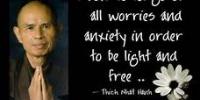
Thich Nhat Hanh reads his poem "For Warmth" in Vietnamese, Krista Tippett reads the translation in English, excerpted from the episode "Mindfulness, Suffering, and Engaged Buddhism."
The sneaker brand Converse has commissioned an indigenous artist in Australia to create a gigantic mural with a surprising twist. The Melbourne mural plays homage to indigenous urban identity and was painted with a special type of pollution-absorbing paint that “cleans the air,” according to the agency behind the project, Amplify.
In 2011 a protest movement started in Israel. Citizens expressed their demand for a fair distribution of resources, claiming for the lack of housing and maintenance of the buildings and apartments, due to the privatized housing schemes. In these instances no one feels responsible for maintaining buildings and those in need are forced to live under poor and risky conditions.
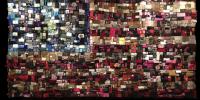
A mixture of a social cause with a creative vision, this visual art exhibit is dedicated to the millions of unemployed citizens and veteran’s in the United States. Constructed out of 1284 used empty wallets from over 2,000 donated nation wide; this project aims to have a voice about the economic problems our country is facing and show the potential of art to awaken our social consciousness.
In early 2016, I began paying attention to reports about the incredible number of unarmed black people being killed by the police. The posts on social media deeply disturbed me, but one in particular brought me to tears: the killing of Alton Sterling in my hometown Baton Rouge, La. This could have happened to any of my family members who still live in the area. I felt furious, hurt and hopeless.
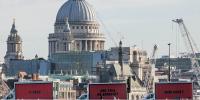
Activism imitated art when Justice 4 Grenfell protesters drove three provocative signs through the streets of London. In a clever nod to Three Billboards Outside Ebbing, Missouri, the Oscar-nominated film directed by Martin McDonagh, the billboards were bright red, with black letters that read:
71 DEAD
AND STILL NO ARRESTS?
HOW COME?
At first glance, it seemed like any other Monday evening in Görlitz, the most eastern town in Germany — where Poland sits just across the river. It was July 31, and a couple hundred people had gathered as part of the so-called Monday demonstrations to protest refugees, the COVID-19 vaccine and the government’s green energy politics.
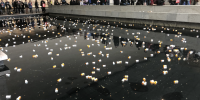
This afternoon, in the Sackler Wing of the Metropolitan Museum of Art in New York, a mother and daughter threw coins into its reflecting pool while a couple posed for engagement photos in front of the Temple of Dendur, the man in red pants and a gray blazer, the woman in a black jumpsuit. A long line snaked out of the temple. It was tranquil, most people speaking in a whisper. That grand space has such an effect on people.
DEL AIRE, Calif. — Fruit looms large in the California psyche. Since the 1800s, dewy images of oranges, lemons and other fruits have been a lure for seekers of the state’s postcard essence, symbols of fertile land, felicitous climate and the possibilities of pleasure.
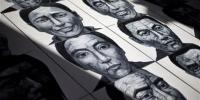
Beijing-based artist Liu Yi is working on a series of black-and-white portraits he knows will never be shown in a Chinese gallery. His varied subjects — men and women, young and old, smiling and pensive — have one thing in common: They are Tibetans who have set themselves on fire to protest repressive Chinese rule.
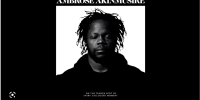
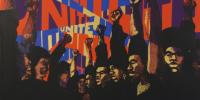
2020 was the year of when protest music blared everywhere. For a long period, Black people struggled against police brutality and in the uproar of George Floyd's murder, BLM protests instantly swept over the country. Of the many protest music that was released that year, trumpeter Ambrose Akinmusire wrote a song that would spearhead raging sentiments towards racial injustice beyond just jazz.
The global response to COVID-19 has made clear that the fear of contracting disease has an ugly cousin: xenophobia. As the coronavirus has spread from China to other countries, anti-Asian discrimination has followed closely behind, manifesting in plummeting sales at Chinese restaurants, near-deserted Chinatown districts and racist bullying against people perceived to be Chinese.
"The Scream: 21st Century Edition" was created by New York-based artist Jim Costanzo in response to the Iraq War. The piece is directly inspired by Edward Munch's painting, "The Scream." Costanzo expresses anger and frustration at the illegal American war and the attack on our civil liberties.
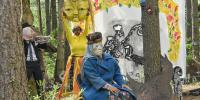
The Insurrection-Resurrection Service Circus is this summer’s [started in 2020 and is ongoing] contribution to the iconic Bread and Puppet Circus tradition beloved by audiences worldwide for nearly 2 generations — a bright, raucous melee of short acts governed by a brass band, addressing the heart of the current moment using diverse puppetry styles and spanning many moods, from slapstick to the sublime.
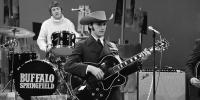
Released as a single on 23 December 1966, Buffalo Springfield’s For What It’s Worth became the short-lived but talent-packed band’s biggest hit, reaching No.7 on the Billboard Hot 100 chart in the spring of 1967.
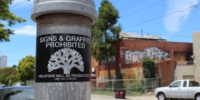
In this article, author Caroline Choi highlights different grafiti artists and their stories. These artists use their talent to tell their stories, ones that might not get to be told otherwise. She goes into the history of grafiti, and how it ties into how rich and white the art world has become.