Human rights activism relies on an ability to tell stories to diverse audiences that will inspire action toward justice. Distributing information through journalism, whether it be traditional or new media, is the standard method of raising awareness. Globalization and the movement of people means that activists and artists from affected communities may cooperate to mutual benefit and find new audiences in the process.
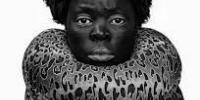
Zanele Muholi, the self-proclaimed visual activist and photographer, investigates the fraught relationship between post-apartheid South Africa and its queer community, who, despite being constitutionally protected since 1996, remain a constant target of abuse and discrimination.
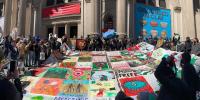
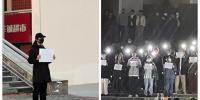
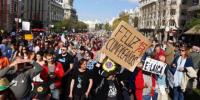
Direct Cause: The event that on November 24, several people died in a fire in a residential building in Urumqi, Xinjiang province, due to delayed disaster relief due to the COVID-19 lockdown policy in China, and the indifference of the government towards the incident and the block of message.
Primary Cause: The three-year-long lockdown policy and the government’s excessive control over speech and thought led to social discontent.
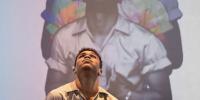
"WILD: Act I" is a film demonstrating the power of creativity in constraint. Using moving choreography performed by Elijah Lancaster and vivid imagery displayed on three walls in a mock cell, Jeremy McQueen gives voice to young Black and Brown men caught in the criminal 'justice' system.
Horror stories about treacherous boat journeys from Africa to the Mediterranean far too often make headline news. The men, women and children fleeing their homes to start a new life in Europe become faceless numbers in the media, and are ‘othered’ by conservative politicians for their own agenda.
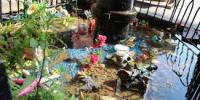
The Bed-Stuy Aquarium (also known as the Hancock Street Bed-Stuy Aquarium) is a makeshift goldfish pond located on a sidewalk in the Bedford-Stuyvesant, Brooklyn neighborhood of New York City. The pond, originally formed by a puddle from a leaky fire hydrant, garnered attention from locals and the press beginning at the time of its creation in August 2024.
"Beginning in 1910, the Mexican Revolution spawned a cultural renaissance, inspiring artists to look inward in search of a specifically Mexican artistic language. This visual vocabulary was designed to transcend the realm of the arts and give a national identity to this population undergoing transition.
To honor their battle, Lebanese women's rights organization ABAAD launched a powerful song and music video titled Not Your Honor. The clip was launched on the occasion of the "16 Days of Activism against Gender-Based Violence" initiative which took off on Nov. 25, the International Day for the Elimination of Violence against Women.
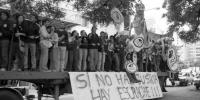
Faced with a lack of prosecution of those accused of crimes against humanity committed during Argentina’s military dictatorship, family members and descendants of the country’s estimated 30,000 disappeared took action.
On March 21, just days after eight people, including six women of Asian descent, were killed in the Atlanta-area shootings, thousands gathered at Columbus Park in Manhattan for a rally against anti-Asian violence. Activists took turns addressing the surge in hate crimes and hate incidents toward the Asian American and Pacific Islander (AAPI) community, when an 8-year-old stepped onto the stage. “Stop the hatred!” Chance yelled into the mic.
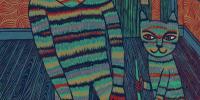
“I really wanted to highlight the strength of the human condition. When we work together we’re stronger,” Meredith Stern says of her exhibition “Cooperation Cats: 10 years, 20 prints” at AS220’s Project Space, 93 Mathewson St., Providence, from Feb. 1 to 29.
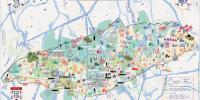
The ZAD (zone à défendre, or “zone to defend”) in Western France is 4000 acres of wetland, farmland and forest that was originally intended to be built into an airport in 1965 but is now an autonomous territory occupied by 40 different collectives looking to reclaim the land. There are around 200 people living permanently on the zone, in addition to some 2,000 people coming and going.
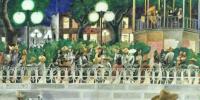
The 15M movement in Spain grew out of a desire for liberation and greater access to social and political rights for marginalized groups. At its core the activists of 15M were visionaries and used voting for a utopian society as a creative act to reimagine the world they created. Reality is socially construed by the forces that determine individual agency.
The pink "pussy hats" in The Women's March were created by a group of activists and knitters, including Krista Suh and Jayna Zweiman. The hats were designed as a form of protest and a symbol of resistance to the new administration and its policies.
Dogs featured in one ruse to ridicule the regime—pictures of dictator Than Shwe were hung around the necks of the stray dogs that roam the streets of Rangoon. The pictures, which rapidly found their way onto the Internet, are the work of an exiled Burmese satirist who goes by the name of Mr Creator. Downloaded copies of his pictures and cartoons are popular items among cyber dissidents.
CLEVELAND, Ohio – Dana Schutz, the acclaimed New York artist who trained at the Cleveland Institute of Art, famously stirred controversy at the 2017 Biennial at the Whitney Museum of American Art with “Open Casket,’’ her painting depicting Emmett Till’s body in its coffin.
Till, a black 14-year-old, was murdered and mutilated by white men in Mississippi in 1955 after having been falsely accused of flirting with a white woman.
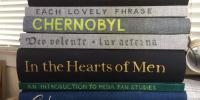
User @ArmoredSuperHeavy on Twitter recently posted a master document detailing their explorations into bookbinding, fanfiction preservation, and the online gift economy. Their bookbinding venture, named Dead Dove Publishing, is a project that seeks to preserve and legitimize fanworks and celebrate the fandom gift economy. The document explains their actions and the work they have done since they began two years ago.
Gao Yaojie (Chinese: 高耀潔, Gao Yaojie; 19 December 1927 – 10 December 2023) was a Chinese gynecologist, academic, and AIDS activist based in Zhengzhou, Henan, China. Gao was honoured for her work by the United Nations and Western organizations whilst spending time under house arrest.
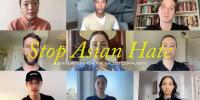
"Amid a rise in anti-Asian hate crimes around the world, Singapore-based dancewear company Cloud & Victory posted a video on March 18 calling for a stop to the hate against the Asian and Pacific Islander (AAPI) community. It features prominent Asian dancers and allies, including former professional dancer Miko Fogarty, The Joffrey Ballet's Jeraldine Mendoza and Boston Ballet's Lia Cirio and Paulina Waski.
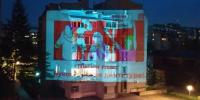
For the past few years around election time in Serbia, people have taken to the streets to protest government corruption, attacks on free press and voter suppression. This Spring, despite a nationwide lock-down to combat the COVID-19 pandemic, activists are finding new ways to protest the country’s increasingly-repressive government.
Last month, on the International Day for the Elimination of Violence Against Women, dozens of women gathered outside the supreme court building in Santiago, Chile—a country now beset by popular uprisings against inequality—for a feminist flash mob.
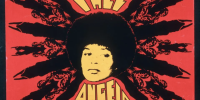
When the U.S. government came after Anglea Davis, art came to her defense. Targeted by the Federal Bureau of Investigation as one of its “10 Most Wanted” in 1970, tracked down, jailed and accused of three capital crimes, artists and activists around the world rose to her defense. She would be found not guilty on all counts.
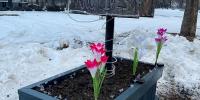
The Ogden Ar(t)chives Mailbox is a community project that was initiated by Ogden poet, Angelika Brewer. The project involves a metal sculpture of a mailbox, which has various decorative elements such as a typewriter, a birdcage, and a heart. The mailbox serves as a platform for the public to submit their creative works such as poems, drawings, letters, or anything that can fit in an envelope.