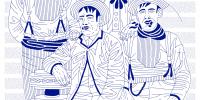
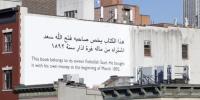
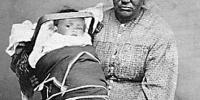
"Soviet Lives of Uncle Tom"
105 NY-110, Melville, NY 11747
February 4, 11 am – March 1, 7 pm
Monday – Friday, 11 am – 7 pm, free admission
Artist talk – February 28, 2 pm
Please write to racc.ny@mail.ru or call (347) 662 1456
The artist is available for interviews
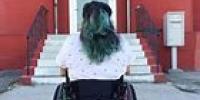
Access Denied is a working project that started in 2015 that deals with inaccessible art spaces around Los Angeles. I am a physically disabled person who has been going to visit art shows for over 10 years and during that time I have experienced many instances of Inaccessibility. After many instances of exclusion I could no longer ignore my experience so I decided to make work about my denied access.
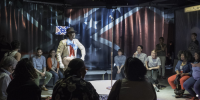
"Four theatrical spaces and the full inventory of of 3LD Art & Technology Center were enlisted in the transformation of the space into SupremacyLand, a dystopian theme park where white supremacy and racist carnage was raised and twisted into totally immersive, experiences.
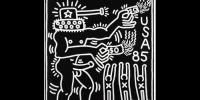
It's this symbolism and the characters that repeatedly appear in Haring's work that provide the backbone of an exhibition opening March 16, 2018 at the Albertina Museum in Vienna. On view through June 24, 2018, "Keith Haring. The Alphabet," comprises 100 of the artist's works, from subway art and drawings to sculptures and paintings.
GAME ON! Its gonna be a good Spring!" Connie Bacon.
Activists and the politically aware will march with the message that Donald Trump and his beliefs are "UNWANTED".
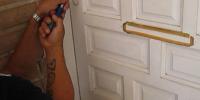
58,241 evictions were conducted in Spain in 2011, mostly through real estate speculation by the Mediterranean Savings Bank. In Intervention #1, the artist created a cooperative through which she contracted a construction worker (who himself had been evicted from his own house) to remove the entrance doors to other foreclosed properties. In this way, houses were accessible and open to public use, and occupants were not liable for housebreaking.
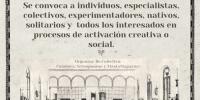
COLLABORATIVE LABORATORY FOR ANALYZE PASSIVE ATTITUDES AND CREATIVE STRATEGIES OF ACTIVATION.
14-15-16 February 2014
Meeting to discuss experiences and reflect on the concept of creativity as a tool for transformation.
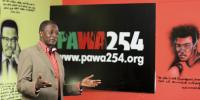
Kenyan-based photographer Boniface Mwangi has captured his country's political and civic turmoil since the controversial presidential election in 2007. The violence and disorder he witnesses daily motivated him to take action, setting up a creative hub for activism called PAWA 254.
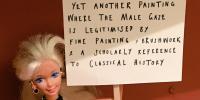
Museums and art galleries are not usually the sites of feminist political protest. Yet over the past couple of years, before the lockdown, gallery visitors all over the UK had noticed a small, determined activist whose modus operandi is “Small signs, big questions, fabulous wardrobe”.
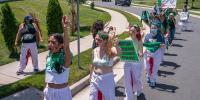
Pro-choice activists protested outside Supreme Court justice Amy Coney Barrett’s Virginia home on Saturday ahead of the apex court’s decision on a landmark case constitutionally protecting a woman’s right to safe abortion.
The activists, part of a group called Rise Up 4 Abortion Rights, donned clothes soaked in fake blood, held baby dolls and carried signs with slogans such as “Abortion on demand and without apology”.
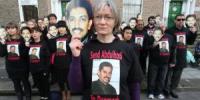
Former colleagues of Abdulhadi Al Khawaja from Front Line Defenders today held a silent vigil at the Embassy of Saudi Arabia in Dublin to urge the King of Saudi Arabia to use his influence with Bahrain to enable Abdulhadi to travel to Denmark for medical treatment.
Recurrent themes in Emily Jacir's practice—which spans a range of strategies including film, photography, interventions, archiving, performance, video, writing, and sound—are silenced historical narratives, resistance, movement, and exchange.
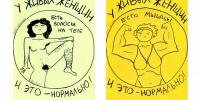
"My body is not pornography" — that is the slogan written under many of the social media posts inspired by Yulia Tsvetkova. Women are posting pictures of themselves showing off their curves, body hair and scars, along with feminist art and pictures of everyday objects that look like vaginas — like fruits or flowers.
During the 1600’s the Iroquois Indian Nations, a group of several indigenous tribes in North America, engaged in warfare with many other tribes. The men controlled when and against whom they declared a war.
Tribal Iroquois women decided that they wanted to stop unregulated warfare, and thought of a way to convince the Iroquois men to give them more power in deciding issues of war and peace.
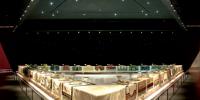
The Dinner Party, an important icon of 1970s feminist art and a milestone in twentieth-century art, is presented as the centerpiece around which the Elizabeth A. Sackler Center for Feminist Art is organized. The Dinner Party comprises a massive ceremonial banquet, arranged on a triangular table with a total of thirty-nine place settings, each commemorating an important woman from history.
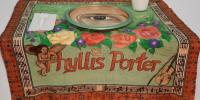
In 2013, a group of ten women incarcerated at York Correctional Institution in Connecticut, calling themselves “Women of York,” created this work of art inspired by Judy Chicago’s The Dinner Party. The installation includes six entry banners and ten place settings arranged on a triangular table, each dedicated to a woman of personal significance to the artist.